
Clean & Minimal AI Powered Fitness Routines
Download AppNew Lifter Fundamentals — 25 Minutes
A focused full-body fundamentals session: squat pattern, hinge pattern, push, pull, and core.
New Lifter Fundamentals — 25 Minutes
A focused full-body fundamentals session: squat pattern, hinge pattern, push, pull, and core.
Warm-Up
Movement prep to increase temperature and groove the main patterns without fatigue.
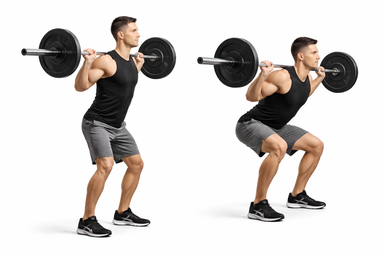
How to
A barbell squat that trains your quads, glutes, and core with both legs working together.
- Set the bar on your upper back and stand with feet about shoulder-width apart.
- Brace your core and keep your chest tall.
- Bend your knees and hips to lower under control.
- Descend until you reach your comfortable depth.
- Drive through your feet to stand back up.
- Keep your knees in line with your toes
- Keep the bar over midfoot
- Letting your knees cave inward
- Rounding your back as you squat
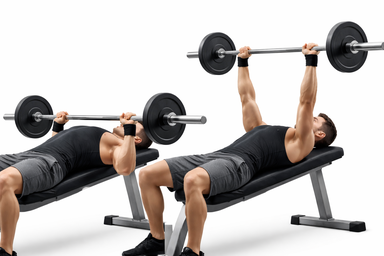
How to
A barbell press from a bench that trains your chest, shoulders, and triceps.
- Lie on the bench with feet planted and eyes under the bar.
- Grip the bar slightly wider than your shoulders.
- Unrack the bar and hold it over your chest with straight arms.
- Lower the bar to your mid-chest with control.
- Press the bar back up until your arms are straight.
- Keep your shoulder blades pulled back.
- Keep your feet planted.
- Bouncing the bar off your chest.
- Letting your elbows flare straight out.
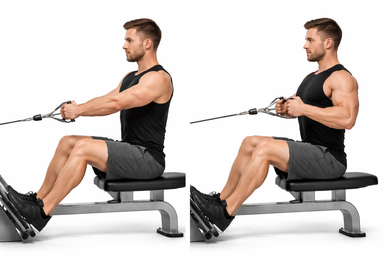
How to
A seated or standing pull that trains your upper back, lats, and arms.
- Set the cable at about waist height and hold the handle with both hands.
- Step back or sit tall with arms straight and shoulders down.
- Pull the handle toward your ribs, squeezing your shoulder blades back.
- Pause briefly, then straighten your arms with control.
- Repeat for all reps.
- Keep your chest tall
- Pull elbows back, not up
- Leaning far back to move the weight
- Shrugging your shoulders as you pull
Main Lift Circuit
Moderate loads and crisp technique. Aim for consistent reps across rounds.
How to
A barbell squat that trains your quads, glutes, and core with both legs working together.
- Set the bar on your upper back and stand with feet about shoulder-width apart.
- Brace your core and keep your chest tall.
- Bend your knees and hips to lower under control.
- Descend until you reach your comfortable depth.
- Drive through your feet to stand back up.
- Keep your knees in line with your toes
- Keep the bar over midfoot
- Letting your knees cave inward
- Rounding your back as you squat
How to
A barbell press from a bench that trains your chest, shoulders, and triceps.
- Lie on the bench with feet planted and eyes under the bar.
- Grip the bar slightly wider than your shoulders.
- Unrack the bar and hold it over your chest with straight arms.
- Lower the bar to your mid-chest with control.
- Press the bar back up until your arms are straight.
- Keep your shoulder blades pulled back.
- Keep your feet planted.
- Bouncing the bar off your chest.
- Letting your elbows flare straight out.
How to
A seated or standing pull that trains your upper back, lats, and arms.
- Set the cable at about waist height and hold the handle with both hands.
- Step back or sit tall with arms straight and shoulders down.
- Pull the handle toward your ribs, squeezing your shoulder blades back.
- Pause briefly, then straighten your arms with control.
- Repeat for all reps.
- Keep your chest tall
- Pull elbows back, not up
- Leaning far back to move the weight
- Shrugging your shoulders as you pull
Finisher
Short, controlled work to reinforce the hinge and trunk stiffness.
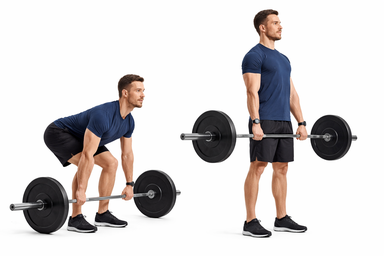
How to
A weighted hip hinge that trains your glutes, hamstrings, back, and grip.
- Stand with the bar over midfoot, feet hip-width apart.
- Hinge down and grip the bar just outside your legs.
- Brace your core, keep your chest up, and push the floor away.
- Stand tall with the bar close to your body.
- Hinge at your hips and lower the bar back to the floor.
- Keep the bar close
- Drive through your whole foot
- Rounding your back as you lift
- Letting the bar drift away from you
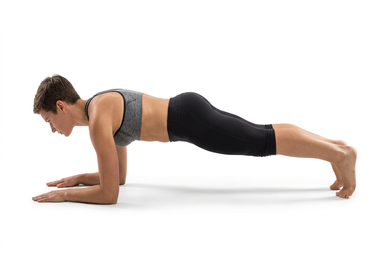
How to
A core hold that trains your abs, shoulders, and glutes while you keep a straight body line.
- Place your forearms on the floor with elbows under shoulders.
- Step both feet back and lift into a straight line from head to heels.
- Brace your abs and squeeze your glutes.
- Hold the position and breathe steadily.
- Lower your knees to the floor to finish.
- Keep your ribs pulled down
- Push the floor away
- Letting your hips sag
- Lifting your hips too high

Why Six Lifts Cover Every Force Vector
Squat and deadlift load the posterior chain through vertical and horizontal force production, while bench press and cable row create opposing push-pull balance across the shoulder girdle. Pull-ups add scapular depression under load, and the plank trains intra-abdominal pressure — every major movement pattern in one session, zero redundancy.

The Intermediate Trap New Lifters Fall Into
At this stage, technique degradation under fatigue is the primary injury risk — not load. The squat-to-deadlift pairing in the finisher section deliberately sequences high-demand hip hinge work after your nervous system is primed but before full glycolytic fatigue sets in, keeping your movement quality sharp where it matters most.

Building the Base Before Adding Load
This circuit structure prioritizes motor pattern encoding over intensity — the same principle elite coaches use in GPP blocks. Track your cable row grip width and pull-up depth each session; when both feel effortless at the same RPE, that's your signal to add 2.5–5% load to the barbell lifts.