
Clean & Minimal AI Powered Fitness Routines
Download AppAdolescent Growth Spurt Routine — 25 Minutes
A 25-minute mobility + strength session to support posture, coordination, and joint-friendly training during a growth spurt.
Adolescent Growth Spurt Routine — 25 Minutes
A 25-minute mobility + strength session to support posture, coordination, and joint-friendly training during a growth spurt.
Warm-Up
Mobility prep. Increase blood flow and gently open hips, spine, and ankles.
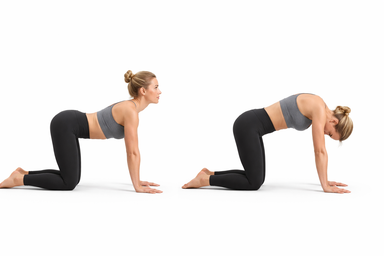
How to
A gentle spine mobility move that alternates rounding and arching your back on hands and knees.
- Start on hands and knees with wrists under shoulders and knees under hips.
- Inhale and drop your belly as you lift your chest and tailbone.
- Exhale and round your back, tucking your chin and tailbone.
- Move slowly between both positions with your breath.
- Move one vertebra at a time.
- Keep your shoulders away from your ears.
- Forcing your neck up or down.
- Rushing through the movement.
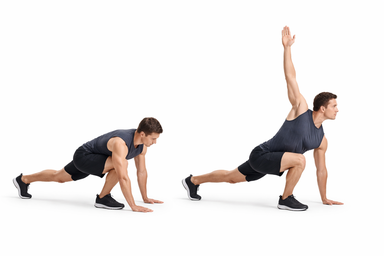
How to
A dynamic lunge stretch that opens your hips, hamstrings, and upper back as you alternate sides.
- Start in a high plank with hands under shoulders.
- Step your right foot outside your right hand.
- Drop your hips, then rotate your right arm up toward the ceiling.
- Place your hand down and step back to plank.
- Repeat on the left side, alternating sides each rep.
- Keep your front foot flat.
- Reach long through your top hand.
- Letting your front heel lift off the floor.
- Rushing the rotation without control.
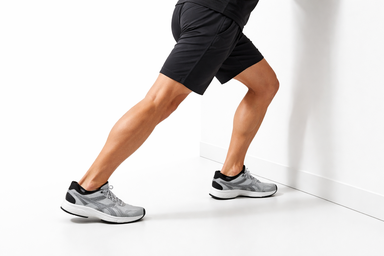
How to
A standing calf stretch that targets the back of your lower leg with a steady hold.
- Stand facing a wall and place your hands on it.
- Step one foot back and keep that heel on the floor.
- Bend your front knee until you feel a calf stretch.
- Hold and breathe slowly without bouncing.
- Finish the hold, then switch legs.
- Keep your back heel down
- Point both toes forward
- Bouncing in the stretch
- Letting the back heel lift
Circuit A
Moderate pace. Choose loads that allow clean form.
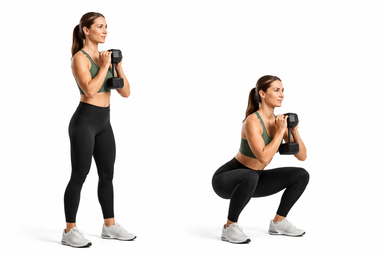
How to
A squat holding a weight at your chest. It trains your quads, glutes, and core.
- Stand with feet about shoulder-width and hold the weight at your chest.
- Brace your core and keep your chest tall.
- Bend your knees and hips to squat down under control.
- Lower until comfortable, with knees tracking over toes.
- Drive through your feet to stand back up.
- Keep your chest tall
- Knees track over toes
- Letting your knees cave inward
- Rounding your back at the bottom
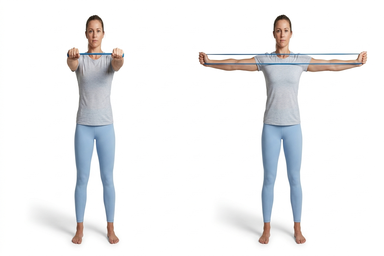
How to
A band upper-back move that trains your rear shoulders and mid-back.
- Stand tall and hold a band at chest height with both hands.
- Start with arms straight and hands shoulder-width apart.
- Pull the band apart until your hands move out to your sides.
- Pause briefly with shoulder blades squeezed together.
- Control the band back to the start and repeat.
- Keep your ribs down.
- Move from your shoulders, not your lower back.
- Shrugging your shoulders toward your ears.
- Arching your back to finish the pull.
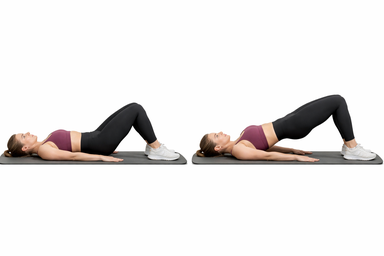
How to
A floor hip lift that trains your glutes and hamstrings with both feet planted.
- Lie on your back with knees bent and feet flat, hip-width apart.
- Brace your core and press your arms lightly into the floor.
- Drive through your heels and lift your hips until your body forms a straight line.
- Squeeze your glutes at the top, then lower with control.
- Repeat for your reps.
- Keep your ribs down
- Drive through your heels
- Arching your lower back at the top
- Pushing through your toes
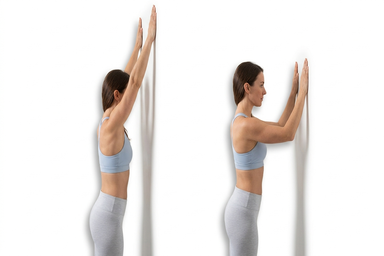
How to
A wall-based shoulder move that trains shoulder control and upper-back posture.
- Stand with your back to a wall and feet a small step out.
- Press your head, upper back, and hips gently into the wall.
- Place your arms on the wall in a goalpost shape.
- Slide your arms up the wall as far as you can control.
- Slide back down to the start and repeat.
- Keep your ribs down.
- Move slowly and stay in control.
- Arching your lower back to reach higher.
- Shrugging your shoulders toward your ears.
Circuit B
Core and balance work. Keep hips level and ribs down.
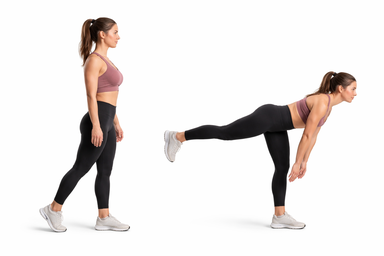
How to
A hip hinge on one leg that trains your hamstrings and glutes while challenging balance.
- Stand tall with weight on one foot and a soft bend in that knee.
- Hinge at your hips as your other leg reaches back behind you.
- Lower your torso until you feel a stretch, keeping your back flat.
- Drive through your standing foot to return to standing.
- Finish your reps, then switch legs.
- Keep your hips square
- Reach long from head to heel
- Rounding your back as you lower
- Opening your hips toward the side
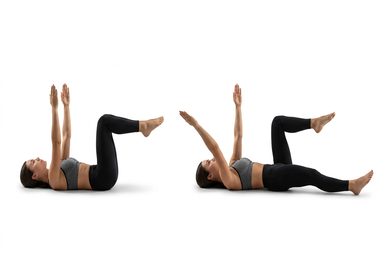
How to
A core move on your back that trains control while you move opposite arm and leg.
- Lie on your back with arms up and knees bent over hips.
- Press your lower back gently toward the floor.
- Lower one arm and the opposite leg with control.
- Return to the start, then repeat on the other side.
- Keep alternating sides for each rep.
- Move slow and stay braced
- Keep your ribs down
- Letting your lower back arch
- Rushing through the reps
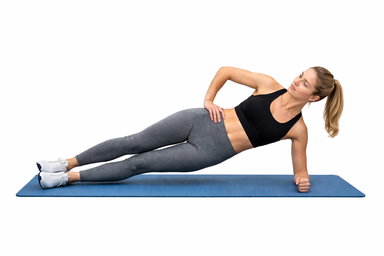
How to
A side hold that trains your obliques, hips, and shoulder stability.
- Lie on one side with your elbow under your shoulder and legs stacked.
- Lift your hips until your body forms a straight line.
- Hold the position and breathe steadily.
- Lower your hips with control.
- Finish your hold, then switch sides.
- Keep your hips stacked
- Press the floor away
- Letting your hips sag
- Rolling your chest toward the floor
Cool-Down
Downshift and stretch. Bring breathing down and restore length in commonly tight areas during growth spurts.
How to
A standing calf stretch that targets the back of your lower leg with a steady hold.
- Stand facing a wall and place your hands on it.
- Step one foot back and keep that heel on the floor.
- Bend your front knee until you feel a calf stretch.
- Hold and breathe slowly without bouncing.
- Finish the hold, then switch legs.
- Keep your back heel down
- Point both toes forward
- Bouncing in the stretch
- Letting the back heel lift
How to
A dynamic lunge stretch that opens your hips, hamstrings, and upper back as you alternate sides.
- Start in a high plank with hands under shoulders.
- Step your right foot outside your right hand.
- Drop your hips, then rotate your right arm up toward the ceiling.
- Place your hand down and step back to plank.
- Repeat on the left side, alternating sides each rep.
- Keep your front foot flat.
- Reach long through your top hand.
- Letting your front heel lift off the floor.
- Rushing the rotation without control.

Protecting Bone Plates Without Losing Gains
Goblet Squats and Glute Bridges load the hips and quads through controlled ranges, building strength without compressing vulnerable growth plates. Single-Leg Deadlifts simultaneously develop the posterior chain and proprioception — two things that lag behind bone length during rapid growth spurts.

Why Coordination Breaks Down Mid-Growth
When long bones grow faster than surrounding soft tissue, the nervous system temporarily loses its movement map — explaining the clumsiness and posture collapse common during this phase. Dead Bug and Side Plank directly retrain neuromuscular timing between the core and limbs, rebuilding the coordination that growth temporarily disrupts.

Sequencing Mobility Before Load Is Non-Negotiable
Cat-Cow and World's Greatest Stretch prime spinal segmentation and hip mobility before any loading begins — critical when tight hip flexors and thoracic stiffness are already pulling posture forward. As coordination improves, increase Single-Leg Deadlift reps before adding load to keep adaptation joint-first, strength-second.