
Clean & Minimal AI Powered Fitness Routines
Download AppDesk Mobility Reset
Beginner-friendly mobility to undo sitting stiffness in ~25 minutes.
Desk Mobility Reset
Beginner-friendly mobility to undo sitting stiffness in ~25 minutes.
Reset Warm-Up
Downshift stress and gently open the neck/upper back before deeper mobility.
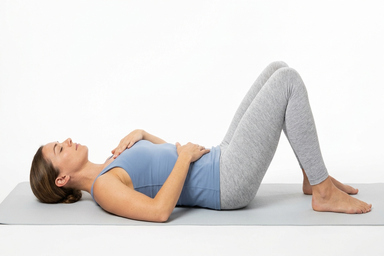
How to
A slow breathing drill that trains relaxed belly breathing and helps you control your breath.
- Lie on your back or sit tall with one hand on your belly.
- Inhale through your nose and let your belly rise.
- Exhale slowly and let your belly fall.
- Keep your chest and shoulders quiet.
- Continue for the set time with smooth breaths.
- Breathe low into your belly
- Keep your shoulders relaxed
- Shrugging your shoulders as you inhale
- Forcing the breath or holding tension
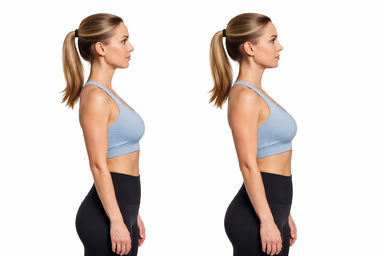
How to
A small neck position hold that trains the front of your neck and helps control head position.
- Sit or stand tall with your eyes looking straight ahead.
- Gently slide your chin straight back, like making a double chin.
- Keep your head level and your jaw relaxed.
- Hold the tuck and breathe slowly.
- Release to neutral, then repeat for the set.
- Move straight back, not down.
- Keep your shoulders relaxed.
- Tilting your head up or down.
- Forcing the tuck or clenching your jaw.
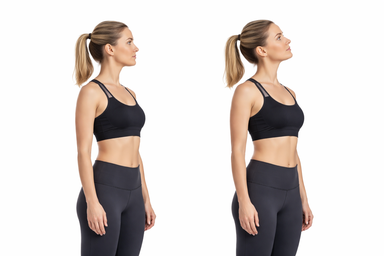
How to
A gentle side-bend stretch for the side of your neck, held still while you breathe.
- Sit or stand tall with your shoulders relaxed.
- Let your right ear move toward your right shoulder.
- Hold the stretch and breathe slowly.
- Return to center, then switch sides.
- Keep both shoulders down.
- Move slowly and gently.
- Lifting the shoulder toward your ear.
- Forcing your head into the stretch.
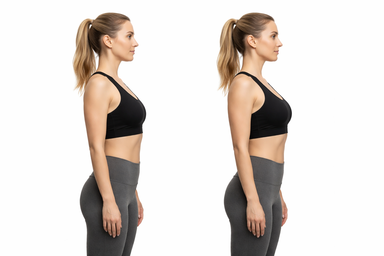
How to
A small shoulder blade squeeze that trains your upper back and shoulder control.
- Stand or sit tall with your arms relaxed by your sides.
- Pull your shoulder blades back and slightly down.
- Pause briefly while keeping your ribs stacked.
- Release with control to the start position.
- Repeat for the set.
- Keep your neck relaxed
- Move from your shoulder blades
- Shrugging your shoulders toward your ears
- Arching your lower back to create the squeeze
Main Mobility Circuit
Spine, hips, and ankles—move smoothly and keep the effort easy to moderate.
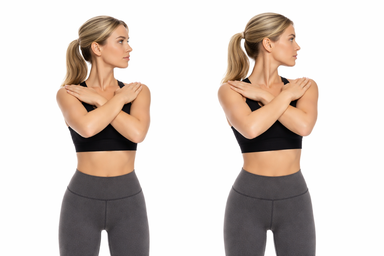
How to
A controlled upper-back rotation that trains thoracic mobility and trunk control.
- Sit or stand tall with your feet steady.
- Cross your arms over your chest or reach them forward.
- Rotate your chest to one side while your hips stay still.
- Return to center, then rotate to the other side.
- Move slowly and breathe through each turn.
- Keep your hips still
- Rotate through your upper back
- Letting your hips follow the turn
- Twisting mostly from your lower back
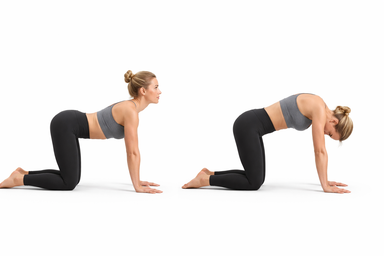
How to
A gentle spine mobility move that alternates rounding and arching your back on hands and knees.
- Start on hands and knees with wrists under shoulders and knees under hips.
- Inhale and drop your belly as you lift your chest and tailbone.
- Exhale and round your back, tucking your chin and tailbone.
- Move slowly between both positions with your breath.
- Move one vertebra at a time.
- Keep your shoulders away from your ears.
- Forcing your neck up or down.
- Rushing through the movement.
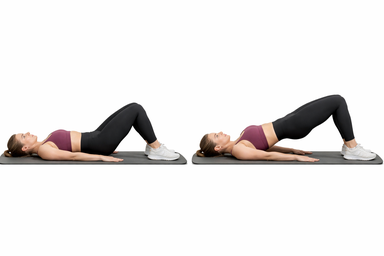
How to
A floor hip lift that trains your glutes and hamstrings with both feet planted.
- Lie on your back with knees bent and feet flat, hip-width apart.
- Brace your core and press your arms lightly into the floor.
- Drive through your heels and lift your hips until your body forms a straight line.
- Squeeze your glutes at the top, then lower with control.
- Repeat for your reps.
- Keep your ribs down
- Drive through your heels
- Arching your lower back at the top
- Pushing through your toes
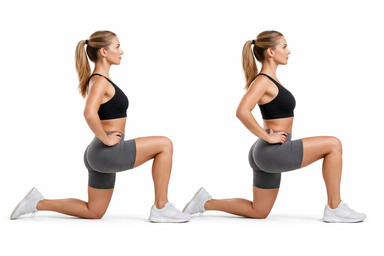
How to
A kneeling stretch for the front of your hip. It targets the hip flexors on one side at a time.
- Kneel with one foot forward and the other knee on the floor.
- Tuck your hips slightly and stand tall through your chest.
- Shift your hips forward until you feel a stretch in the back-leg hip.
- Hold and breathe slowly without bouncing.
- Release gently, then switch sides.
- Keep your ribs stacked over your hips
- Squeeze the back-leg glute lightly
- Arching your lower back to go deeper
- Bouncing in the stretch
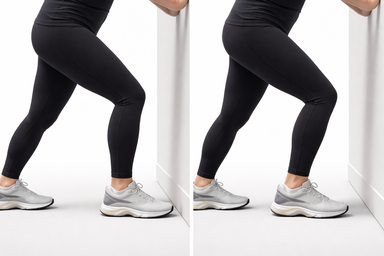
How to
A one-leg ankle mobility drill that trains dorsiflexion by moving your knee over your toes.
- Stand facing a wall with one foot flat a few inches away.
- Keep your heel down and your toes pointing forward.
- Drive your knee toward the wall over your middle toes.
- Ease back to the start and repeat smoothly.
- Finish your reps, then switch legs.
- Keep your heel planted.
- Track your knee over your toes.
- Letting your heel lift.
- Rolling your foot inward or outward.
Cool-Down
Longer holds to reduce stiffness in hips and calves after the circuit.
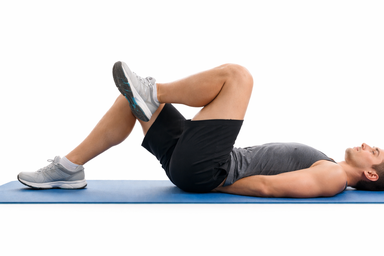
How to
A seated or lying hip stretch that targets your glutes and outer hip on one side.
- Lie on your back with both knees bent and feet flat.
- Cross one ankle over the opposite thigh, making a figure four.
- Pull the uncrossed thigh toward your chest until you feel a stretch.
- Hold and breathe, keeping your shoulders relaxed.
- Release slowly, then switch sides.
- Keep your lower back relaxed
- Flex the crossed foot
- Forcing the knee down with your hand
- Holding your breath
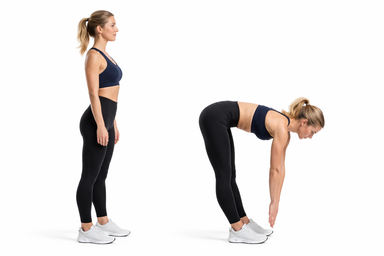
How to
A held stretch for the back of your thigh that targets your hamstrings.
- Sit tall with your target leg straight and toes up.
- Hinge at your hips and reach toward your foot.
- Stop when you feel a gentle stretch behind your thigh.
- Hold the stretch and breathe slowly.
- Release slowly, then switch sides if stretching one leg.
- Keep your back long.
- Hinge from your hips.
- Rounding your back to reach farther.
- Bouncing in the stretch.
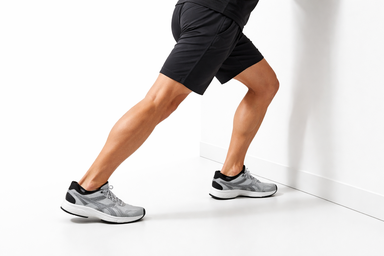
How to
A standing calf stretch that targets the back of your lower leg with a steady hold.
- Stand facing a wall and place your hands on it.
- Step one foot back and keep that heel on the floor.
- Bend your front knee until you feel a calf stretch.
- Hold and breathe slowly without bouncing.
- Finish the hold, then switch legs.
- Keep your back heel down
- Point both toes forward
- Bouncing in the stretch
- Letting the back heel lift

Reversing the Flexion Collapse Pattern
Chin tucks, scapular retractions, and thoracic rotations directly counter the forward-head, rounded-shoulder posture that hours of sitting cement into your spine. Each targets the deep cervical flexors, mid-trapezius, and thoracic facet joints — the exact structures compressed under sustained desk load.

What Prolonged Sitting Actually Does to Tissue
After 60+ minutes seated, hip flexors like the iliopsoas adaptively shorten, glute firing patterns downregulate, and ankle dorsiflexion stiffens from floor contact and inactivity. Your body isn't broken — it's optimized for the position you hold longest, and this routine systematically interrupts that adaptation.

Sequencing That Mirrors Tissue Readiness
Diaphragmatic breathing opens the routine because parasympathetic activation reduces resting muscle tone before any stretch is applied — making every subsequent movement more effective. Progress this routine by adding 2-second pauses at end-range on the hip flexor and figure four stretches as mobility improves.