
Clean & Minimal AI Powered Fitness Routines
Download AppIntermediate Obliques & Anti-Rotation
A 25-minute core session focused on obliques, anti-rotation control, and trunk stability.
Intermediate Obliques & Anti-Rotation
A 25-minute core session focused on obliques, anti-rotation control, and trunk stability.
Warm-Up
Prep the spine, hips, and deep core for controlled anti-rotation work. 5 minutes.
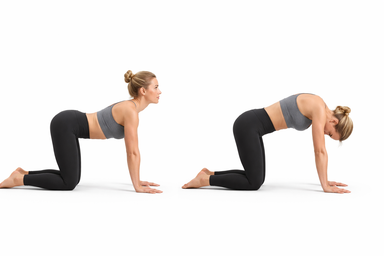
How to
A gentle spine mobility move that alternates rounding and arching your back on hands and knees.
- Start on hands and knees with wrists under shoulders and knees under hips.
- Inhale and drop your belly as you lift your chest and tailbone.
- Exhale and round your back, tucking your chin and tailbone.
- Move slowly between both positions with your breath.
- Move one vertebra at a time.
- Keep your shoulders away from your ears.
- Forcing your neck up or down.
- Rushing through the movement.
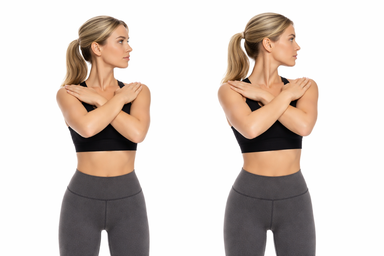
How to
A controlled upper-back rotation that trains thoracic mobility and trunk control.
- Sit or stand tall with your feet steady.
- Cross your arms over your chest or reach them forward.
- Rotate your chest to one side while your hips stay still.
- Return to center, then rotate to the other side.
- Move slowly and breathe through each turn.
- Keep your hips still
- Rotate through your upper back
- Letting your hips follow the turn
- Twisting mostly from your lower back
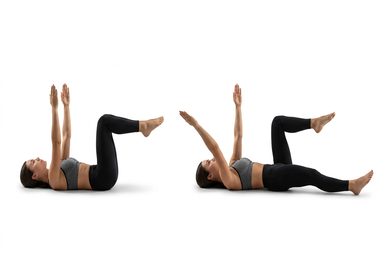
How to
A core move on your back that trains control while you move opposite arm and leg.
- Lie on your back with arms up and knees bent over hips.
- Press your lower back gently toward the floor.
- Lower one arm and the opposite leg with control.
- Return to the start, then repeat on the other side.
- Keep alternating sides for each rep.
- Move slow and stay braced
- Keep your ribs down
- Letting your lower back arch
- Rushing through the reps
Circuit A — Anti-Rotation Basics
Use a band anchored at chest height. Step away to create tension; press straight out and resist rotation.
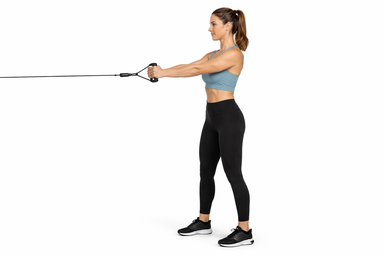
How to
An anti-rotation core hold that uses a band or cable to train your abs and trunk control.
- Stand sideways to the anchor with the handle at chest height.
- Hold it with both hands at your chest and step out to add tension.
- Press your hands straight out in front of your chest.
- Hold still and breathe, resisting the pull to rotate.
- Bring your hands back to your chest, then turn around and repeat.
- Keep your ribs down and hips square.
- Brace as if avoiding a twist.
- Letting the anchor pull your torso sideways.
- Shrugging your shoulders or locking your knees.
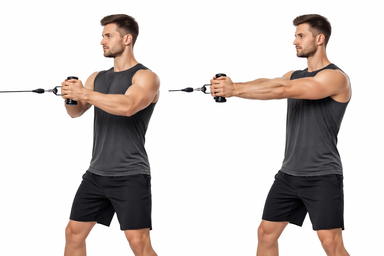
How to
An anti-rotation core hold that trains your abs and obliques to resist twisting.
- Stand sideways to an anchor with the handle at chest height.
- Hold it at your chest with both hands and step out to create tension.
- Brace your core and press your hands straight forward.
- Hold the position and breathe slowly without letting your torso turn.
- Bring your hands back to your chest with control.
- Keep your ribs down
- Stay tall and square
- Letting your torso rotate
- Shrugging your shoulders
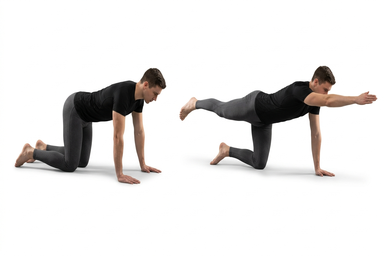
How to
A core stability move from all fours that trains your abs, back, glutes, and balance.
- Start on hands and knees with your hands under shoulders and knees under hips.
- Brace your core and keep your back flat.
- Reach one arm forward and the opposite leg back until they are straight.
- Pause briefly, then bring your hand and knee back under you.
- Repeat on the other side, alternating each rep.
- Keep your hips square
- Move slow and controlled
- Arching or sagging your lower back
- Rotating your hips as you reach
Circuit B — Loaded Stability
Choose moderate dumbbells. Move with control; avoid shifting hips side-to-side.
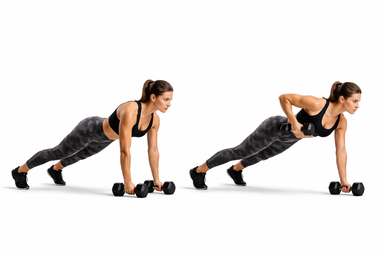
How to
A plank row that trains your back, arms, and core while resisting rotation.
- Set up in a high plank with a weight in each hand.
- Place your feet wide and brace your core.
- Row one weight toward your ribs without twisting your hips.
- Lower it with control, then row the other side.
- Keep alternating sides for all reps.
- Keep your hips square
- Pull your elbow toward your ribs
- Rocking your hips side to side
- Shrugging your shoulder as you row
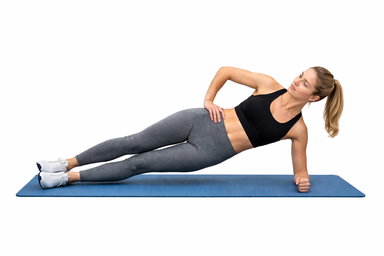
How to
A side hold that trains your obliques, hips, and shoulder stability.
- Lie on one side with your elbow under your shoulder and legs stacked.
- Lift your hips until your body forms a straight line.
- Hold the position and breathe steadily.
- Lower your hips with control.
- Finish your hold, then switch sides.
- Keep your hips stacked
- Press the floor away
- Letting your hips sag
- Rolling your chest toward the floor
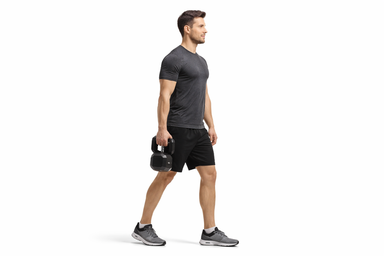
How to
A one-arm loaded carry that trains grip, core, and posture while you walk.
- Hold a weight at one side with your arm straight.
- Stand tall with ribs down and shoulders level.
- Walk forward with slow, controlled steps.
- Keep the weight off your thigh as you move.
- Finish the distance or time, then switch sides.
- Stay tall and level
- Brace like you expect a bump
- Leaning away from the weight
- Letting the weight swing or rest on your leg
Cool-Down
Downshift breathing and gently open the trunk and lats. 2–3 minutes.
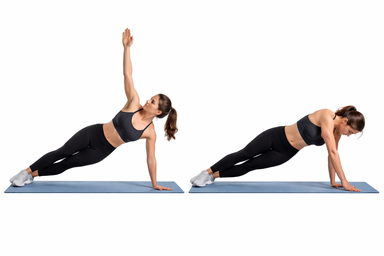
How to
A side plank variation that trains your obliques, shoulders, and core control with a reach-through position.
- Set up on one forearm in a side plank, feet stacked or staggered.
- Lift your hips and make a straight line from head to heels.
- Reach your top arm under your ribs and hold your body steady.
- Breathe slowly while keeping your hips lifted.
- Hold for time, then switch sides.
- Keep your hips stacked
- Press the floor away
- Letting your hips sag
- Rolling your chest toward the floor
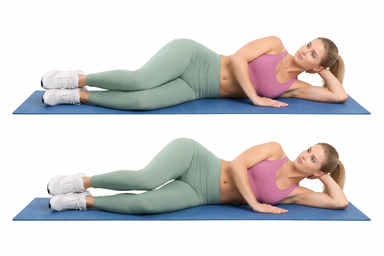
How to
A side-lying hip rotation move that trains hip control and glutes.
- Lie on one side with hips and knees bent about 90 degrees.
- Stack your hips and keep your lower leg on the floor.
- Rotate your top leg, alternating lifting the knee and then the foot.
- Move slowly and keep the motion in your hip.
- Complete one rep, then roll to the other side and repeat.
- Keep your hips stacked
- Move with control
- Rolling your hips backward
- Swinging the leg instead of rotating the hip
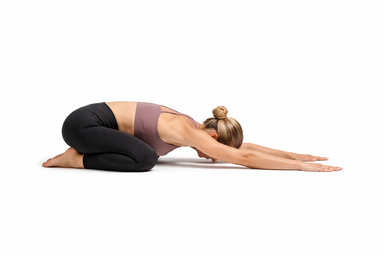
How to
A kneeling rest pose that gently stretches your back, hips, and shoulders.
- Kneel on the floor with your big toes together and knees apart.
- Sit your hips back toward your heels.
- Fold forward and reach your arms in front of you.
- Rest your forehead down and let your chest sink between your thighs.
- Hold the position and breathe slowly.
- Relax your shoulders
- Breathe into your back
- Forcing your hips down
- Holding your breath

Rotational Force vs. Anti-Rotation Tension
The Pallof Press and Renegade Row train your obliques isometrically against rotational load — the exact demand that protects your lumbar spine under real-world stress. Bird Dog and Dead Bug reinforce this by demanding contralateral limb control, forcing deep transverse abdominis and quadratus lumborum co-activation without spinal flexion.

Why Obliques Fail Under Fatigue
The obliques don't just rotate — they resist rotation, brace during asymmetric loading, and transfer force between your upper and lower body. The Suitcase Carry exploits this by creating a lateral offset load that exposes any weakness in lateral trunk stiffness, the exact failure point most intermediate trainees overlook.

Stiffness Before Strength, Always
Cat-Cow and Thoracic Rotation prime segmental spinal mobility before your stabilizers are asked to lock that range down — a critical sequencing principle called mobility-to-stability patterning. Finish your Pallof Press sets by pausing 3 seconds at full extension to increase time-under-tension and accelerate neuromuscular anti-rotation adaptation.