
Clean & Minimal AI Powered Fitness Routines
Download AppIntermediate Patellofemoral Pain Routine
Low-impact strength + control work to support the kneecap and reduce anterior knee pain in ~25 minutes.
Intermediate Patellofemoral Pain Routine
Low-impact strength + control work to support the kneecap and reduce anterior knee pain in ~25 minutes.
Warm-Up
Increase blood flow and gently prep hips, quads, and knees without impact. 5 minutes.
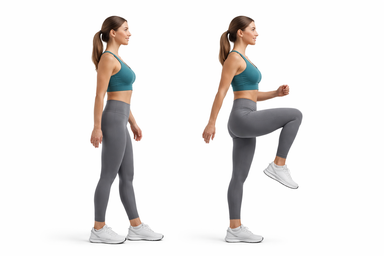
How to
A standing knee-lift move that warms up your hips, legs, and core.
- Stand tall with your feet hip-width apart and arms at your sides.
- Lift one knee toward hip height as the opposite arm swings forward.
- Lower that foot under control.
- Repeat on the other side and keep alternating.
- Move at a steady pace and stay tall.
- Keep your chest up
- Land softly each step
- Leaning back as your knee lifts
- Stomping your feet down
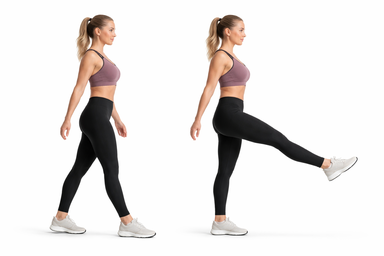
How to
A dynamic stretch that sweeps toward your front foot to warm up your hamstrings and calves.
- Stand tall with one heel slightly forward and toes lifted.
- Hinge at your hips and sweep both hands down toward your foot.
- Keep your front leg mostly straight as you reach.
- Return to standing and repeat for your reps.
- Switch legs and repeat on the other side.
- Keep your back long
- Move with control
- Rounding your back to reach lower
- Locking your knee hard
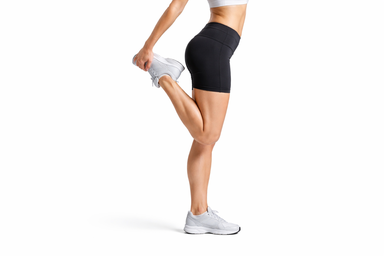
How to
A standing thigh stretch that targets the front of your hip and quad on one leg.
- Stand tall and hold a wall or chair for balance if needed.
- Bend one knee and hold your ankle or foot behind you.
- Keep your knees close and gently draw your heel toward your glute.
- Hold the stretch and breathe slowly.
- Release with control, then switch legs.
- Stand tall through your chest
- Keep your knees close
- Arching your lower back
- Pulling the knee out to the side
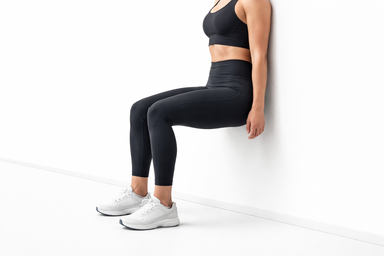
How to
An isometric squat hold against a wall that trains your quads, glutes, and endurance.
- Stand with your back against a wall and feet hip-width apart.
- Walk your feet forward and slide down until your thighs are near parallel.
- Keep your back on the wall and knees over your ankles.
- Hold the position and breathe steadily.
- Stand up by pressing through your feet when finished.
- Keep your chest tall
- Press your back into the wall
- Letting your knees cave inward
- Holding your breath
Circuit A
Focus on glute activation and hip control. Keep pelvis steady. — Hips and glutes.
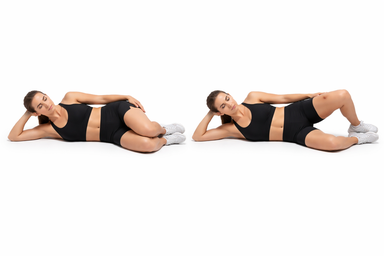
How to
A side-lying hip exercise that trains your glutes and outer hips.
- Lie on your side with knees bent and feet stacked.
- Brace your core and keep your hips stacked.
- Lift your top knee while keeping your feet together.
- Lower your knee with control to the start.
- Finish your reps, then switch sides.
- Keep your hips stacked
- Move slow and controlled
- Rolling your hips back as you lift
- Letting your feet separate
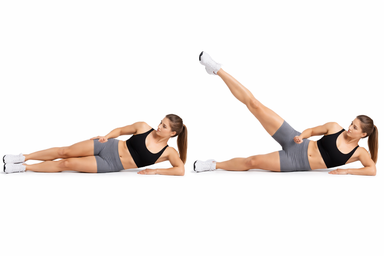
How to
A side-lying leg lift that trains your outer hips and glutes.
- Lie on your side with your legs straight and hips stacked.
- Brace your core and point your top foot straight ahead.
- Lift your top leg up without rolling your hips back.
- Lower with control to the start position.
- Finish your reps, then switch sides.
- Keep your hips stacked.
- Lead with your heel.
- Rolling your top hip back as you lift.
- Swinging the leg instead of controlling it.
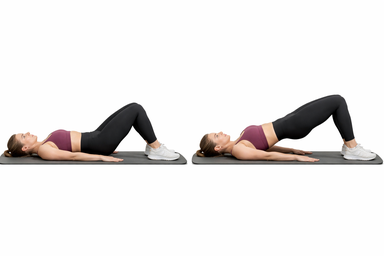
How to
A floor hip lift that trains your glutes and hamstrings with both feet planted.
- Lie on your back with knees bent and feet flat, hip-width apart.
- Brace your core and press your arms lightly into the floor.
- Drive through your heels and lift your hips until your body forms a straight line.
- Squeeze your glutes at the top, then lower with control.
- Repeat for your reps.
- Keep your ribs down
- Drive through your heels
- Arching your lower back at the top
- Pushing through your toes
Circuit B
Stay in a pain-free range. Prioritize alignment and slow lowering. — Knee-friendly quads.
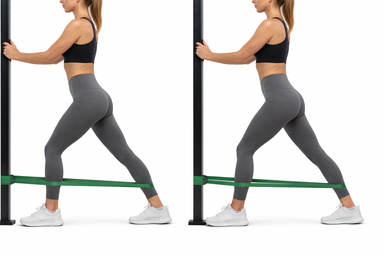
How to
A knee extension drill that trains your quads and control near a straight knee.
- Anchor a band behind one knee and step back to add light tension.
- Stand tall with that foot flat and your knee slightly bent.
- Straighten your knee by tightening your thigh.
- Pause briefly, then bend your knee with control.
- Finish your reps, then switch legs.
- Keep your foot flat
- Move from the knee, not the hips
- Letting your heel lift off the floor
- Snapping the knee back too fast
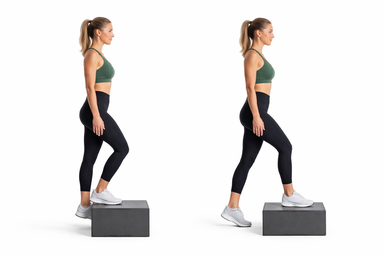
How to
A controlled step from a raised surface that trains your quads, glutes, and balance.
- Stand on a step with one foot near the edge.
- Let the other foot hover off the front of the step.
- Bend your standing knee and lower your free heel toward the floor.
- Tap lightly, then press through your standing foot to return to the top.
- Finish your reps, then switch legs.
- Keep your knee tracking over your toes.
- Move slowly and stay tall.
- Dropping your free foot hard to the floor.
- Letting your standing knee cave inward.
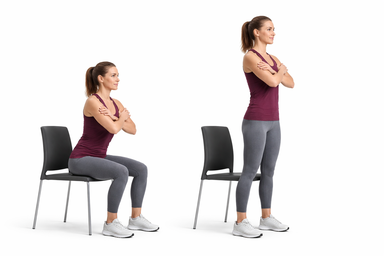
How to
A chair-based squat pattern that trains your thighs and glutes for standing strength.
- Sit near the front of a chair with feet flat and hip-width apart.
- Lean slightly forward and brace your core.
- Press through both feet and stand tall.
- Push your hips back and sit down with control.
- Keep your knees tracking over your toes
- Stand tall at the top
- Letting your knees cave inward
- Dropping hard onto the chair
Finisher
Keep it steady; stop short of knee pain. — Calves and isometric.
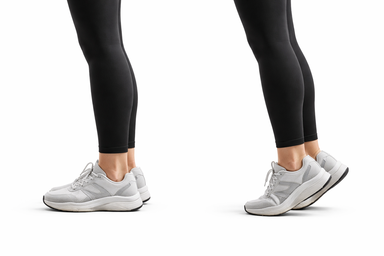
How to
A standing lower-leg move that trains your calves by lifting and lowering your heels.
- Stand tall with both feet hip-width apart.
- Press through the balls of your feet and lift your heels.
- Pause briefly at the top with control.
- Lower your heels slowly back to the floor.
- Repeat for your reps.
- Keep your ankles tracking straight.
- Move up and down with control.
- Rocking onto the outside edges of your feet.
- Bouncing at the bottom of each rep.
How to
An isometric squat hold against a wall that trains your quads, glutes, and endurance.
- Stand with your back against a wall and feet hip-width apart.
- Walk your feet forward and slide down until your thighs are near parallel.
- Keep your back on the wall and knees over your ankles.
- Hold the position and breathe steadily.
- Stand up by pressing through your feet when finished.
- Keep your chest tall
- Press your back into the wall
- Letting your knees cave inward
- Holding your breath
Cool-Down
Downshift and restore comfort in hips and thighs. 3 minutes.
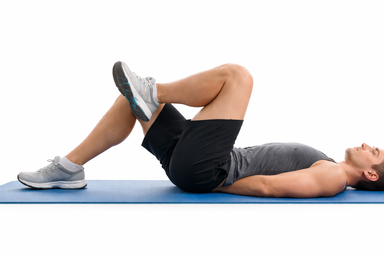
How to
A seated or lying hip stretch that targets your glutes and outer hip on one side.
- Lie on your back with both knees bent and feet flat.
- Cross one ankle over the opposite thigh, making a figure four.
- Pull the uncrossed thigh toward your chest until you feel a stretch.
- Hold and breathe, keeping your shoulders relaxed.
- Release slowly, then switch sides.
- Keep your lower back relaxed
- Flex the crossed foot
- Forcing the knee down with your hand
- Holding your breath
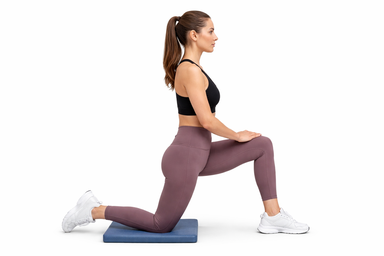
How to
A kneeling stretch for the front of your hip. It targets the hip flexors on one side at a time.
- Kneel with one knee down and the other foot in front.
- Tuck your pelvis slightly and keep your chest tall.
- Shift your hips forward until you feel a gentle stretch.
- Hold the position and breathe steadily.
- Finish the hold, then switch sides.
- Squeeze the glute on the back leg
- Keep your ribs stacked over your hips
- Arching your lower back to get deeper
- Letting the front knee cave inward

VMO & Hip Control: The PFP Fix
Terminal knee extension and step-downs directly target the vastus medialis oblique, the quad fiber most responsible for pulling the kneecap into proper tracking. Clamshells and hip abduction strengthen the glute medius, correcting the femoral internal rotation that forces the patella laterally under load.

Why PFP Isn't Actually a Knee Problem
Patellofemoral pain is a contact-stress condition — the kneecap compresses against the femur when hip weakness allows the thigh to collapse inward. The glute bridge and sit-to-stand train the posterior chain to absorb force that would otherwise concentrate at the patellofemoral joint during every step and stair.

Pain-Free Range as Your Training Variable
The wall sit's "pain-free range" instruction reflects the principle of load management — building quad endurance and joint tolerance without provoking the compression angles that aggravate the cartilage. Progress this routine by gradually increasing wall sit depth and step-down step height as symptoms allow, using pain as your periodization signal.