
Clean & Minimal AI Powered Fitness Routines
Download App25-Minute Yard Work Prep
A 25-minute warm-up + strength circuit to help you lift, carry, rake, and shovel with better stamina and form.
25-Minute Yard Work Prep
A 25-minute warm-up + strength circuit to help you lift, carry, rake, and shovel with better stamina and form.
Warm-Up
Raise your heart rate and mobilize hips, spine, and shoulders before lifting/carrying. (5 minutes)
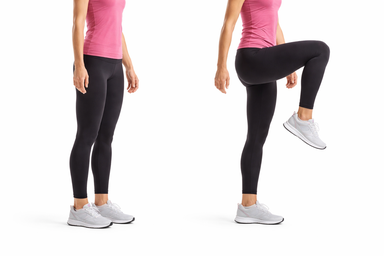
How to
A low-impact cardio move that warms up your legs and hips while raising your heart rate.
- Stand tall with your feet hip-width apart and arms at your sides.
- Lift one knee to hip height as you swing the opposite arm forward.
- Lower that foot, then lift the other knee and switch arms.
- Keep alternating sides at a steady pace.
- Slow down and plant both feet to finish.
- Stand tall with your chest up
- Land softly under your hips
- Leaning back as you lift your knees
- Stomping your feet on each step
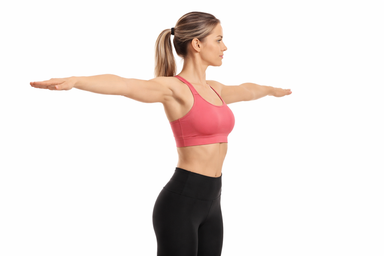
How to
A simple shoulder warm-up that moves both arms in circles and trains shoulder control.
- Stand tall with your feet about hip-width apart.
- Raise both arms out to your sides at shoulder height.
- Make small, controlled circles with both arms.
- Keep circling for the set time, then reverse direction if told.
- Lower your arms to finish.
- Keep your ribs down
- Move smoothly, not fast
- Shrugging your shoulders toward your ears
- Arching your back to keep the arms up
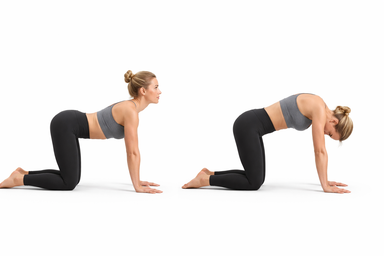
How to
A gentle spine mobility move that alternates rounding and arching your back on hands and knees.
- Start on hands and knees with wrists under shoulders and knees under hips.
- Inhale and drop your belly as you lift your chest and tailbone.
- Exhale and round your back, tucking your chin and tailbone.
- Move slowly between both positions with your breath.
- Move one vertebra at a time.
- Keep your shoulders away from your ears.
- Forcing your neck up or down.
- Rushing through the movement.
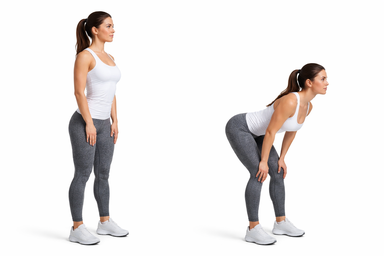
How to
A standing hip hinge that trains your glutes and hamstrings and builds the pattern for deadlifts.
- Stand with feet hip-width apart and knees slightly bent.
- Brace your core and keep your chest open.
- Push your hips back as your torso tips forward.
- Lower until you feel your hamstrings, keeping your back flat.
- Drive your hips forward to stand tall again.
- Move from your hips, not your waist.
- Keep your back long.
- Squatting instead of hinging your hips back.
- Rounding your back as you lower.
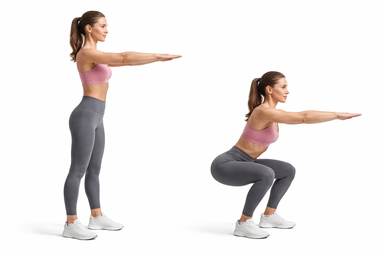
How to
A bodyweight lower-body move that trains your quads, glutes, and hips.
- Stand with feet about shoulder-width apart and toes slightly out.
- Brace your core and keep your chest tall.
- Bend your knees and hips to lower into a squat.
- Push through your feet to stand back up.
- Keep your knees tracking over your toes
- Keep your chest up
- Letting your knees cave in
- Rounding your back as you lower
Circuit A
Move station-to-station with short rests. Choose moderate loads you can control with good posture.
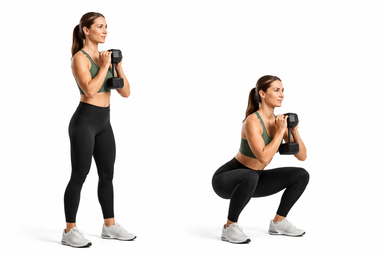
How to
A squat holding a weight at your chest. It trains your quads, glutes, and core.
- Stand with feet about shoulder-width and hold the weight at your chest.
- Brace your core and keep your chest tall.
- Bend your knees and hips to squat down under control.
- Lower until comfortable, with knees tracking over toes.
- Drive through your feet to stand back up.
- Keep your chest tall
- Knees track over toes
- Letting your knees cave inward
- Rounding your back at the bottom
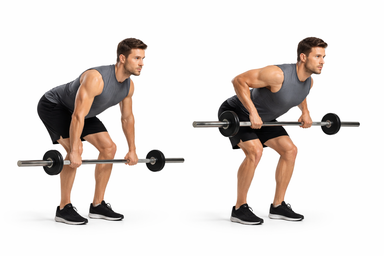
How to
A bent-over pulling move that trains your upper back, lats, and arms.
- Stand with feet hip-width and hold the weights in front of your thighs.
- Hinge at your hips and keep your back long, with arms hanging down.
- Pull the weights toward your ribs, squeezing your shoulder blades back.
- Lower the weights with control until your arms are straight.
- Keep your chest proud.
- Pull elbows back, not out.
- Rounding your back as you row.
- Jerking the weights with your body.
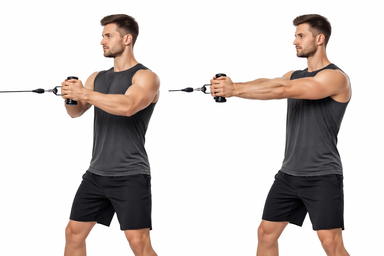
How to
An anti-rotation core hold that trains your abs and obliques to resist twisting.
- Stand sideways to an anchor with the handle at chest height.
- Hold it at your chest with both hands and step out to create tension.
- Brace your core and press your hands straight forward.
- Hold the position and breathe slowly without letting your torso turn.
- Bring your hands back to your chest with control.
- Keep your ribs down
- Stay tall and square
- Letting your torso rotate
- Shrugging your shoulders
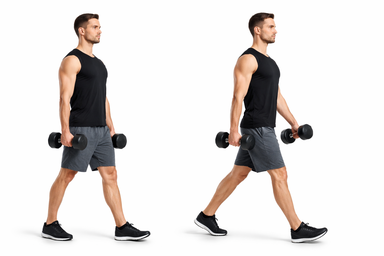
How to
A loaded walk that trains your grip, core, shoulders, and posture.
- Stand tall with a weight in each hand at your sides.
- Brace your core and pull your shoulders down and back.
- Walk forward with short, controlled steps.
- Keep the weights steady and your torso upright.
- Set the weights down with control when finished.
- Stand tall as you walk
- Keep the weights by your sides
- Leaning back or to one side
- Letting the weights swing
Circuit B
Prioritize hinge mechanics and leg strength for shoveling, lifting bags, and getting up/down from the ground.
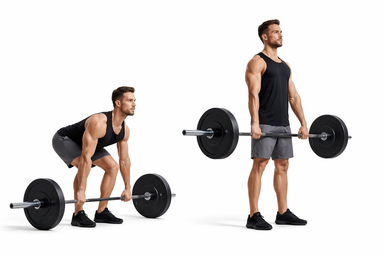
How to
A hip hinge that trains your glutes, hamstrings, back, and grip.
- Stand with feet hip-width and the weight over your midfoot.
- Hinge at your hips and grip the weight with a flat back.
- Push the floor away and stand tall, keeping the weight close.
- Hinge back and lower the weight under control to the floor.
- Keep your back flat
- Drive through your whole foot
- Rounding your back as you lift
- Letting the weight drift away from you
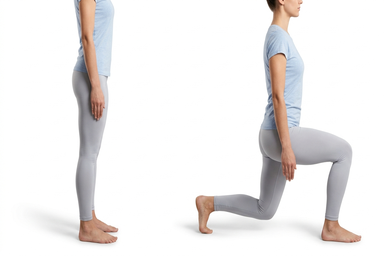
How to
A backward-stepping lunge that trains your quads, glutes, and balance.
- Stand tall with your feet hip-width apart.
- Step one foot back and lower until both knees bend.
- Push through your front foot to stand back up.
- Finish your reps, then switch legs.
- Keep your chest tall.
- Track your front knee over your toes.
- Letting your front knee cave inward.
- Pushing off the back foot to stand.
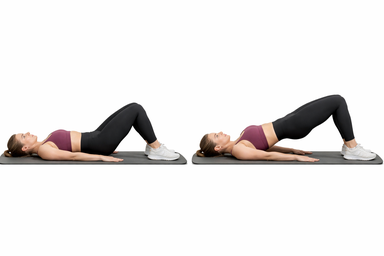
How to
A floor hip lift that trains your glutes and hamstrings with both feet planted.
- Lie on your back with knees bent and feet flat, hip-width apart.
- Brace your core and press your arms lightly into the floor.
- Drive through your heels and lift your hips until your body forms a straight line.
- Squeeze your glutes at the top, then lower with control.
- Repeat for your reps.
- Keep your ribs down
- Drive through your heels
- Arching your lower back at the top
- Pushing through your toes
Cool-Down
Downshift your breathing and loosen hips, hamstrings, and upper back after work-like effort. (3 minutes)
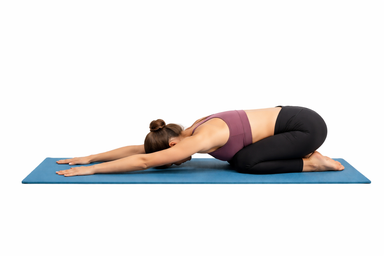
How to
A kneeling rest stretch that relaxes your back, hips, and shoulders while you breathe.
- Kneel with your big toes together and knees apart.
- Sit your hips back toward your heels.
- Reach your arms forward and lower your chest to the floor.
- Rest your forehead down and relax your neck.
- Hold the stretch and breathe slowly.
- Let your hips sink back
- Keep your neck relaxed
- Forcing your hips down
- Holding your breath
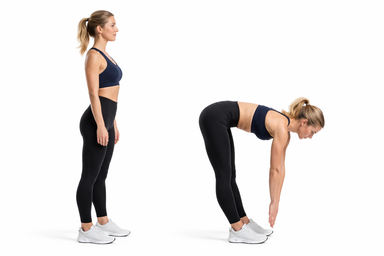
How to
A held stretch for the back of your thigh that targets your hamstrings.
- Sit tall with your target leg straight and toes up.
- Hinge at your hips and reach toward your foot.
- Stop when you feel a gentle stretch behind your thigh.
- Hold the stretch and breathe slowly.
- Release slowly, then switch sides if stretching one leg.
- Keep your back long.
- Hinge from your hips.
- Rounding your back to reach farther.
- Bouncing in the stretch.
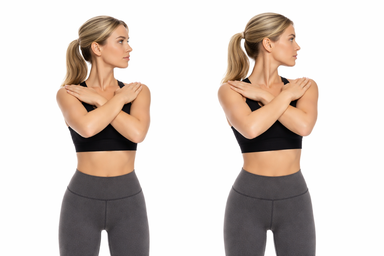
How to
A controlled upper-back rotation that trains thoracic mobility and trunk control.
- Sit or stand tall with your feet steady.
- Cross your arms over your chest or reach them forward.
- Rotate your chest to one side while your hips stay still.
- Return to center, then rotate to the other side.
- Move slowly and breathe through each turn.
- Keep your hips still
- Rotate through your upper back
- Letting your hips follow the turn
- Twisting mostly from your lower back

Hip Hinge Mechanics Power Every Shovel Stroke
Deadlifts, goblet squats, and glute bridges train the posterior chain—glutes, hamstrings, and erector spinae—to absorb and generate force through the exact hip hinge pattern used when shoveling and lifting bags of mulch. The farmer carry directly loads your grip, traps, and core stabilizers against the asymmetrical demands of hauling equipment across uneven terrain.

Why Yard Work Breaks Bodies It Shouldn't
Raking, shoveling, and carrying combine prolonged spinal flexion with repetitive rotational loading—a pattern that fatigues the lumbar erectors and thoracic rotators faster than most people expect. The real injury risk isn't heavy lifting; it's cumulative load on a cold, unprepared spine during the first 20 minutes before the body warms up.

Rotation Prep Is the Overlooked Multiplier
Thoracic rotation and the Pallof press train your spine to resist unwanted twisting while allowing controlled rotation—exactly what separates efficient raking mechanics from lower-back strain over a two-hour session. Start the Pallof press at a light resistance and focus on bracing your core before initiating movement; that sequence transfers directly to protecting your lumbar spine mid-task.