
Clean & Minimal AI Powered Fitness Routines
Download AppTattoo's Assisted Pull-Up Strength
Back-friendly upper-body strength focused on assisted pull-ups, posture, and stability for Tattoo.
Tattoo's Assisted Pull-Up Strength
Back-friendly upper-body strength focused on assisted pull-ups, posture, and stability for Tattoo.
Warm-Up (Pull + Posture)
Prep shoulders/scaps and brace for pulling without irritating the low back.
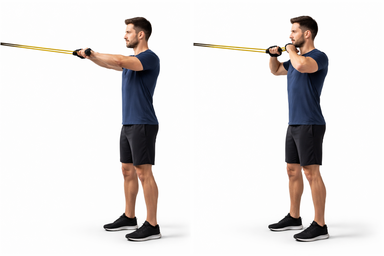
How to
A band pull to your face that trains your upper back, rear shoulders, and shoulder control.
- Anchor the band at face height and hold one end in each hand.
- Step back with arms straight and palms facing down or in.
- Pull the band toward your face, leading with your elbows.
- Squeeze your shoulder blades, then slowly extend your arms.
- Repeat for all reps with steady control.
- Keep your ribs down
- Pull elbows high and wide
- Shrugging your shoulders toward your ears
- Leaning back to move the band
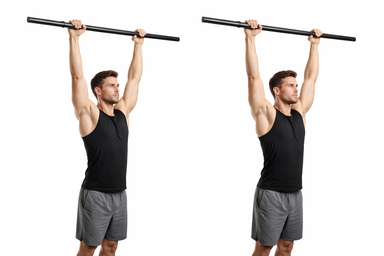
How to
A small pull-up prep that trains shoulder blade control and upper back strength from a dead hang.
- Hang from a bar with hands overhand and arms straight.
- Brace your body and let your shoulders rise toward your ears.
- Pull your shoulder blades down to lift your chest slightly.
- Keep your elbows straight as you pause at the top.
- Lower under control back to the hang and repeat.
- Move from your shoulder blades.
- Keep your ribs down.
- Bending your elbows to turn it into a pull-up.
- Swinging your body between reps.
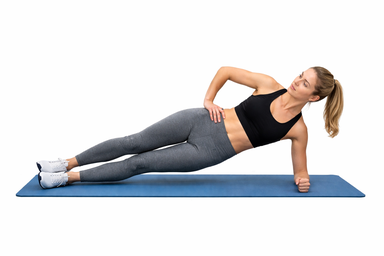
How to
A side hold that trains your obliques, hips, and shoulder stability.
- Lie on one side with your elbow under your shoulder and legs stacked.
- Lift your hips until your body forms a straight line.
- Hold the position and breathe steadily.
- Lower your hips with control.
- Finish your hold, then switch sides.
- Keep your hips stacked
- Press the floor away
- Letting your hips sag
- Rolling your chest toward the floor
Set A — Assisted Pull-Up + Brace
Use enough assistance to keep full range and a controlled lower.
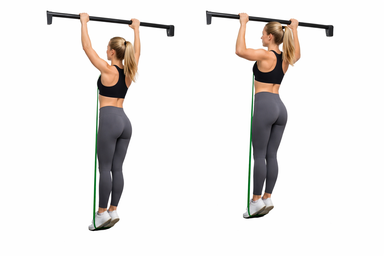
How to
A supported vertical pull that trains your back, biceps, and grip with less body weight.
- Set the assistance and grip the bar slightly wider than shoulders.
- Start hanging with arms straight and shoulders active.
- Pull your chest toward the bar, driving elbows down.
- Lower with control until your arms are straight again.
- Repeat for your reps.
- Keep your ribs down
- Lead with your chest
- Kicking or swinging to get up
- Shrugging your shoulders toward your ears
How to
A side hold that trains your obliques, hips, and shoulder stability.
- Lie on one side with your elbow under your shoulder and legs stacked.
- Lift your hips until your body forms a straight line.
- Hold the position and breathe steadily.
- Lower your hips with control.
- Finish your hold, then switch sides.
- Keep your hips stacked
- Press the floor away
- Letting your hips sag
- Rolling your chest toward the floor
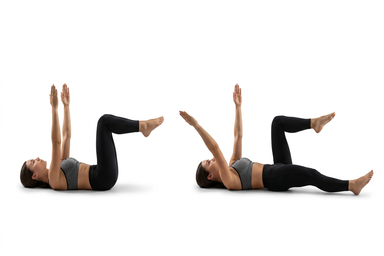
How to
A core move on your back that trains control while you move opposite arm and leg.
- Lie on your back with arms up and knees bent over hips.
- Press your lower back gently toward the floor.
- Lower one arm and the opposite leg with control.
- Return to the start, then repeat on the other side.
- Keep alternating sides for each rep.
- Move slow and stay braced
- Keep your ribs down
- Letting your lower back arch
- Rushing through the reps
Set B — Row + Rear Delts
Keep neck long; pull elbows toward ribs; pause 1 second at the top of each rep.
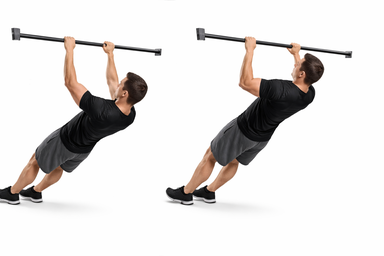
How to
A bodyweight row done under a bar that trains your upper back, lats, and biceps.
- Set a bar at waist height and lie under it.
- Grip the bar with straight arms and your body in a straight line.
- Pull your chest toward the bar.
- Pause briefly, then lower with control.
- Repeat for reps.
- Keep your body straight
- Pull elbows down and back
- Letting your hips sag
- Shrugging your shoulders toward your ears
How to
A band pull to your face that trains your upper back, rear shoulders, and shoulder control.
- Anchor the band at face height and hold one end in each hand.
- Step back with arms straight and palms facing down or in.
- Pull the band toward your face, leading with your elbows.
- Squeeze your shoulder blades, then slowly extend your arms.
- Repeat for all reps with steady control.
- Keep your ribs down
- Pull elbows high and wide
- Shrugging your shoulders toward your ears
- Leaning back to move the band
Set C — Push Balance (Back-Friendly)
Press with ribs down; elbows about 45° from the body; no back arching.
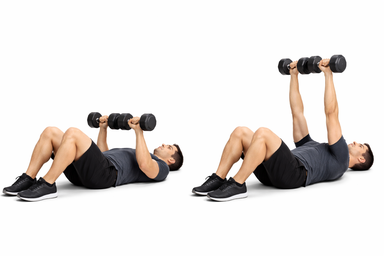
How to
A floor chest press with dumbbells that trains your chest, shoulders, and triceps.
- Lie on your back with knees bent and a dumbbell in each hand.
- Set upper arms on the floor, elbows about 45 degrees from your body.
- Press the dumbbells up until your arms are straight over your chest.
- Lower with control until your upper arms lightly touch the floor.
- Repeat for reps.
- Keep wrists stacked over elbows.
- Press both dumbbells evenly.
- Bouncing your arms off the floor.
- Letting elbows flare straight out.
Cool-Down
Downshift and open lats/upper back after pulling volume.
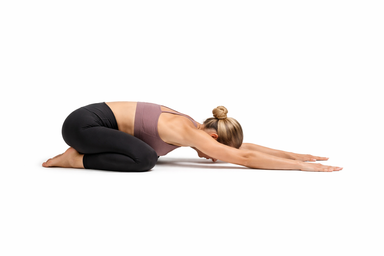
How to
A kneeling rest pose that gently stretches your back, hips, and shoulders.
- Kneel on the floor with your big toes together and knees apart.
- Sit your hips back toward your heels.
- Fold forward and reach your arms in front of you.
- Rest your forehead down and let your chest sink between your thighs.
- Hold the position and breathe slowly.
- Relax your shoulders
- Breathe into your back
- Forcing your hips down
- Holding your breath

Scapular Control Before Pulling Power
Scapular pull-ups prime the lower trapezius and serratus anterior before loading the lats in assisted pull-ups — preventing the shoulder impingement pattern that derails most beginners. Inverted rows and band face pulls then reinforce horizontal pulling, balancing the glenohumeral joint against the vertical pull demand.

Why Assisted Pull-Ups Demand Scapular Stability
Pull-up strength isn't just a lat problem — it's a scapular upward rotation problem. Without the lower traps firing correctly, the shoulder blade tips forward under load, compressing the rotator cuff and stalling progress. This is exactly why your warm-up earns its place before a single assisted rep is pulled.

Band Assistance as a Periodization Tool
Reducing band resistance by one level every 2–3 weeks applies progressive overload without changing the movement pattern, preserving the neuromuscular groove your nervous system is building. Dead bug and side plank anchor your anterior core, ensuring force transfers cleanly from grip to lat without lumbar compensation — track your band level each session.