
Clean & Minimal AI Powered Fitness Routines
Download AppIntermediate Rheumatoid Arthritis Mobility and Strength
Low-impact mobility and joint-friendly strength to support RA on a good-to-moderate day.
Intermediate Rheumatoid Arthritis Mobility and Strength
Low-impact mobility and joint-friendly strength to support RA on a good-to-moderate day.
Warm-Up
Joint prep with gentle range-of-motion and breathing to reduce stiffness before strengthening.
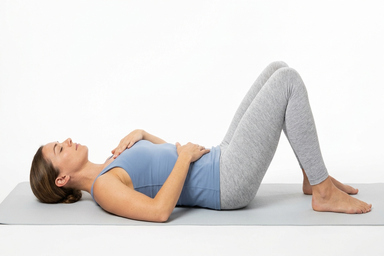
How to
A slow breathing drill that trains relaxed belly breathing and helps you control your breath.
- Lie on your back or sit tall with one hand on your belly.
- Inhale through your nose and let your belly rise.
- Exhale slowly and let your belly fall.
- Keep your chest and shoulders quiet.
- Continue for the set time with smooth breaths.
- Breathe low into your belly
- Keep your shoulders relaxed
- Shrugging your shoulders as you inhale
- Forcing the breath or holding tension
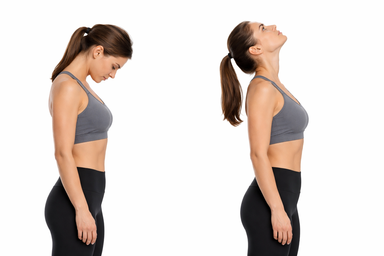
How to
A gentle neck mobility drill that moves your head through flexion, rotation, and side bends.
- Sit or stand tall with your shoulders relaxed.
- Lower your chin toward your chest, then return to center.
- Turn your head slowly left and right, returning to center each time.
- Tilt one ear toward your shoulder, then repeat on the other side.
- Move smoothly and breathe as you continue for the set time.
- Move slowly and stay relaxed
- Keep your shoulders down
- Forcing past a comfortable range
- Shrugging your shoulders as you move
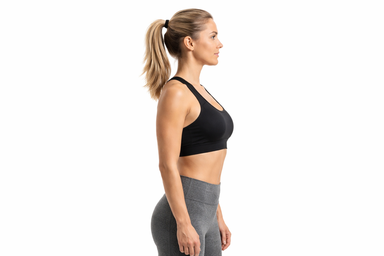
How to
A simple shoulder mobility move that warms up your upper back, neck, and shoulders.
- Stand tall with your arms relaxed at your sides.
- Lift both shoulders up toward your ears.
- Roll them back and down in a smooth circle.
- Repeat for reps, then reverse the direction if needed.
- Move slowly and smoothly.
- Keep your neck relaxed.
- Shrugging with tension in your neck.
- Rushing through small, jerky circles.
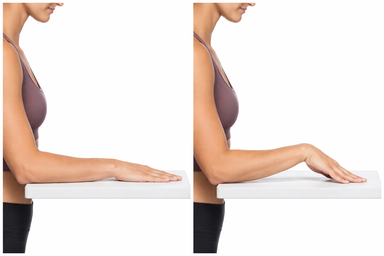
How to
A gentle wrist mobility drill that moves both wrists through flexion, extension, and circles.
- Sit or stand tall with your arms in front of you.
- Open your hands and slowly bend both wrists up and down.
- Move both wrists side to side with control.
- Make slow circles in one direction, then the other.
- Keep the motion smooth for the full set.
- Move slowly and stay relaxed.
- Use a pain-free range.
- Forcing the wrists past comfort.
- Shrugging your shoulders as you move.
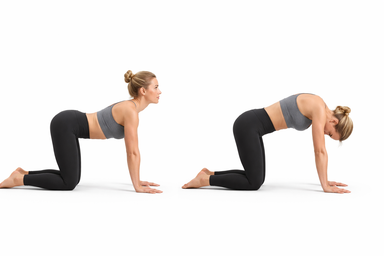
How to
A gentle spine mobility move that alternates rounding and arching your back on hands and knees.
- Start on hands and knees with wrists under shoulders and knees under hips.
- Inhale and drop your belly as you lift your chest and tailbone.
- Exhale and round your back, tucking your chin and tailbone.
- Move slowly between both positions with your breath.
- Move one vertebra at a time.
- Keep your shoulders away from your ears.
- Forcing your neck up or down.
- Rushing through the movement.
Circuit A
Controlled reps. Use the chair for support as needed.
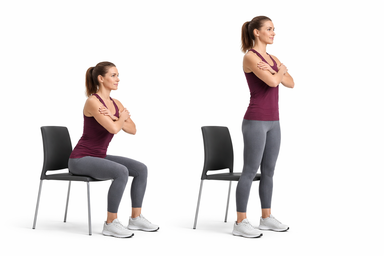
How to
A chair-based squat pattern that trains your thighs and glutes for standing strength.
- Sit near the front of a chair with feet flat and hip-width apart.
- Lean slightly forward and brace your core.
- Press through both feet and stand tall.
- Push your hips back and sit down with control.
- Keep your knees tracking over your toes
- Stand tall at the top
- Letting your knees cave inward
- Dropping hard onto the chair
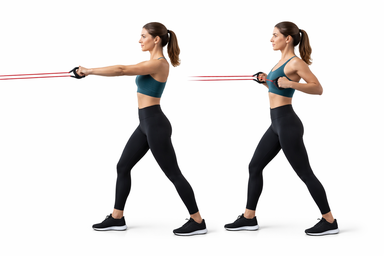
How to
A band pulling exercise that trains your upper back, shoulders, and arms.
- Anchor the band at chest height and hold one end in each hand.
- Step back until the band is tight, with arms straight.
- Pull your elbows back and squeeze your shoulder blades.
- Pause briefly, then straighten your arms with control.
- Repeat for all reps.
- Keep your chest tall.
- Pull elbows close to your sides.
- Shrugging your shoulders as you pull.
- Leaning back to move the band.
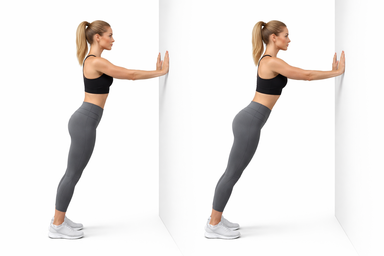
How to
A standing push-up against a wall that trains your chest, shoulders, and triceps.
- Stand facing a wall and place your hands at chest height.
- Step your feet back so your body forms a straight line.
- Bend your elbows and lower your chest toward the wall.
- Press the wall away to return to the start.
- Repeat for your planned reps.
- Keep your body straight
- Keep elbows about 45 degrees
- Letting your hips sag
- Shrugging your shoulders toward your ears
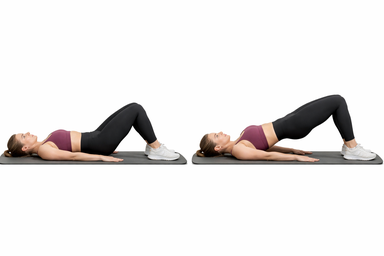
How to
A floor hip lift that trains your glutes and hamstrings with both feet planted.
- Lie on your back with knees bent and feet flat, hip-width apart.
- Brace your core and press your arms lightly into the floor.
- Drive through your heels and lift your hips until your body forms a straight line.
- Squeeze your glutes at the top, then lower with control.
- Repeat for your reps.
- Keep your ribs down
- Drive through your heels
- Arching your lower back at the top
- Pushing through your toes
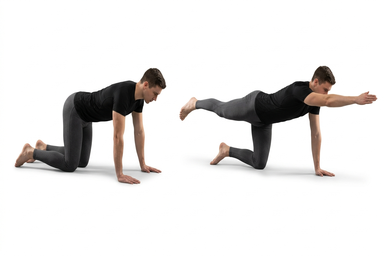
How to
A core stability move from all fours that trains your abs, back, glutes, and balance.
- Start on hands and knees with your hands under shoulders and knees under hips.
- Brace your core and keep your back flat.
- Reach one arm forward and the opposite leg back until they are straight.
- Pause briefly, then bring your hand and knee back under you.
- Repeat on the other side, alternating each rep.
- Keep your hips square
- Move slow and controlled
- Arching or sagging your lower back
- Rotating your hips as you reach
Circuit B
Circulation and ankle work. Keep it light and rhythmic; hold onto a wall or chair if needed.
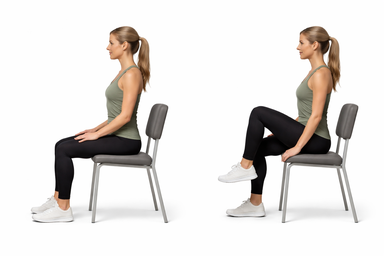
How to
A seated leg lift that trains your hip flexors and core while keeping you upright.
- Sit tall near the front of a chair with feet flat.
- Brace your core and keep your chest lifted.
- Lift one knee toward your chest without leaning back.
- Lower that foot with control, then lift the other knee.
- Keep alternating legs for all reps.
- Sit tall through your spine
- Move with control
- Leaning back as you lift your knee
- Letting your foot drop to the floor
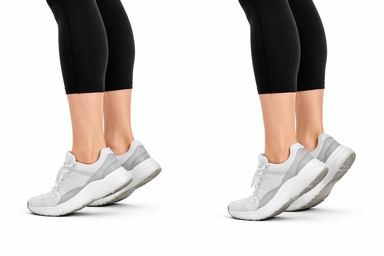
How to
A standing lower-leg move that trains your calves by lifting and lowering your heels.
- Stand tall with feet hip-width apart and toes pointing forward.
- Press through the balls of your feet and lift your heels high.
- Pause briefly at the top without leaning forward.
- Lower your heels with control to the floor.
- Keep your knees softly straight.
- Rise straight up, not forward.
- Bouncing through the reps.
- Letting your ankles roll outward.
Cool-Down
Gentle stretching to relax muscles and calm the nervous system.
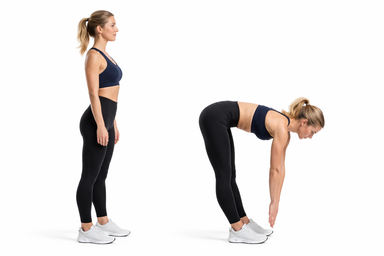
How to
A held stretch for the back of your thigh that targets your hamstrings.
- Sit tall with your target leg straight and toes up.
- Hinge at your hips and reach toward your foot.
- Stop when you feel a gentle stretch behind your thigh.
- Hold the stretch and breathe slowly.
- Release slowly, then switch sides if stretching one leg.
- Keep your back long.
- Hinge from your hips.
- Rounding your back to reach farther.
- Bouncing in the stretch.
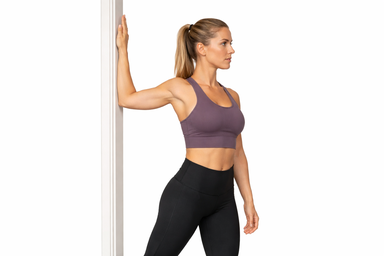
How to
A static chest opener that stretches your chest and front shoulders.
- Stand tall and clasp your hands behind your back.
- Straighten your arms and gently lift your hands.
- Open your chest until you feel a comfortable stretch.
- Hold and breathe slowly, then release with control.
- Keep your ribs down
- Relax your shoulders
- Arching your lower back to force the stretch
- Shrugging your shoulders up toward your ears
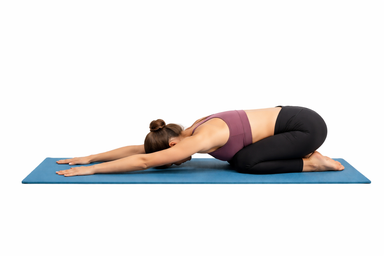
How to
A kneeling rest stretch that relaxes your back, hips, and shoulders while you breathe.
- Kneel with your big toes together and knees apart.
- Sit your hips back toward your heels.
- Reach your arms forward and lower your chest to the floor.
- Rest your forehead down and relax your neck.
- Hold the stretch and breathe slowly.
- Let your hips sink back
- Keep your neck relaxed
- Forcing your hips down
- Holding your breath

Synovial Fluid First, Strength Second
Neck ROM, shoulder rolls, and wrist circles prime synovial fluid circulation before any load is introduced — reducing friction in inflamed joints before they're asked to work. Cat-Cow follows to mobilize the facet joints of the spine, where RA-related stiffness often accumulates silently. Every warm-up choice here is sequenced to reduce the injury window that exists in the first 10 minutes of move

RA's Hidden Demand: Stability Under Fatigue
On moderate-symptom days, the real challenge isn't pain at rest — it's joint instability when stabilizing muscles fatigue mid-movement. Bird Dog and Glute Bridge directly train the deep spinal and hip stabilizers that protect against this, while Sit-to-Stand builds the functional quad and glute strength that reduces joint stress during daily loading. These aren't beginner exercises — they're preci

Graded Load Without Flare Provocation
This routine applies the principle of minimum effective dose: resistance band rows and wall push-ups deliver upper-body stimulus with zero compressive spinal load, preserving shoulder and wrist joint integrity. Progressive overload here means increasing band resistance or rep tempo before adding sets — never chasing soreness. If grip fatigue appears during band rows before muscular fatigue does, t