
Clean & Minimal AI Powered Fitness Routines
Download AppIntermediate Unilateral Strength
A 25-minute unilateral strength session to build balance, stability, and strength symmetry.
Intermediate Unilateral Strength
A 25-minute unilateral strength session to build balance, stability, and strength symmetry.
Warm-Up
Unilateral prep. Activate glutes and core; prepare hips and shoulders for single-limb loading.
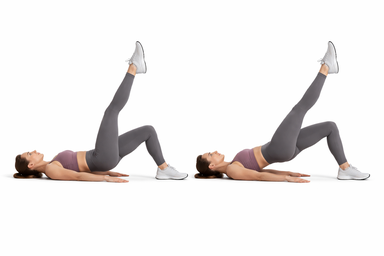
How to
A one-leg bridge that trains your glutes and hamstrings while challenging hip control.
- Lie on your back with one knee bent and the other leg lifted.
- Brace your core and press the planted foot into the floor.
- Lift your hips until your body forms a straight line.
- Lower your hips with control back to the floor.
- Finish your reps, then switch legs.
- Keep your hips level.
- Drive through your heel.
- Letting one hip drop as you lift.
- Arching your lower back at the top.
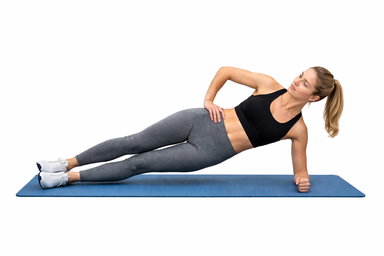
How to
A side hold that trains your obliques, hips, and shoulder stability.
- Lie on one side with your elbow under your shoulder and legs stacked.
- Lift your hips until your body forms a straight line.
- Hold the position and breathe steadily.
- Lower your hips with control.
- Finish your hold, then switch sides.
- Keep your hips stacked
- Press the floor away
- Letting your hips sag
- Rolling your chest toward the floor
Circuit A
Moderate-heavy load. Keep form strict; rest as needed between rounds.
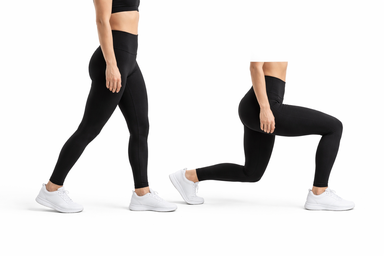
How to
A forward stepping lunge that trains your legs and glutes while challenging balance.
- Stand tall with your feet hip-width apart.
- Step forward with one foot and lower into a lunge.
- Keep your front knee over your foot as your back knee lowers.
- Push through your front foot and bring your back foot forward.
- Step into the next lunge with the other leg and keep alternating.
- Keep your chest tall
- Take controlled steps
- Letting your front knee cave inward
- Pushing off mostly from your back foot
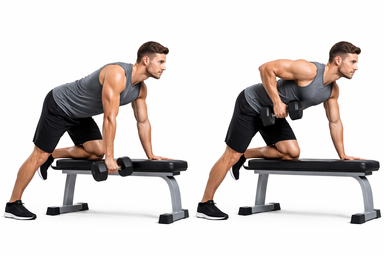
How to
A one-arm pulling move that trains your back, rear shoulder, and arm.
- Place one hand on a bench or sturdy support and hinge your hips.
- Hold the weight in your other hand with your arm hanging down.
- Pull your elbow back toward your hip.
- Lower with control until your arm is straight.
- Finish your reps, then switch arms.
- Keep your chest square to the floor.
- Pull with your elbow.
- Twisting your torso as you row.
- Shrugging your shoulder toward your ear.
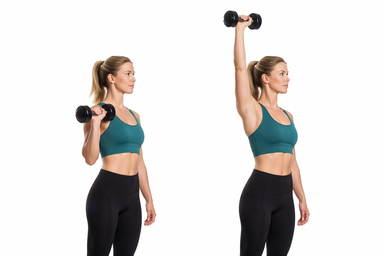
How to
A one-arm shoulder press that trains your shoulders, triceps, and core control.
- Stand tall with one weight at shoulder height, palm facing in or forward.
- Brace your core and keep your ribs down.
- Press the weight overhead until your arm is straight.
- Lower the weight with control back to your shoulder.
- Finish your reps, then switch arms.
- Keep your wrist stacked over your elbow
- Do not lean back as you press
- Flaring your ribs to lift the weight
- Letting the weight drift far forward
Circuit B
Posterior-chain and anti-lateral-flexion finisher. Stay tall and controlled.
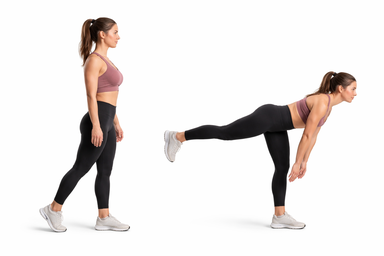
How to
A hip hinge on one leg that trains your hamstrings and glutes while challenging balance.
- Stand tall with weight on one foot and a soft bend in that knee.
- Hinge at your hips as your other leg reaches back behind you.
- Lower your torso until you feel a stretch, keeping your back flat.
- Drive through your standing foot to return to standing.
- Finish your reps, then switch legs.
- Keep your hips square
- Reach long from head to heel
- Rounding your back as you lower
- Opening your hips toward the side
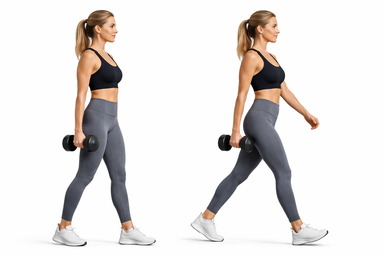
How to
A loaded carry with one weight at your side that trains grip, core, and posture.
- Stand tall with one weight held at your side.
- Brace your core and keep your shoulders level.
- Walk forward with short, controlled steps.
- Stop at the set distance and set the weight down with control.
- Finish your distance, then switch sides.
- Stay tall through your spine.
- Do not lean toward the weight.
- Letting the weight pull you sideways.
- Rushing your steps or swinging the weight.

Isolating Asymmetry Before It Compounds
Single-leg deadlifts and walking lunges force your glutes, hamstrings, and stabilizing hip abductors to work independently, exposing side-to-side strength deficits that bilateral lifts mask. The single-arm row and overhead press mirror this logic for the posterior chain and shoulder girdle, ensuring no dominant side compensates silently.

Why Unilateral Training Hits Different
Every single-limb movement demands your deep stabilizers — glute medius, rotator cuff, and contralateral core — to fire continuously just to maintain position, a demand bilateral training rarely creates. The farmer's carry and side plank are the pressure test: they reveal whether your newfound stability holds under load and time.

25 Minutes of Maximum Motor Recruitment
This session follows a specificity principle where each exercise pairs a stability demand with a strength demand, progressively loading the neuromuscular system without redundancy. To personalize it, track your weaker side's rep quality separately — when it matches your dominant side in control and depth, increase load unilaterally on that side first.