
Clean & Minimal AI Powered Fitness Routines
Download App25-Minute Intermediate Prediabetes Reversal Routine
A 25-minute, moderate-intensity circuit to support insulin sensitivity with low-impact cardio + full-body strength.
25-Minute Intermediate Prediabetes Reversal Routine
A 25-minute, moderate-intensity circuit to support insulin sensitivity with low-impact cardio + full-body strength.
Warm-Up
5 minutes. Raise heart rate and prep joints for strength and cardio intervals.
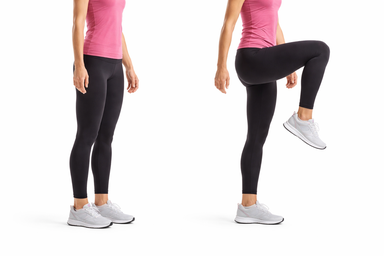
How to
A low-impact cardio move that warms up your legs and hips while raising your heart rate.
- Stand tall with your feet hip-width apart and arms at your sides.
- Lift one knee to hip height as you swing the opposite arm forward.
- Lower that foot, then lift the other knee and switch arms.
- Keep alternating sides at a steady pace.
- Slow down and plant both feet to finish.
- Stand tall with your chest up
- Land softly under your hips
- Leaning back as you lift your knees
- Stomping your feet on each step
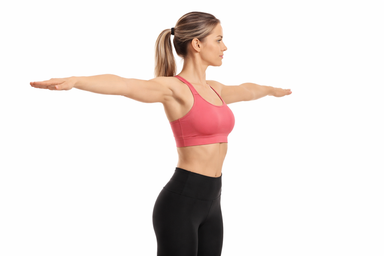
How to
A simple shoulder warm-up that moves both arms in circles and trains shoulder control.
- Stand tall with your feet about hip-width apart.
- Raise both arms out to your sides at shoulder height.
- Make small, controlled circles with both arms.
- Keep circling for the set time, then reverse direction if told.
- Lower your arms to finish.
- Keep your ribs down
- Move smoothly, not fast
- Shrugging your shoulders toward your ears
- Arching your back to keep the arms up
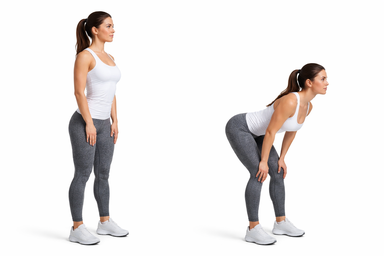
How to
A standing hip hinge that trains your glutes and hamstrings and builds the pattern for deadlifts.
- Stand with feet hip-width apart and knees slightly bent.
- Brace your core and keep your chest open.
- Push your hips back as your torso tips forward.
- Lower until you feel your hamstrings, keeping your back flat.
- Drive your hips forward to stand tall again.
- Move from your hips, not your waist.
- Keep your back long.
- Squatting instead of hinging your hips back.
- Rounding your back as you lower.
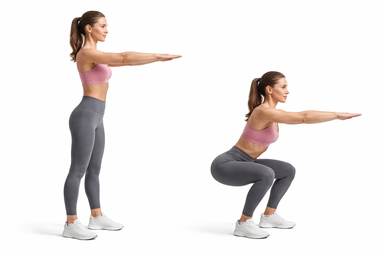
How to
A bodyweight lower-body move that trains your quads, glutes, and hips.
- Stand with feet about shoulder-width apart and toes slightly out.
- Brace your core and keep your chest tall.
- Bend your knees and hips to lower into a squat.
- Push through your feet to stand back up.
- Keep your knees tracking over your toes
- Keep your chest up
- Letting your knees cave in
- Rounding your back as you lower
Main Circuit
17 minutes. Full-body strength and cardio to support insulin sensitivity.
How to
A bodyweight lower-body move that trains your quads, glutes, and hips.
- Stand with feet about shoulder-width apart and toes slightly out.
- Brace your core and keep your chest tall.
- Bend your knees and hips to lower into a squat.
- Push through your feet to stand back up.
- Keep your knees tracking over your toes
- Keep your chest up
- Letting your knees cave in
- Rounding your back as you lower
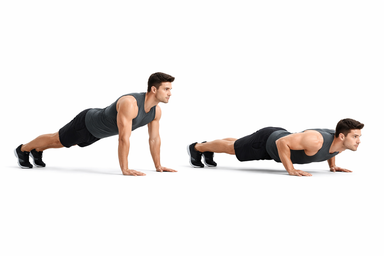
How to
A bodyweight press that trains your chest, shoulders, triceps, and core.
- Start in a high plank with hands just wider than shoulders.
- Brace your core and keep your body in a straight line.
- Bend your elbows and lower your chest toward the floor.
- Press the floor away until your arms are straight again.
- Repeat for your reps.
- Keep your ribs down
- Move your body as one piece
- Letting your hips sag
- Flaring your elbows straight out
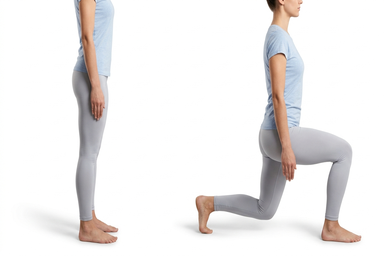
How to
A backward-stepping lunge that trains your quads, glutes, and balance.
- Stand tall with your feet hip-width apart.
- Step one foot back and lower until both knees bend.
- Push through your front foot to stand back up.
- Finish your reps, then switch legs.
- Keep your chest tall.
- Track your front knee over your toes.
- Letting your front knee cave inward.
- Pushing off the back foot to stand.
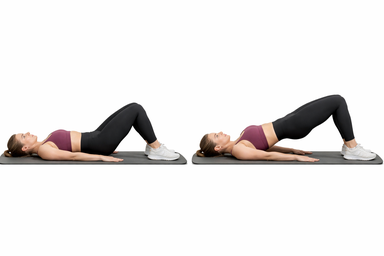
How to
A floor hip lift that trains your glutes and hamstrings with both feet planted.
- Lie on your back with knees bent and feet flat, hip-width apart.
- Brace your core and press your arms lightly into the floor.
- Drive through your heels and lift your hips until your body forms a straight line.
- Squeeze your glutes at the top, then lower with control.
- Repeat for your reps.
- Keep your ribs down
- Drive through your heels
- Arching your lower back at the top
- Pushing through your toes
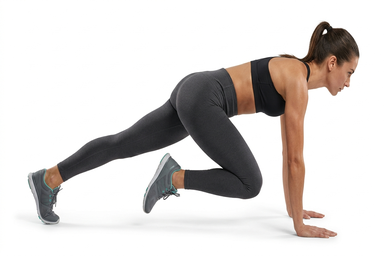
How to
A fast plank move that trains your core, shoulders, and hip flexors.
- Start in a high plank with hands under shoulders and legs straight.
- Brace your core and keep your body in a straight line.
- Drive one knee toward your chest, then quickly step it back.
- Alternate knees at a steady pace for the set.
- Keep your hips low
- Push the floor away
- Letting your hips bounce high
- Dropping your head or rounding your shoulders
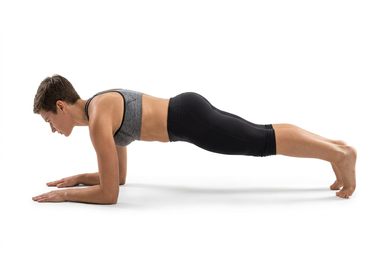
How to
A core hold that trains your abs, shoulders, and glutes while you keep a straight body line.
- Place your forearms on the floor with elbows under shoulders.
- Step both feet back and lift into a straight line from head to heels.
- Brace your abs and squeeze your glutes.
- Hold the position and breathe steadily.
- Lower your knees to the floor to finish.
- Keep your ribs pulled down
- Push the floor away
- Letting your hips sag
- Lifting your hips too high
Cool-Down
3 minutes. Downshift breathing and gently stretch the lower body.
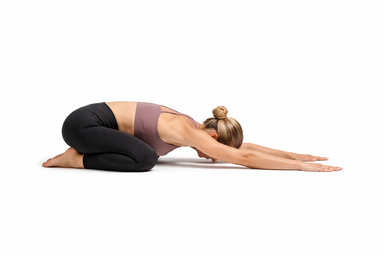
How to
A kneeling rest pose that gently stretches your back, hips, and shoulders.
- Kneel on the floor with your big toes together and knees apart.
- Sit your hips back toward your heels.
- Fold forward and reach your arms in front of you.
- Rest your forehead down and let your chest sink between your thighs.
- Hold the position and breathe slowly.
- Relax your shoulders
- Breathe into your back
- Forcing your hips down
- Holding your breath
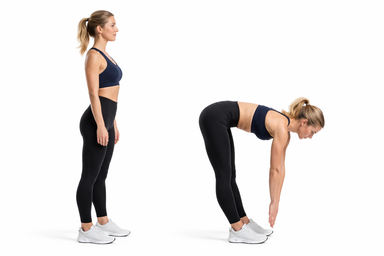
How to
A held stretch for the back of your thigh that targets your hamstrings.
- Sit tall with your target leg straight and toes up.
- Hinge at your hips and reach toward your foot.
- Stop when you feel a gentle stretch behind your thigh.
- Hold the stretch and breathe slowly.
- Release slowly, then switch sides if stretching one leg.
- Keep your back long.
- Hinge from your hips.
- Rounding your back to reach farther.
- Bouncing in the stretch.
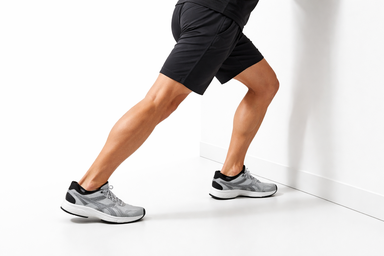
How to
A standing calf stretch that targets the back of your lower leg with a steady hold.
- Stand facing a wall and place your hands on it.
- Step one foot back and keep that heel on the floor.
- Bend your front knee until you feel a calf stretch.
- Hold and breathe slowly without bouncing.
- Finish the hold, then switch legs.
- Keep your back heel down
- Point both toes forward
- Bouncing in the stretch
- Letting the back heel lift

Muscle Mass as Your Glucose Sink
Squats, reverse lunges, and glute bridges recruit the quadriceps, hamstrings, and glutes — the body's largest skeletal muscle groups, which account for up to 80% of post-meal glucose uptake. Push-ups and mountain climbers add upper-body and core demand, maximizing the total muscle surface area activated to pull glucose out of the bloodstream.

Why Prediabetes Responds to This Intensity
Moderate-intensity circuits hit the sweet spot where GLUT-4 transporters migrate to muscle cell membranes without triggering cortisol spikes that can blunt insulin response. The hip hinge and bodyweight squat specifically train the posterior chain, which is often undertrained yet critical for metabolic health and functional glucose regulation throughout the day.

Circuit Structure Drives Metabolic Adaptation
Alternating between compound lower-body, upper-body, and core movements — squat to push-up to plank — prevents localized fatigue while sustaining elevated heart rate, the key driver of insulin sensitization. To personalize, track your perceived exertion on mountain climbers: if you can hold a full conversation, slow your tempo to increase muscular time-under-tension and deepen the metabolic stimul