
Clean & Minimal AI Powered Fitness Routines
Download AppIntermediate Hip Osteoarthritis Mobility and Strength
Low-impact hip mobility and glute strengthening to support hip osteoarthritis in ~25 minutes.
Intermediate Hip Osteoarthritis Mobility and Strength
Low-impact hip mobility and glute strengthening to support hip osteoarthritis in ~25 minutes.
Warm-Up
Mobility prep — Gentle motion to warm tissues and reduce hip stiffness before strengthening.
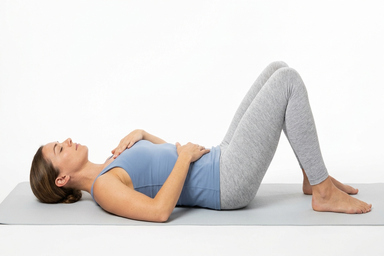
How to
A slow breathing drill that trains relaxed belly breathing and helps you control your breath.
- Lie on your back or sit tall with one hand on your belly.
- Inhale through your nose and let your belly rise.
- Exhale slowly and let your belly fall.
- Keep your chest and shoulders quiet.
- Continue for the set time with smooth breaths.
- Breathe low into your belly
- Keep your shoulders relaxed
- Shrugging your shoulders as you inhale
- Forcing the breath or holding tension
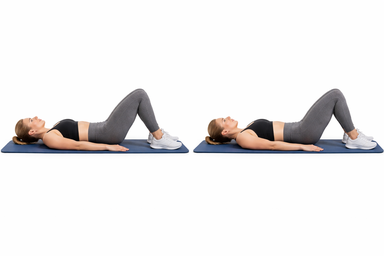
How to
A gentle floor move that trains pelvic control and engages your lower abs and glutes.
- Lie on your back with knees bent and feet flat on the floor.
- Exhale and tilt your pelvis to press your lower back toward the floor.
- Inhale and slowly return to your starting curve.
- Repeat with smooth, controlled movement.
- Move from your pelvis, not your ribs.
- Keep your shoulders relaxed.
- Holding your breath during the tilt.
- Pushing hard through your feet.
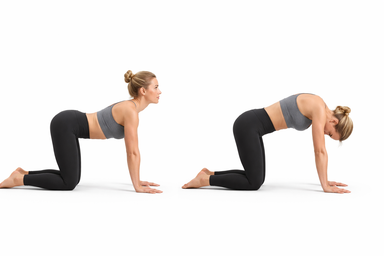
How to
A gentle spine mobility move that alternates rounding and arching your back on hands and knees.
- Start on hands and knees with wrists under shoulders and knees under hips.
- Inhale and drop your belly as you lift your chest and tailbone.
- Exhale and round your back, tucking your chin and tailbone.
- Move slowly between both positions with your breath.
- Move one vertebra at a time.
- Keep your shoulders away from your ears.
- Forcing your neck up or down.
- Rushing through the movement.
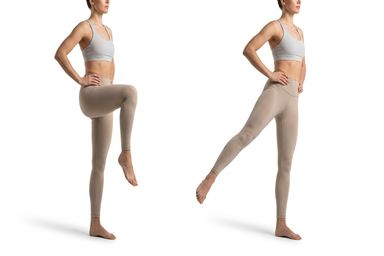
How to
A dynamic hip mobility move that trains hip control, glutes, and balance.
- Stand tall and hold a wall if you need support.
- Lift one knee in front of your hip.
- Circle the knee out, around, and back with control.
- Finish your reps in both directions, then lower your foot.
- Switch legs and repeat.
- Keep your torso tall.
- Move from your hip.
- Leaning or twisting your torso.
- Rushing through the circle.
Circuit A
Focus on glute activation and lateral hip strength. Rest as needed, stay pain-free.
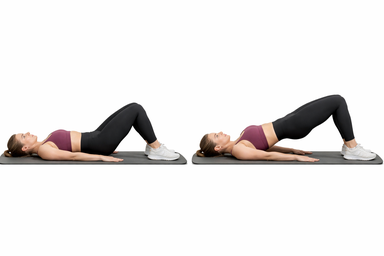
How to
A floor hip lift that trains your glutes and hamstrings with both feet planted.
- Lie on your back with knees bent and feet flat, hip-width apart.
- Brace your core and press your arms lightly into the floor.
- Drive through your heels and lift your hips until your body forms a straight line.
- Squeeze your glutes at the top, then lower with control.
- Repeat for your reps.
- Keep your ribs down
- Drive through your heels
- Arching your lower back at the top
- Pushing through your toes
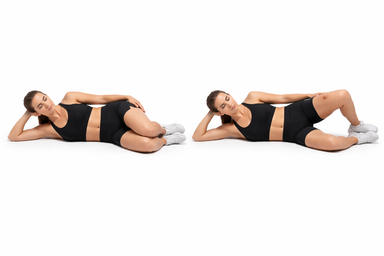
How to
A side-lying hip exercise that trains your glutes and outer hips.
- Lie on your side with knees bent and feet stacked.
- Brace your core and keep your hips stacked.
- Lift your top knee while keeping your feet together.
- Lower your knee with control to the start.
- Finish your reps, then switch sides.
- Keep your hips stacked
- Move slow and controlled
- Rolling your hips back as you lift
- Letting your feet separate
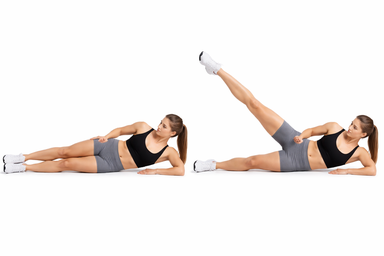
How to
A side-lying leg lift that trains your outer hips and glutes.
- Lie on your side with your legs straight and hips stacked.
- Brace your core and point your top foot straight ahead.
- Lift your top leg up without rolling your hips back.
- Lower with control to the start position.
- Finish your reps, then switch sides.
- Keep your hips stacked.
- Lead with your heel.
- Rolling your top hip back as you lift.
- Swinging the leg instead of controlling it.
Circuit B
Functional strength and standing hip control. Use the chair for support.
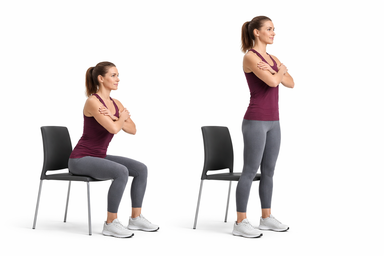
How to
A chair-based squat pattern that trains your thighs and glutes for standing strength.
- Sit near the front of a chair with feet flat and hip-width apart.
- Lean slightly forward and brace your core.
- Press through both feet and stand tall.
- Push your hips back and sit down with control.
- Keep your knees tracking over your toes
- Stand tall at the top
- Letting your knees cave inward
- Dropping hard onto the chair
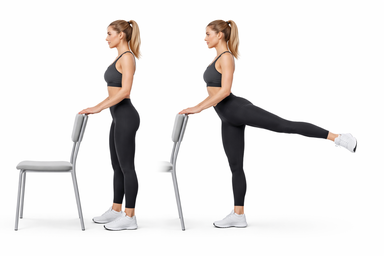
How to
A standing leg raise to the side that trains your outer hips and balance.
- Stand tall with one hand on a wall or chair for balance.
- Shift your weight onto one leg and brace your core.
- Lift the other leg out to the side without leaning your torso.
- Lower the leg with control to the start position.
- Finish your reps, then switch legs.
- Keep your toes facing forward.
- Stand tall through each rep.
- Leaning your torso to lift the leg.
- Turning your toes outward as you raise.
Cool-Down
Gentle stretch — Downshift and restore comfortable hip range without forcing depth.
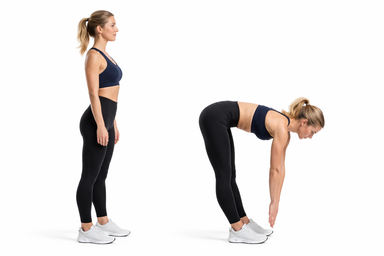
How to
A held stretch for the back of your thigh that targets your hamstrings.
- Sit tall with your target leg straight and toes up.
- Hinge at your hips and reach toward your foot.
- Stop when you feel a gentle stretch behind your thigh.
- Hold the stretch and breathe slowly.
- Release slowly, then switch sides if stretching one leg.
- Keep your back long.
- Hinge from your hips.
- Rounding your back to reach farther.
- Bouncing in the stretch.
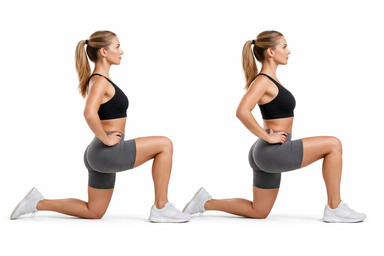
How to
A kneeling stretch for the front of your hip. It targets the hip flexors on one side at a time.
- Kneel with one foot forward and the other knee on the floor.
- Tuck your hips slightly and stand tall through your chest.
- Shift your hips forward until you feel a stretch in the back-leg hip.
- Hold and breathe slowly without bouncing.
- Release gently, then switch sides.
- Keep your ribs stacked over your hips
- Squeeze the back-leg glute lightly
- Arching your lower back to go deeper
- Bouncing in the stretch

Glute Recruitment Over Hip Joint Load
Clamshells and side-lying abduction isolate gluteus medius without compressing the acetabular cartilage, while glute bridges build posterior chain strength through a pain-safe range. Sit-to-stand transfers that strength into the exact movement pattern your hip performs dozens of times daily.

Why OA Hips Need Movement, Not Rest
Osteoarthritic cartilage lacks blood supply and depends on synovial fluid circulation driven by gentle, rhythmic motion — exactly what hip circles and cat-cow deliver. The real enemy is disuse atrophy of the glutes and hip abductors, which shifts compressive load onto already-degraded joint surfaces.

Stability Before Strength, Always
Diaphragmatic breathing and pelvic tilts establish lumbopelvic control first, ensuring the glute bridges and standing abduction work the right muscles rather than compensating through the lumbar spine. As pain-free range improves week to week, increase bridge hold duration by 2-second increments before adding any external load.