
Clean & Minimal AI Powered Fitness Routines
Download AppIntermediate COPD Pulmonary Rehab
A low-impact pulmonary rehab session to improve breathing efficiency, aerobic capacity, and functional strength.
Intermediate COPD Pulmonary Rehab
A low-impact pulmonary rehab session to improve breathing efficiency, aerobic capacity, and functional strength.
Breathing and Warm-Up
Settle breathing, open the chest, and gently raise heart rate. Duration: 5 minutes.
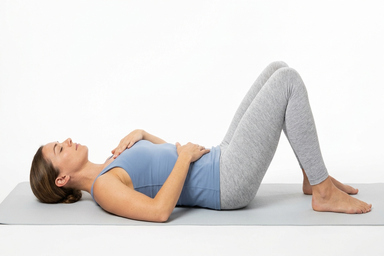
How to
A slow breathing drill that trains relaxed belly breathing and helps you control your breath.
- Lie on your back or sit tall with one hand on your belly.
- Inhale through your nose and let your belly rise.
- Exhale slowly and let your belly fall.
- Keep your chest and shoulders quiet.
- Continue for the set time with smooth breaths.
- Breathe low into your belly
- Keep your shoulders relaxed
- Shrugging your shoulders as you inhale
- Forcing the breath or holding tension
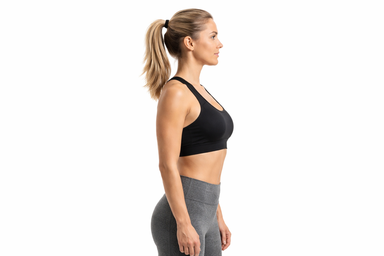
How to
A simple shoulder mobility move that warms up your upper back, neck, and shoulders.
- Stand tall with your arms relaxed at your sides.
- Lift both shoulders up toward your ears.
- Roll them back and down in a smooth circle.
- Repeat for reps, then reverse the direction if needed.
- Move slowly and smoothly.
- Keep your neck relaxed.
- Shrugging with tension in your neck.
- Rushing through small, jerky circles.
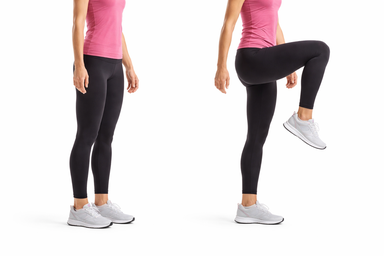
How to
A low-impact cardio move that warms up your legs and hips while raising your heart rate.
- Stand tall with your feet hip-width apart and arms at your sides.
- Lift one knee to hip height as you swing the opposite arm forward.
- Lower that foot, then lift the other knee and switch arms.
- Keep alternating sides at a steady pace.
- Slow down and plant both feet to finish.
- Stand tall with your chest up
- Land softly under your hips
- Leaning back as you lift your knees
- Stomping your feet on each step
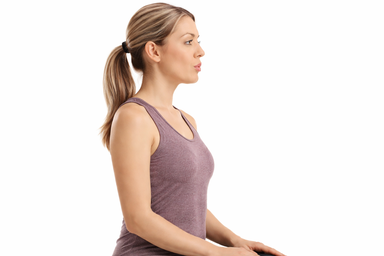
How to
A slow breathing drill that trains control and helps you focus on a steady exhale.
- Sit or stand tall with your shoulders relaxed.
- Inhale gently through your nose for 2 counts.
- Purse your lips like you are blowing through a straw.
- Exhale slowly through your lips for 4 counts.
- Repeat for the set time, keeping each breath smooth.
- Keep your neck and jaw relaxed
- Make the exhale longer than the inhale
- Forcing the air out hard
- Lifting your shoulders as you breathe
Aerobic Intervals
Moderate paced cardio with built-in recovery breathing. Duration: 10 minutes.
How to
A low-impact cardio move that warms up your legs and hips while raising your heart rate.
- Stand tall with your feet hip-width apart and arms at your sides.
- Lift one knee to hip height as you swing the opposite arm forward.
- Lower that foot, then lift the other knee and switch arms.
- Keep alternating sides at a steady pace.
- Slow down and plant both feet to finish.
- Stand tall with your chest up
- Land softly under your hips
- Leaning back as you lift your knees
- Stomping your feet on each step
How to
A slow breathing drill that trains control and helps you focus on a steady exhale.
- Sit or stand tall with your shoulders relaxed.
- Inhale gently through your nose for 2 counts.
- Purse your lips like you are blowing through a straw.
- Exhale slowly through your lips for 4 counts.
- Repeat for the set time, keeping each breath smooth.
- Keep your neck and jaw relaxed
- Make the exhale longer than the inhale
- Forcing the air out hard
- Lifting your shoulders as you breathe
Functional Strength
Build endurance in legs and upper body to support daily activities. Duration: 10 minutes.
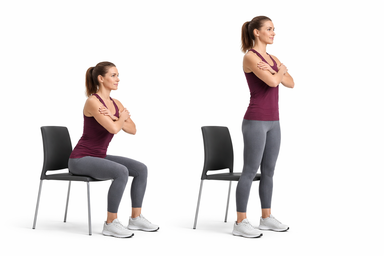
How to
A chair-based squat pattern that trains your thighs and glutes for standing strength.
- Sit near the front of a chair with feet flat and hip-width apart.
- Lean slightly forward and brace your core.
- Press through both feet and stand tall.
- Push your hips back and sit down with control.
- Keep your knees tracking over your toes
- Stand tall at the top
- Letting your knees cave inward
- Dropping hard onto the chair
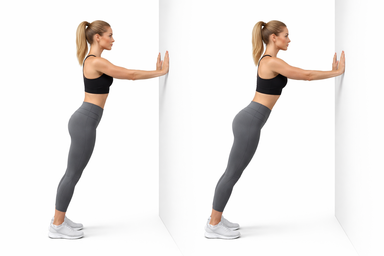
How to
A standing push-up against a wall that trains your chest, shoulders, and triceps.
- Stand facing a wall and place your hands at chest height.
- Step your feet back so your body forms a straight line.
- Bend your elbows and lower your chest toward the wall.
- Press the wall away to return to the start.
- Repeat for your planned reps.
- Keep your body straight
- Keep elbows about 45 degrees
- Letting your hips sag
- Shrugging your shoulders toward your ears
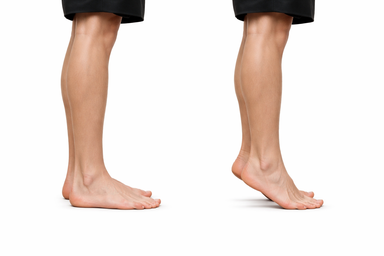
How to
A standing calf raise that trains your calves using bodyweight or added load.
- Stand tall with feet hip-width apart and toes pointing forward.
- Press through the balls of your feet and lift your heels high.
- Pause briefly at the top with control.
- Lower your heels slowly back to the floor.
- Keep your knees softly straight.
- Rise straight up, not forward.
- Bouncing through the reps.
- Letting your ankles roll outward or inward.
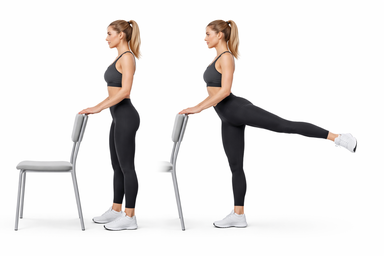
How to
A standing leg raise to the side that trains your outer hips and balance.
- Stand tall with one hand on a wall or chair for balance.
- Shift your weight onto one leg and brace your core.
- Lift the other leg out to the side without leaning your torso.
- Lower the leg with control to the start position.
- Finish your reps, then switch legs.
- Keep your toes facing forward.
- Stand tall through each rep.
- Leaning your torso to lift the leg.
- Turning your toes outward as you raise.
Cool-Down
Downshift breathing and relax the upper body. Duration: 2–3 minutes.
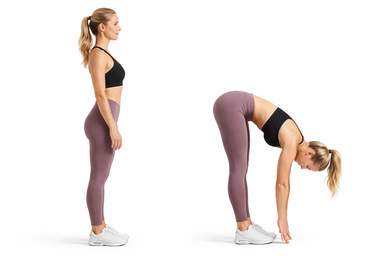
How to
A standing fold that stretches your hamstrings, calves, and back while you hold the position.
- Stand with feet hip-width apart and knees soft.
- Hinge at your hips and fold your torso toward your legs.
- Let your head and arms hang, or rest hands on your legs.
- Hold the fold and breathe slowly.
- To come up, bend your knees and roll up with control.
- Keep your knees softly bent
- Relax your neck and shoulders
- Locking your knees
- Forcing your hands to the floor
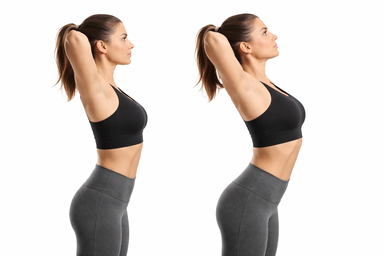
How to
A held upper-back extension that trains thoracic mobility and postural control.
- Sit or kneel tall with your hands behind your head.
- Brace lightly and lift your chest without flaring your ribs.
- Gently extend through your upper back and hold.
- Breathe slowly, then return to tall posture.
- Move from your upper back
- Keep your neck relaxed
- Cranking your neck back
- Flaring your ribs to fake the arch

Breathing Mechanics Drive Every Rep
Diaphragmatic and pursed-lip breathing aren't warm-up filler — they retrain the primary respiratory muscles to reduce air trapping and lower breathing rate during exertion. Every strength movement like sit-to-stand and wall push-up is anchored to this breath control, turning each rep into a ventilatory training stimulus.

COPD's Hidden Load: Dynamic Hyperinflation
During march-in-place intervals, your airways narrow under exertion, trapping stale air and forcing accessory muscles to compensate — this is why fatigue hits faster than your legs suggest it should. The forward lean recovery position directly offloads the diaphragm by fixing the shoulder girdle, giving it mechanical advantage to reset between intervals.

Functional Thresholds, Not Fitness Aesthetics
Sit-to-stand targets the quadriceps-to-bodyweight ratio that predicts fall risk and hospital readmission in COPD populations, while heel raises preserve the calf-pump mechanism critical for circulation during low-intensity activity. To personalize: track your perceived breathlessness on a 0–10 scale each session and use it — not time — as your true intensity governor.