
Clean & Minimal AI Powered Fitness Routines
Download AppYoga Strength Support — 25 Minutes
A 25-minute yoga flow focused on strength, stability, and controlled tempo.
Yoga Strength Support — 25 Minutes
A 25-minute yoga flow focused on strength, stability, and controlled tempo.
Warm-Up & Activation
Mobilize spine and shoulders, then wake up the posterior chain.
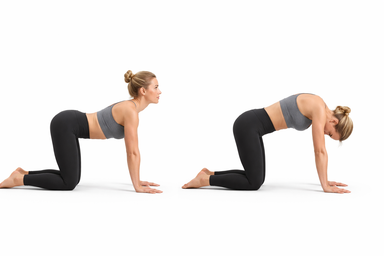
How to
A gentle spine mobility move that alternates rounding and arching your back on hands and knees.
- Start on hands and knees with wrists under shoulders and knees under hips.
- Inhale and drop your belly as you lift your chest and tailbone.
- Exhale and round your back, tucking your chin and tailbone.
- Move slowly between both positions with your breath.
- Move one vertebra at a time.
- Keep your shoulders away from your ears.
- Forcing your neck up or down.
- Rushing through the movement.
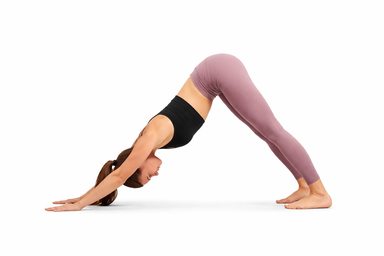
How to
A full-body isometric pose that trains shoulders, core, and hips while stretching the back line.
- Start on hands and knees, with hands under shoulders and knees under hips.
- Tuck your toes and lift your hips up and back.
- Straighten your arms and press the floor away.
- Let your heels reach toward the floor, with knees slightly bent if needed.
- Hold the pose and breathe steadily.
- Press your chest toward your thighs
- Keep your neck relaxed
- Rounding your upper back and shrugging your shoulders
- Forcing your heels down by locking your knees
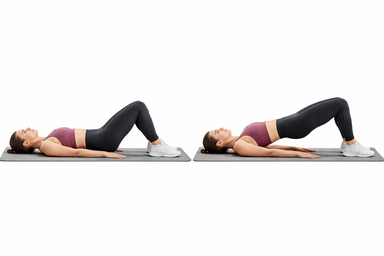
How to
A floor bridge hold that trains your glutes, hamstrings, and core.
- Lie on your back with knees bent and feet flat, hip-width apart.
- Place your arms by your sides and brace your core.
- Press through your heels and lift your hips until your body forms a line.
- Hold the bridge and breathe steadily.
- Lower your hips to the floor with control.
- Squeeze your glutes at the top
- Keep your ribs down
- Arching your lower back at the top
- Letting your knees cave inward
Core & Shoulder Stability
Brace lightly through the midline; keep shoulders stacked and strong.
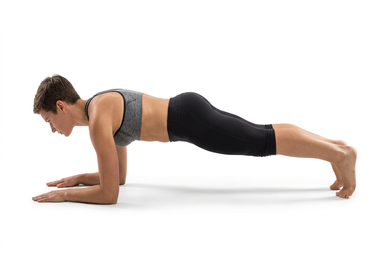
How to
A core hold that trains your abs, shoulders, and glutes while you keep a straight body line.
- Place your forearms on the floor with elbows under shoulders.
- Step both feet back and lift into a straight line from head to heels.
- Brace your abs and squeeze your glutes.
- Hold the position and breathe steadily.
- Lower your knees to the floor to finish.
- Keep your ribs pulled down
- Push the floor away
- Letting your hips sag
- Lifting your hips too high
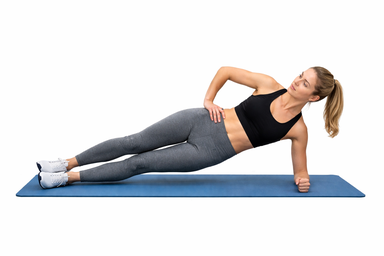
How to
A side hold that trains your obliques, hips, and shoulder stability.
- Lie on one side with your elbow under your shoulder and legs stacked.
- Lift your hips until your body forms a straight line.
- Hold the position and breathe steadily.
- Lower your hips with control.
- Finish your hold, then switch sides.
- Keep your hips stacked
- Press the floor away
- Letting your hips sag
- Rolling your chest toward the floor
How to
A full-body isometric pose that trains shoulders, core, and hips while stretching the back line.
- Start on hands and knees, with hands under shoulders and knees under hips.
- Tuck your toes and lift your hips up and back.
- Straighten your arms and press the floor away.
- Let your heels reach toward the floor, with knees slightly bent if needed.
- Hold the pose and breathe steadily.
- Press your chest toward your thighs
- Keep your neck relaxed
- Rounding your upper back and shrugging your shoulders
- Forcing your heels down by locking your knees
Leg Strength & Control
Slow transitions; keep knees tracking over toes and hips level.
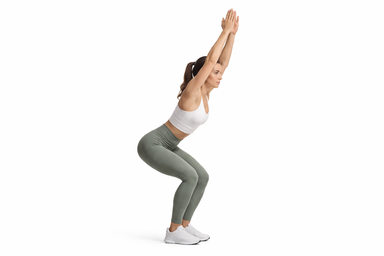
How to
A standing squat-like hold that trains your thighs, glutes, and core.
- Stand tall with feet together or hip-width apart.
- Bend your knees and send your hips back like sitting in a chair.
- Raise your arms overhead or keep hands at your chest.
- Hold the position and breathe steadily.
- Press through your feet to stand back up.
- Keep your chest lifted.
- Keep knees tracking over toes.
- Letting your knees collapse inward.
- Arching your lower back as you hold.
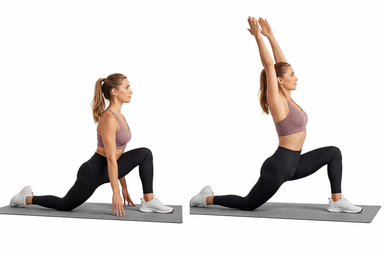
How to
A kneeling lunge hold that opens the front hip and trains steady lower-body control.
- Step one foot forward and lower your back knee to the floor.
- Stack your front knee over your ankle and point both hips forward.
- Lift your chest and let your hips sink gently forward.
- Hold and breathe slowly without bouncing.
- Release with control, then switch sides.
- Keep your chest tall
- Hips face forward
- Letting your front knee collapse inward
- Arching your lower back to go deeper
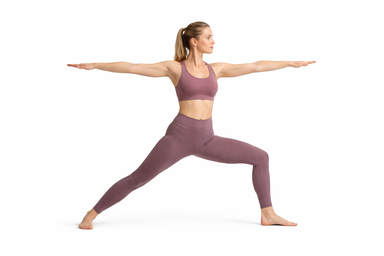
How to
A standing lunge pose that trains legs, hips, and posture while you hold steady.
- Stand wide and turn one foot out, with the other foot slightly in.
- Raise your arms to shoulder height, reaching in both directions.
- Bend your front knee over your ankle and face over your front hand.
- Hold the pose and breathe evenly.
- Come up with control, then switch sides.
- Keep your front knee tracking over toes
- Reach long through both arms
- Letting the front knee cave inward
- Leaning your torso over the front thigh
Glute & Core Finisher
Keep ribs down; avoid overarching the low back in bridge.
How to
A floor bridge hold that trains your glutes, hamstrings, and core.
- Lie on your back with knees bent and feet flat, hip-width apart.
- Place your arms by your sides and brace your core.
- Press through your heels and lift your hips until your body forms a line.
- Hold the bridge and breathe steadily.
- Lower your hips to the floor with control.
- Squeeze your glutes at the top
- Keep your ribs down
- Arching your lower back at the top
- Letting your knees cave inward
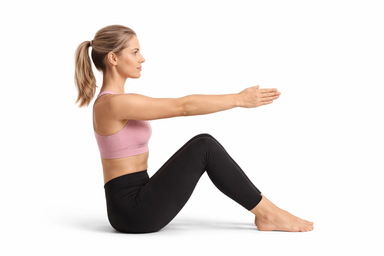
How to
A seated core hold that trains your abs, hip flexors, and balance.
- Sit and lean back with knees bent.
- Lift your feet and balance on your sit bones.
- Straighten your legs if you can, then keep holding.
- Breathe steadily and keep your chest lifted.
- Lower your feet to finish.
- Keep your spine long
- Hold your chest up
- Rounding your back and collapsing your chest
- Holding your breath
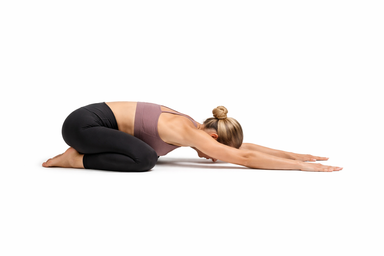
How to
A kneeling rest pose that gently stretches your back, hips, and shoulders.
- Kneel on the floor with your big toes together and knees apart.
- Sit your hips back toward your heels.
- Fold forward and reach your arms in front of you.
- Rest your forehead down and let your chest sink between your thighs.
- Hold the position and breathe slowly.
- Relax your shoulders
- Breathe into your back
- Forcing your hips down
- Holding your breath
Cool-Down
Downshift the nervous system and restore length to hips and back.
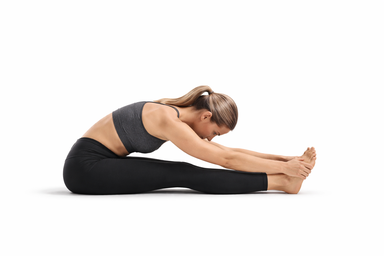
How to
A seated hamstring stretch that also eases your lower back and hips.
- Sit tall with both legs straight in front of you.
- Flex your feet and reach your arms toward your toes.
- Fold forward from your hips until you feel a gentle stretch.
- Hold the position and breathe slowly.
- Keep your knees soft
- Lengthen your spine
- Forcing your head toward your knees
- Bouncing in the stretch
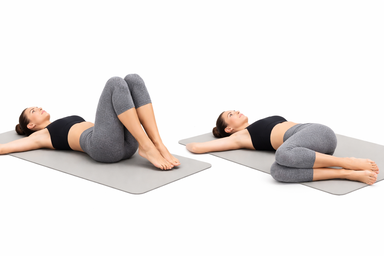
How to
A lying spinal twist that stretches your trunk and hips while you hold and breathe.
- Lie on your back with arms out and knees bent.
- Draw one knee toward your chest.
- Guide that knee across your body toward the floor.
- Keep both shoulders heavy and hold while breathing slowly.
- Return to center, then switch sides.
- Keep both shoulders down
- Move into the twist gently
- Forcing your knee to the floor
- Letting your shoulder lift and roll over

Isometric Load Meets Fascial Release
Warrior II, Chair Pose, and Side Plank recruit slow-twitch stabilizers in the glutes, obliques, and deep spinal erectors under sustained isometric tension — the exact demand yoga strength places on connective tissue. Bridge and Boat Pose then challenge posterior chain and hip flexor endurance from opposing angles, ensuring no muscle group dominates.

Where Yoga Strength Actually Breaks Down
Intermediate yoga practitioners typically lose integrity not in flexibility but in scapular control and lateral core stability during transitions. Side Plank and Low Lunge Hold directly address the serratus anterior and psoas — the two muscles most responsible for shaky holds and collapsed alignment under fatigue.

Tempo as Your Progressive Overload Tool
Without added load, time-under-tension becomes the primary adaptation driver here — extending holds in Chair Pose or Warrior II by 5–10 seconds per session mirrors progressive overload principles. Cat-Cow and Supine Spinal Twist bookend the flow to regulate the nervous system and restore spinal mobility lost during sustained isometric work.