
Clean & Minimal AI Powered Fitness Routines
Download AppIntermediate Ankle Stabilizers
A ~25-minute routine to strengthen ankle stabilizers, improve balance, and build lower-leg control.
Intermediate Ankle Stabilizers
A ~25-minute routine to strengthen ankle stabilizers, improve balance, and build lower-leg control.
Warm-Up
Prep the ankle and lower leg for balance and strengthening work. (5 minutes)
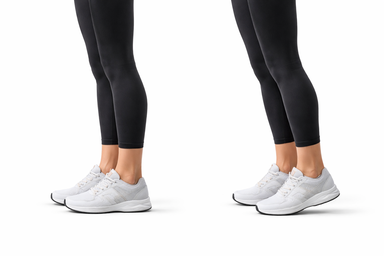
How to
A knee-to-wall ankle drill that trains ankle mobility and control.
- Stand facing a wall with one foot a short step back.
- Keep your heel down and bend that knee toward the wall.
- Move only as far as you can with control, then straighten it.
- Do your reps, then switch sides.
- Keep your heel planted
- Move slowly and smoothly
- Lifting the heel off the floor
- Letting the knee cave inward
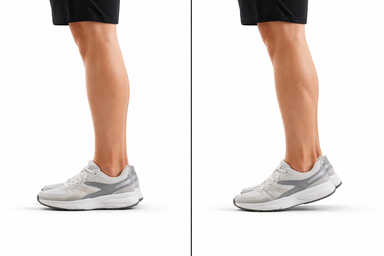
How to
A one-ankle movement that points your foot to train calf and ankle control.
- Sit tall with one leg extended and your heel supported.
- Start with your foot relaxed and toes pointing up.
- Point your toes away from your shin as far as you can control.
- Return your foot to the start position with control.
- Finish your reps, then switch legs.
- Move only at the ankle.
- Keep your knee still.
- Curling your toes instead of pointing your foot.
- Bouncing through the range.
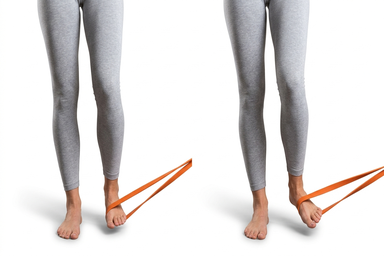
How to
A controlled ankle movement that trains the inner lower leg and ankle control.
- Sit tall with one leg extended and your heel on the floor.
- Keep your leg still and turn the sole of your foot inward.
- Pause briefly, then return your foot to neutral.
- Finish your reps, then switch sides.
- Move only at the ankle.
- Keep your knee still.
- Rotating your whole leg instead of your ankle.
- Rushing or snapping back to neutral.
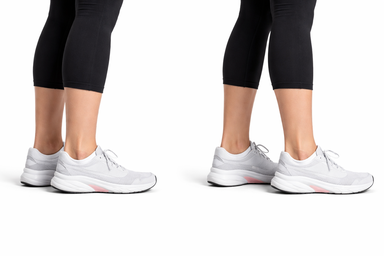
How to
A controlled ankle move that turns your foot outward to train the muscles on the outside of your lower leg.
- Sit tall with one leg extended and your heel resting on the floor.
- Keep your knee still and toes pointing up.
- Turn the sole of your foot outward as far as you can control.
- Return slowly to the start position.
- Finish your reps, then switch sides.
- Move only at the ankle.
- Keep the motion slow.
- Letting your knee roll with your foot.
- Snapping back to the start position.
Circuit A
Use light support as needed, but keep most of your weight on the working leg.
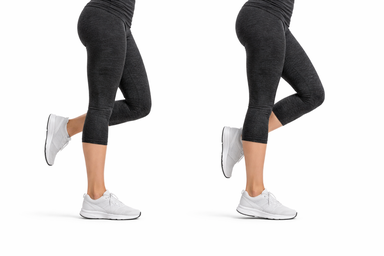
How to
A one-leg calf raise that trains your calves and balance.
- Stand tall on one foot near a wall or support.
- Let your heel drop slightly if standing on a step.
- Press through the ball of your foot and lift your heel high.
- Lower with control until your heel is down or slightly below the step.
- Finish your reps, then switch legs.
- Keep your knee mostly straight.
- Move straight up and down.
- Bouncing at the bottom.
- Rolling your ankle in or out.
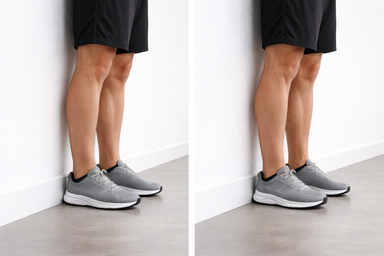
How to
A lower-leg move that lifts your toes to train the muscles along the front of your shins.
- Stand tall with both feet hip-width apart.
- Keep your heels on the floor and lift your toes toward your shins.
- Pause briefly at the top.
- Lower your toes back to the floor with control.
- Keep your knees soft
- Move both feet together
- Rocking your body to lift the toes
- Letting your toes drop quickly
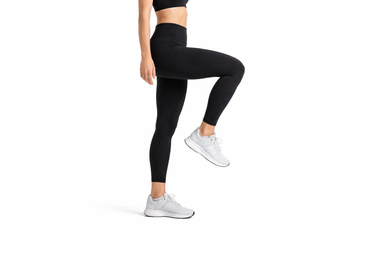
How to
A one-leg standing hold that trains balance and stability in your foot, ankle, and hips.
- Stand tall with feet hip-width apart and arms relaxed.
- Shift your weight onto one foot and lift the other foot off the floor.
- Hold steady, keep your torso tall, and breathe slowly.
- Lower your foot with control, then switch legs.
- Keep your hips level
- Look at one spot ahead
- Letting your hips twist or drop
- Holding your breath
Circuit B
Move slowly and keep the knee tracking over the toes. Control the lowering phase.
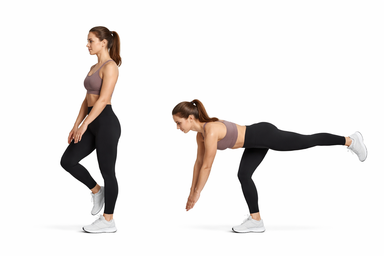
How to
A hip hinge on one leg that trains your hamstrings and glutes while challenging balance.
- Stand tall with weight on one leg and a soft bend in your knee.
- Hinge at your hips and reach your free leg back behind you.
- Lower your chest until you feel a stretch in your standing hamstring.
- Drive through your standing foot to return to tall.
- Finish your reps, then switch legs.
- Keep your hips square.
- Keep your back long.
- Rounding your back as you lower.
- Opening your hips toward the side.
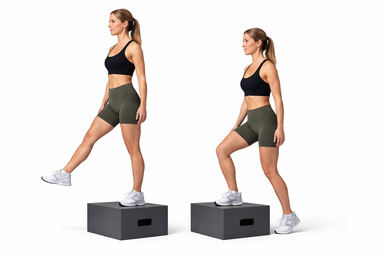
How to
A single-leg step move that trains your quads, glutes, and hip control.
- Stand sideways on a step with one foot planted and the other hanging off.
- Bend your standing knee and hip to lower the free heel toward the floor.
- Tap lightly, then press through the planted foot to stand tall.
- Finish your reps, then switch legs.
- Keep your knee tracking over your toes.
- Move slow and stay level through your hips.
- Dropping your hip as you lower.
- Letting your knee cave inward.
Cool-Down
Downshift and restore calf/ankle range of motion. (2 minutes)
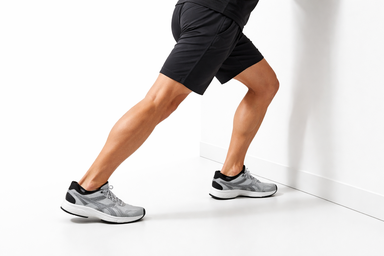
How to
A standing calf stretch that targets the back of your lower leg with a steady hold.
- Stand facing a wall and place your hands on it.
- Step one foot back and keep that heel on the floor.
- Bend your front knee until you feel a calf stretch.
- Hold and breathe slowly without bouncing.
- Finish the hold, then switch legs.
- Keep your back heel down
- Point both toes forward
- Bouncing in the stretch
- Letting the back heel lift

Banded Planes Before Balance Demands
The four banded movements isolate the peroneals, tibialis anterior, and posterior tibialis across all ankle planes before proprioceptive load is added. This sequences neuromuscular activation before the single-leg balance and lateral step-down challenge your stabilizers under real positional stress.

Why Ankle Rehab Fails Without Eversion
Most ankle injuries compromise the lateral retinaculum and peroneal tendons, leaving eversion chronically weak and re-injury risk high. The band eversion and single-leg RDL here directly address that deficit — the RDL's hip hinge forces the ankle to stabilize dynamically, mimicking the exact demand of uneven terrain.

Eccentric Calf Load Closes the Loop
The tibialis raise and single-leg calf raise create opposing eccentric-concentric pairings across the ankle joint, building tendon stiffness in both the Achilles and tibialis anterior simultaneously. To personalize progression, add a 3-second lowering tempo to the calf raise once single-leg balance holds steady for 45 seconds without compensation.