
Clean & Minimal AI Powered Fitness Routines
Download AppGentle Reset for Tomorrow
A very light floor-based recovery flow to ease stiffness and help you feel steadier tomorrow.
Gentle Reset for Tomorrow
A very light floor-based recovery flow to ease stiffness and help you feel steadier tomorrow.
Warm-up
Gentle mobility and activation for core, glutes, hamstrings, and hip flexors.
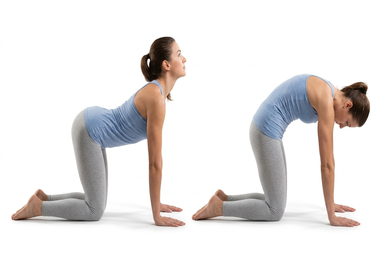
How to
A gentle spine mobility move on hands and knees that warms up your back, neck, and hips.
- Start on hands and knees with wrists under shoulders and knees under hips.
- Inhale and drop your belly as you lift your chest and tailbone.
- Exhale and round your back as you tuck your chin and tailbone.
- Move slowly between positions with your breath.
- Move one vertebra at a time
- Keep your hands and knees planted
- Shrugging your shoulders toward your ears
- Forcing your neck at the end range
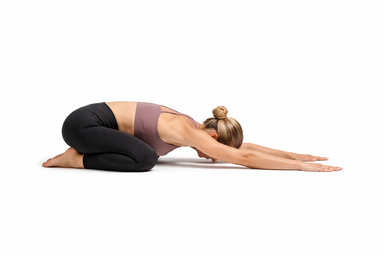
How to
A kneeling rest pose that gently stretches your back, hips, and shoulders.
- Kneel on the floor with your big toes together and knees apart.
- Sit your hips back toward your heels.
- Fold forward and reach your arms in front of you.
- Rest your forehead down and let your chest sink between your thighs.
- Hold the position and breathe slowly.
- Relax your shoulders
- Breathe into your back
- Forcing your hips down
- Holding your breath
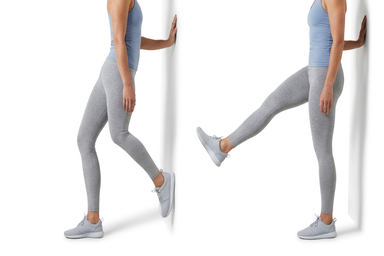
How to
A dynamic hip mobility move that swings each leg to warm up your hips, glutes, and hamstrings.
- Stand tall beside a wall or stable support.
- Brace lightly and shift your weight to one foot.
- Swing the other leg forward and back under control.
- Place it down, then repeat with the other leg.
- Alternate legs for the set.
- Keep your torso tall
- Move from the hip
- Arching your back to swing higher
- Letting the leg swing out of control
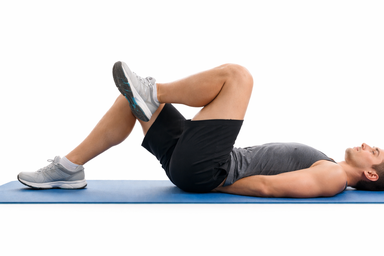
How to
A seated or lying hip stretch that targets your glutes and outer hip on one side.
- Lie on your back with both knees bent and feet flat.
- Cross one ankle over the opposite thigh, making a figure four.
- Pull the uncrossed thigh toward your chest until you feel a stretch.
- Hold and breathe, keeping your shoulders relaxed.
- Release slowly, then switch sides.
- Keep your lower back relaxed
- Flex the crossed foot
- Forcing the knee down with your hand
- Holding your breath
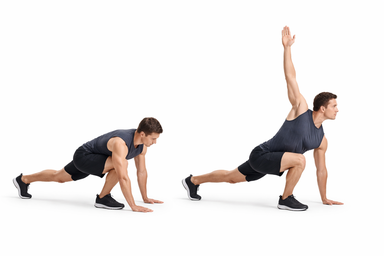
How to
A dynamic lunge stretch that opens your hips, hamstrings, and upper back as you alternate sides.
- Start in a high plank with hands under shoulders.
- Step your right foot outside your right hand.
- Drop your hips, then rotate your right arm up toward the ceiling.
- Place your hand down and step back to plank.
- Repeat on the left side, alternating sides each rep.
- Keep your front foot flat.
- Reach long through your top hand.
- Letting your front heel lift off the floor.
- Rushing the rotation without control.
Recovery Flow
Gentle mobility and low-effort core work to reduce stiffness and restore easy movement.
How to
A kneeling rest pose that gently stretches your back, hips, and shoulders.
- Kneel on the floor with your big toes together and knees apart.
- Sit your hips back toward your heels.
- Fold forward and reach your arms in front of you.
- Rest your forehead down and let your chest sink between your thighs.
- Hold the position and breathe slowly.
- Relax your shoulders
- Breathe into your back
- Forcing your hips down
- Holding your breath
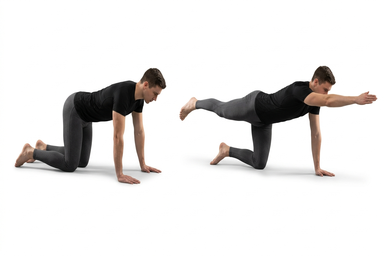
How to
A core stability move from all fours that trains your abs, back, glutes, and balance.
- Start on hands and knees with your hands under shoulders and knees under hips.
- Brace your core and keep your back flat.
- Reach one arm forward and the opposite leg back until they are straight.
- Pause briefly, then bring your hand and knee back under you.
- Repeat on the other side, alternating each rep.
- Keep your hips square
- Move slow and controlled
- Arching or sagging your lower back
- Rotating your hips as you reach
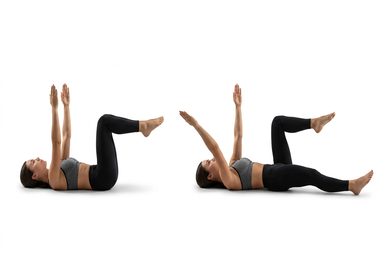
How to
A core move on your back that trains control while you move opposite arm and leg.
- Lie on your back with arms up and knees bent over hips.
- Press your lower back gently toward the floor.
- Lower one arm and the opposite leg with control.
- Return to the start, then repeat on the other side.
- Keep alternating sides for each rep.
- Move slow and stay braced
- Keep your ribs down
- Letting your lower back arch
- Rushing through the reps
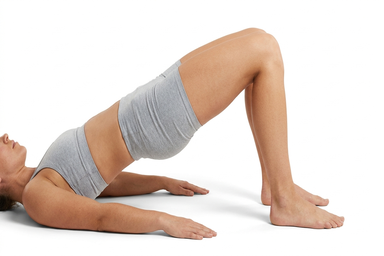
How to
A floor bridge hold that trains your glutes and hamstrings with steady hip extension.
- Lie on your back with knees bent and feet flat, hip-width apart.
- Brace your core and press your feet into the floor.
- Lift your hips until your body forms a straight line from shoulders to knees.
- Hold at the top and breathe steadily.
- Lower your hips with control when the hold is done.
- Squeeze your glutes at the top
- Keep your ribs down
- Arching your lower back at the top
- Letting your knees cave inward
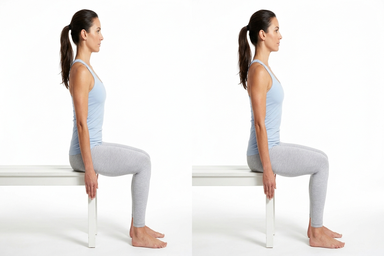
How to
A neck isometric that trains deep neck flexors and posture.
- Stand or sit tall with your chin level.
- Draw your chin straight back, like making a double chin.
- Hold the tuck and breathe slowly.
- Relax, then repeat for the next hold.
- Keep the back of your neck long
- Keep your eyes level
- Tilting your head up or down
- Pushing your chin forward instead of back
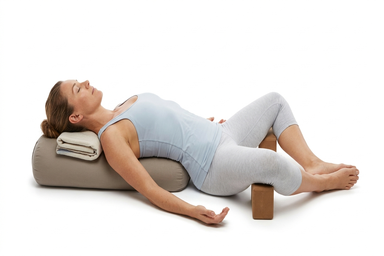
How to
A supported seated hip-opening hold that targets your inner thighs and hips.
- Sit on the floor with the soles of your feet together and knees open.
- Place support under your hips or knees as needed.
- Hold your feet or ankles and sit tall.
- Rest your knees into the support and breathe slowly.
- Bring your knees together, then extend your legs to come out.
- Sit tall through your spine.
- Let your knees be supported.
- Forcing your knees toward the floor.
- Rounding your back and collapsing forward.

Floor Work That Rebuilds From the Ground Up
Bird Dog and Dead Bug aren't just gentle — they're co-contraction drills that train your deep stabilizers (multifidus, transverse abdominis) without loading your spine. Glute Bridge Hold reactivates inhibited glutes, breaking the hip flexor dominance that accumulates from sitting and fatigue.

What Stiffness Is Actually Telling You
Post-exertion stiffness is your nervous system guarding tissues it perceives as vulnerable — not a sign of damage. Cat-Cow and Leg Swings work with this by restoring synovial fluid circulation and resetting mechanoreceptor signaling, so your body stops bracing and starts moving freely again.

Sequence Logic: Calm Before You Lengthen
Chin Tuck Hold and Child's Pose front-load the session with nervous system downregulation before deeper openers like World's Greatest Stretch and Figure Four demand tissue compliance. One cue: slow your exhale to 6+ seconds during Supported Bound Angle — it accelerates the shift into parasympathetic recovery.