
Clean & Minimal AI Powered Fitness Routines
Download AppIntermediate Wrist Tendinopathy Routine
A wrist-friendly mobility + tendon-loading session to reduce pain and build capacity in ~25 minutes.
Intermediate Wrist Tendinopathy Routine
A wrist-friendly mobility + tendon-loading session to reduce pain and build capacity in ~25 minutes.
Warm-Up & Mobility
Increase blood flow and gently move through wrist/hand ranges without provoking symptoms. — 8 minutes.
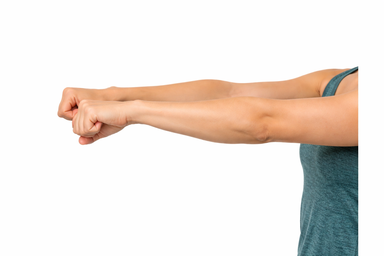
How to
A gentle wrist mobility drill that moves both wrists through circles to warm your forearms and hands.
- Stand or sit tall with your arms relaxed and elbows bent.
- Make slow circles with both wrists in one direction.
- Keep the movement smooth and controlled.
- Reverse direction and circle both wrists the other way.
- Move through a comfortable range
- Keep your shoulders relaxed
- Forcing a painful range
- Moving too fast or jerky
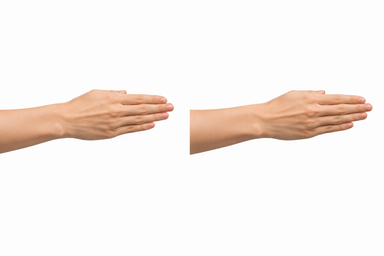
How to
A finger mobility drill for both hands that trains finger control through several fist shapes.
- Hold both hands up with wrists straight and fingers long.
- Bend your fingertips into a hook, then straighten.
- Make a full fist, then straighten your fingers.
- Bend at the big knuckles into a flat fist, then open fully.
- Move slowly through each shape for your reps.
- Keep your wrists straight.
- Move with control.
- Rushing through the finger positions.
- Letting your wrists bend or collapse.
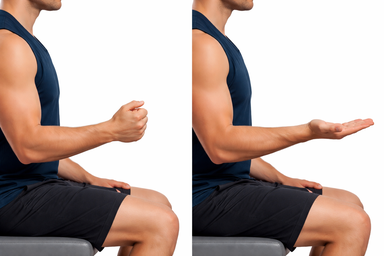
How to
A forearm rotation move that trains wrist control and forearm muscles.
- Sit or stand tall with one elbow bent at 90 degrees by your side.
- Keep your upper arm still and rotate your palm up.
- Rotate your palm down with control.
- Move slowly through a comfortable range for each rep.
- Finish your reps, then switch arms.
- Keep your wrist straight.
- Move from your forearm, not your shoulder.
- Letting your elbow drift away from your side.
- Bending your wrist as you rotate.
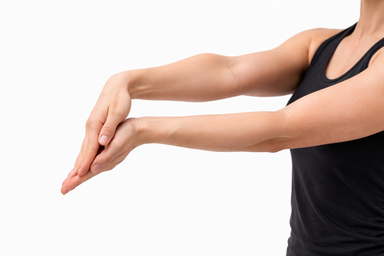
How to
A forearm stretch that targets the wrist flexors on one arm at a time.
- Extend one arm in front of you, palm up.
- Keep your elbow straight and gently pull your fingers back.
- Hold the stretch and breathe slowly.
- Release gently, then switch sides.
- Keep your shoulder relaxed
- Use gentle pressure
- Bending your elbow
- Pulling into sharp pain
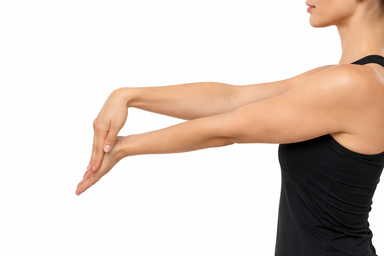
How to
A forearm stretch that targets the wrist extensors on the top of your forearm.
- Extend one arm in front with your palm down.
- Use your other hand to gently bend your wrist down.
- Keep your elbow straight and hold while breathing slowly.
- Release slowly, then switch sides.
- Use gentle pressure
- Keep your shoulder relaxed
- Forcing the wrist into pain
- Bending your elbow during the stretch
Isometric Holds
Press gradually to a tolerable effort (5–7/10). Keep wrist aligned; avoid shrugging.

How to
An isometric wrist drill that trains your wrist extensors without moving the joint.
- Sit or stand with forearms supported and palms facing down.
- Place the backs of both hands under a fixed surface.
- Press your knuckles upward into the surface without moving your wrists.
- Hold the effort and breathe, then relax.
- Keep the pressure steady.
- Keep your forearms still.
- Letting your elbows lift.
- Twisting your wrists as you press.

How to
A one-arm wrist hold that trains your wrist flexors without moving the joint.
- Sit or stand with one forearm supported, palm facing up.
- Bend your wrist slightly toward you and press into your other hand.
- Match the pressure so your wrist does not move.
- Hold and breathe steadily, then relax.
- Switch arms and repeat.
- Keep your forearm still
- Use steady pressure
- Letting your wrist bend or collapse
- Shrugging your shoulder as you press
Eccentric Strength
Use the other hand to help lift; lower slowly for ~3 seconds each rep.
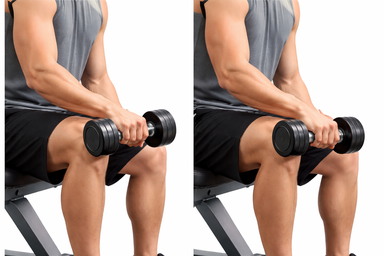
How to
A slow lowering wrist extension that trains the forearm muscles on the back of your arms.
- Sit with forearms supported, palms down, wrists just past the edge.
- Lift both hands so your knuckles point up.
- Slowly lower both hands until your wrists bend down.
- Return to the top with control and repeat.
- Move only at your wrists.
- Keep your forearms planted.
- Letting your hands drop quickly.
- Lifting your forearms off the support.
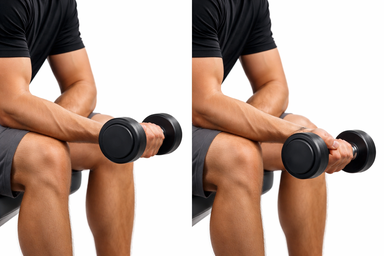
How to
A slow lowering wrist curl that trains your forearms and wrist flexors.
- Sit with both forearms supported and palms facing up.
- Let your hands hang just past the edge.
- Curl both wrists up to start each rep.
- Lower your hands slowly until your wrists extend.
- Reset and repeat with control.
- Keep your forearms still
- Move only at your wrists
- Lifting your forearms off the support
- Dropping your hands too fast
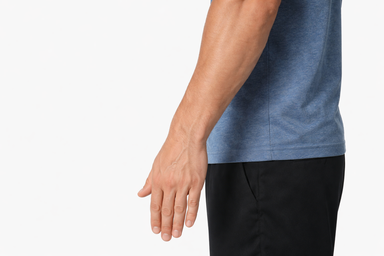
How to
A side-to-side wrist move that trains forearm control and wrist mobility.
- Sit or stand with one forearm supported and palm facing down.
- Keep your forearm still and let your hand hang past the edge.
- Move your wrist toward your thumb side with control.
- Move your wrist toward your pinky side with control.
- Finish your reps, then switch sides.
- Move only at the wrist.
- Use a slow, smooth range.
- Twisting your forearm instead of moving your wrist.
- Rushing through the side-to-side motion.
Cool-Down
Downshift tension and finish with gentle circulation work. — 3 minutes.
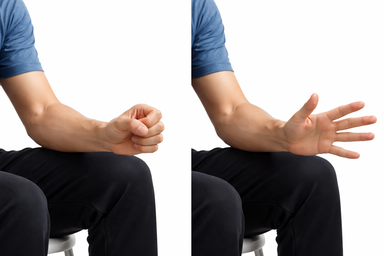
How to
A simple finger opening move that trains the muscles on the back of your hands and forearms.
- Hold both hands in front of you with relaxed wrists.
- Make loose fists with your thumbs outside.
- Open your hands and spread your fingers wide.
- Pause briefly, then return to loose fists.
- Repeat for the set.
- Keep your wrists still.
- Spread through every finger.
- Locking your wrists or shrugging your shoulders.
- Snapping the fingers open too fast.

How to
A gentle self-massage for your wrist and forearm to ease tension and improve body awareness.
- Sit or stand tall and rest one forearm in your other hand.
- Use your thumb to press gently around the wrist and forearm.
- Hold steady pressure on tender spots and breathe slowly.
- Make small circles or strokes without forcing the joint.
- Switch wrists, or repeat where you need more time.
- Use light to moderate pressure
- Keep your wrist relaxed
- Pressing so hard that you tense up
- Bending the wrist sharply while massaging

Isometrics Before Eccentrics: Pain-Free Loading
Wrist Extension and Flexion Isometric Holds prime the tendon before the more demanding eccentrics by producing analgesic effects through cortical pain inhibition. This sequencing lets the FCR, FCU, ECRL, and ECRB tendons accept load progressively rather than abruptly, reducing flare-up risk while still driving collagen remodeling.

Tendinopathy Demands Compression Management
Wrist tendons under pathological load are sensitized to compressive and tensile forces simultaneously, making exercise selection critical. Radial/Ulnar Deviation and Forearm Pronation/Supination address the rotational control deficits that often perpetuate tendinopathy by overloading the extensor carpi ulnaris and radial wrist stabilizers asymmetrically.

Eccentric Loading as Your Adaptation Lever
Wrist Extension and Flexion Eccentrics are the structural core of this routine — slow, controlled lengthening under load stimulates tenocyte activity and increases tendon stiffness without the compressive stress of concentric-dominant work. As pain decreases over 4–6 weeks, increase eccentric tempo to 4–5 seconds per rep to continue driving adaptation without adding external load.