
Clean & Minimal AI Powered Fitness Routines
Download AppIntermediate ACL Prehab
A knee-friendly strength + stability session to support ACL resilience in ~25 minutes.
Intermediate ACL Prehab
A knee-friendly strength + stability session to support ACL resilience in ~25 minutes.
Warm-Up
Increase blood flow and prep hips/knees/ankles for controlled single-leg work. 5 minutes.
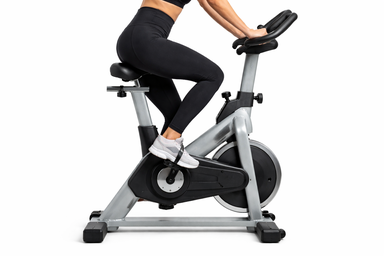
How to
A low-impact cardio exercise done on a bike that trains your legs and builds aerobic fitness.
- Adjust the seat so your knee stays slightly bent at the bottom of each pedal stroke.
- Sit tall, place your feet on the pedals, and hold the handles lightly.
- Start pedaling smoothly at an easy pace.
- Increase resistance or speed to match your workout goal.
- Ease the pace down before you stop pedaling.
- Keep your chest up
- Pedal in smooth circles
- Locking your knees at the bottom
- Hunching your shoulders over the handles
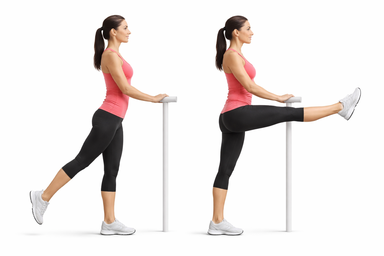
How to
A dynamic leg swing that warms up your hips, hamstrings, and glutes while challenging balance.
- Stand tall and hold a wall or rail for light support if needed.
- Lift one leg slightly off the floor with a soft knee.
- Swing it forward and back with control.
- Set it down, then switch legs on the next rep.
- Keep your torso tall.
- Swing from the hip, not the low back.
- Leaning back as the leg swings forward.
- Forcing the range of motion.
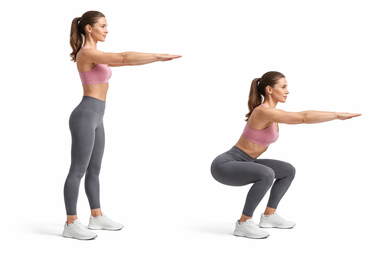
How to
A bodyweight lower-body move that trains your quads, glutes, and hips.
- Stand with feet about shoulder-width apart and toes slightly out.
- Brace your core and keep your chest tall.
- Bend your knees and hips to lower into a squat.
- Push through your feet to stand back up.
- Keep your knees tracking over your toes
- Keep your chest up
- Letting your knees cave in
- Rounding your back as you lower
Circuit A
Controlled tempo. Use light support as needed to keep knee alignment.
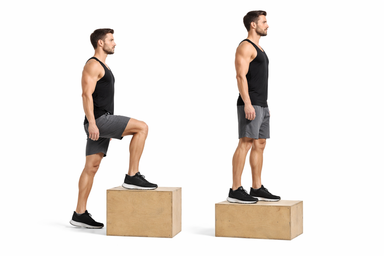
How to
A single-leg climb onto a step that trains your quads, glutes, and balance.
- Stand facing a sturdy step with one foot fully on top.
- Lean slightly forward and drive through the front foot to stand up.
- Bring your back foot onto the step with control.
- Step back down with the same back foot, then lower the front foot.
- Finish your reps, then switch legs.
- Keep your chest tall
- Drive through your whole front foot
- Pushing off too much with the back foot
- Letting your front knee cave inward
How to
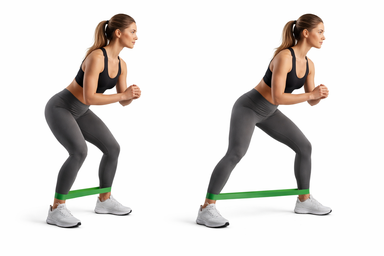
A side-stepping band move that trains your glutes and hips while keeping tension on the band.
- Place a loop band above your knees or around your ankles.
- Stand with feet hip-width apart, knees soft, and hips back slightly.
- Step to one side, then bring the other foot in without losing band tension.
- Keep stepping side to side for your reps, alternating direction as needed.
- Keep your toes facing forward.
- Stay low and controlled.
- Letting your knees cave inward.
- Snapping your feet together between steps.
How to
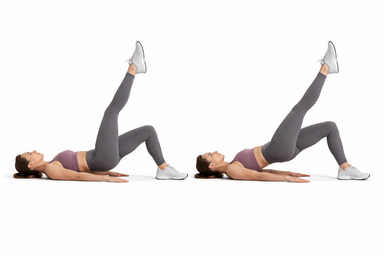
A one-leg bridge that trains your glutes and hamstrings while challenging hip control.
- Lie on your back with one knee bent and the other leg lifted.
- Brace your core and press the planted foot into the floor.
- Lift your hips until your body forms a straight line.
- Lower your hips with control back to the floor.
- Finish your reps, then switch legs.
- Keep your hips level.
- Drive through your heel.
- Letting one hip drop as you lift.
- Arching your lower back at the top.
How to
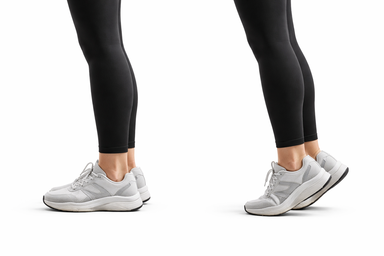
A standing lower-leg move that trains your calves by lifting and lowering your heels.
- Stand tall with both feet hip-width apart.
- Press through the balls of your feet and lift your heels.
- Pause briefly at the top with control.
- Lower your heels slowly back to the floor.
- Repeat for your reps.
- Keep your ankles tracking straight.
- Move up and down with control.
- Rocking onto the outside edges of your feet.
- Bouncing at the bottom of each rep.
Circuit B
Balance and posterior chain work. Keep hips level and move slowly.
How to
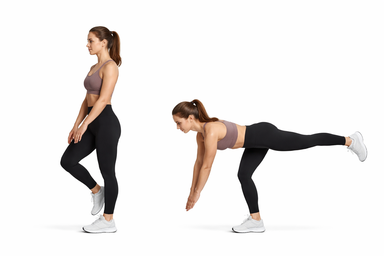
A hip hinge on one leg that trains your hamstrings and glutes while challenging balance.
- Stand tall with weight on one leg and a soft bend in your knee.
- Hinge at your hips and reach your free leg back behind you.
- Lower your chest until you feel a stretch in your standing hamstring.
- Drive through your standing foot to return to tall.
- Finish your reps, then switch legs.
- Keep your hips square.
- Keep your back long.
- Rounding your back as you lower.
- Opening your hips toward the side.
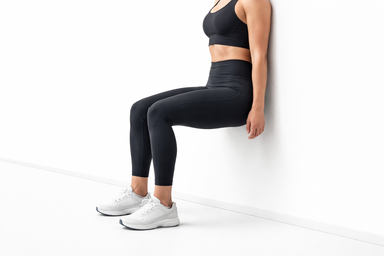
How to
An isometric squat hold against a wall that trains your quads, glutes, and endurance.
- Stand with your back against a wall and feet hip-width apart.
- Walk your feet forward and slide down until your thighs are near parallel.
- Keep your back on the wall and knees over your ankles.
- Hold the position and breathe steadily.
- Stand up by pressing through your feet when finished.
- Keep your chest tall
- Press your back into the wall
- Letting your knees cave inward
- Holding your breath
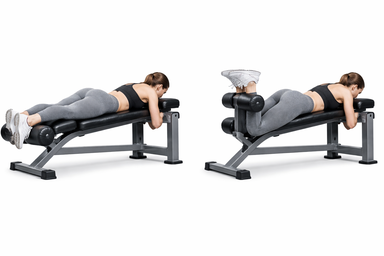
How to
A leg curl that trains your hamstrings by bending both knees against resistance.
- Lie face down with both legs straight and the pad just above your heels.
- Grip the handles and brace your core.
- Curl both heels toward your glutes without lifting your hips.
- Pause briefly, then lower with control to straight legs.
- Keep your hips down.
- Move slowly both ways.
- Lifting your hips to curl the weight.
- Letting the weight drop on the way down.
Cool-Down
Gentle stretching to restore comfort without forcing range of motion. 3 minutes.
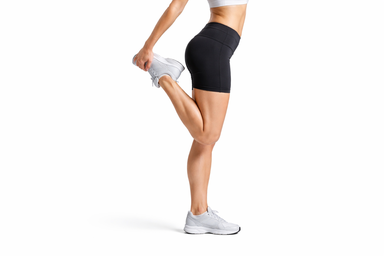
How to
A standing thigh stretch that targets the front of your hip and quad on one leg.
- Stand tall and hold a wall or chair for balance if needed.
- Bend one knee and hold your ankle or foot behind you.
- Keep your knees close and gently draw your heel toward your glute.
- Hold the stretch and breathe slowly.
- Release with control, then switch legs.
- Stand tall through your chest
- Keep your knees close
- Arching your lower back
- Pulling the knee out to the side
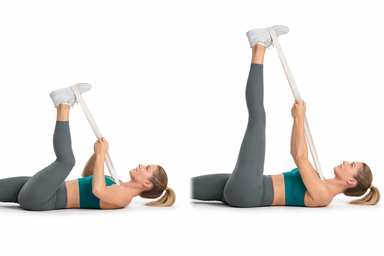
How to
A lying hamstring stretch that uses a steady hold to target the back of your thigh.
- Lie on your back with one leg flat and the other lifted.
- Hold behind your thigh or use a towel around your foot.
- Straighten your raised leg until you feel a gentle stretch.
- Hold the position and breathe slowly.
- Lower your leg, then change sides if your set calls for it.
- Keep your hips heavy on the floor.
- Relax your shoulders and neck.
- Forcing the leg past a gentle stretch.
- Letting your hips roll off the floor.

Targeting the ACL's True Weak Points
Single-leg RDLs and hamstring curls directly load the posterior chain, which acts as a dynamic co-contractor to the ACL under knee stress. Lateral band walks recruit gluteus medius to control valgus collapse — the single most common mechanism of ACL injury. Every exercise here addresses a specific neuromuscular gap, not just general leg strength.

Why ACL Resilience Is a Hip-Knee Problem
The ACL rarely fails in isolation — it fails when hip abductors and external rotators can't control femoral rotation during loading. Athletes and active individuals with ACL vulnerability share a pattern of dominant quad drive with underactive glutes, which is why step-ups and single-leg glute bridges are non-negotiable here. Building this proximal control is what separates prehab from just doing

Building Load Tolerance Without Overexposure
This session uses the specificity principle by progressing from bilateral (bodyweight squat, glute bridge) to unilateral loading (single-leg RDL, step-up), matching how the knee encounters real-world stress. The wall sit introduces isometric quad endurance without shear force on the joint — a strategic choice for building tolerance before adding dynamic load. To personalize, increase band resistan