
Clean & Minimal AI Powered Fitness Routines
Download AppIntermediate Pelvic Floor Strength
A 25-minute pelvic floor strength session focused on breath, control, and hip stability.
Intermediate Pelvic Floor Strength
A 25-minute pelvic floor strength session focused on breath, control, and hip stability.
Warm-Up & Connection
Breath and gentle activation to connect core and pelvic floor.
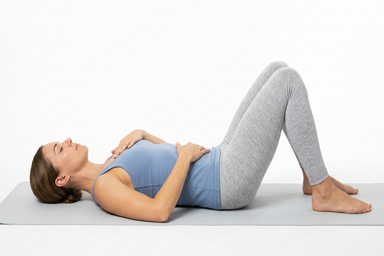
How to
A slow breathing drill that trains relaxed belly breathing and helps you control your breath.
- Lie on your back or sit tall with one hand on your belly.
- Inhale through your nose and let your belly rise.
- Exhale slowly and let your belly fall.
- Keep your chest and shoulders quiet.
- Continue for the set time with smooth breaths.
- Breathe low into your belly
- Keep your shoulders relaxed
- Shrugging your shoulders as you inhale
- Forcing the breath or holding tension
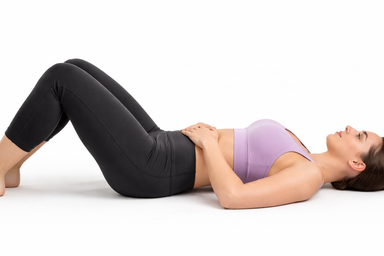
How to
A gentle isometric squeeze that trains control of the pelvic floor muscles.
- Sit or lie comfortably with your hips relaxed.
- Breathe in and relax your belly, glutes, and thighs.
- As you exhale, gently lift and squeeze your pelvic floor.
- Hold the squeeze while breathing normally.
- Release fully and rest before the next hold.
- Keep your glutes relaxed.
- Use a gentle lift, not a hard brace.
- Holding your breath during the squeeze.
- Clenching your glutes or thighs.
Circuit A
Exhale on effort; keep pelvis level and avoid breath holding.
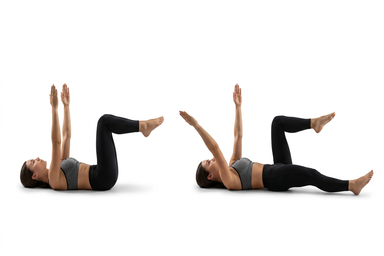
How to
A core move on your back that trains control while you move opposite arm and leg.
- Lie on your back with arms up and knees bent over hips.
- Press your lower back gently toward the floor.
- Lower one arm and the opposite leg with control.
- Return to the start, then repeat on the other side.
- Keep alternating sides for each rep.
- Move slow and stay braced
- Keep your ribs down
- Letting your lower back arch
- Rushing through the reps
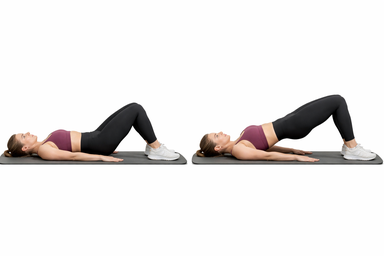
How to
A floor hip lift that trains your glutes and hamstrings with both feet planted.
- Lie on your back with knees bent and feet flat, hip-width apart.
- Brace your core and press your arms lightly into the floor.
- Drive through your heels and lift your hips until your body forms a straight line.
- Squeeze your glutes at the top, then lower with control.
- Repeat for your reps.
- Keep your ribs down
- Drive through your heels
- Arching your lower back at the top
- Pushing through your toes
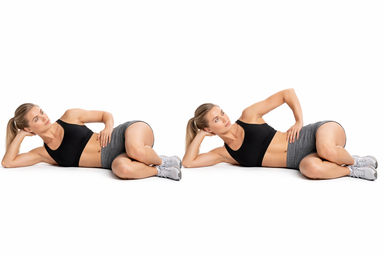
How to
A side-lying hip move that trains your outer glutes and hip rotation control.
- Lie on one side with knees bent and feet stacked.
- Brace lightly and keep your hips stacked.
- Keeping feet together, lift your top knee without rolling back.
- Lower your knee with control to the start.
- Finish your reps, then switch sides.
- Keep your hips stacked.
- Move from the hip, not the low back.
- Rolling your pelvis backward to lift higher.
- Letting your feet separate.
Circuit B
Move slowly and keep trunk steady; reset with an inhale between reps if needed.
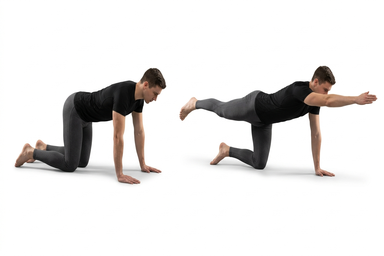
How to
A core stability move from all fours that trains your abs, back, glutes, and balance.
- Start on hands and knees with your hands under shoulders and knees under hips.
- Brace your core and keep your back flat.
- Reach one arm forward and the opposite leg back until they are straight.
- Pause briefly, then bring your hand and knee back under you.
- Repeat on the other side, alternating each rep.
- Keep your hips square
- Move slow and controlled
- Arching or sagging your lower back
- Rotating your hips as you reach
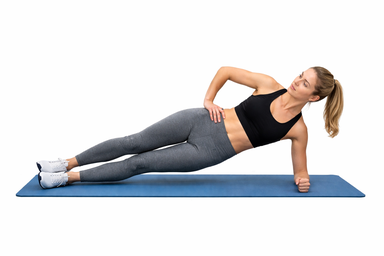
How to
A side hold that trains your obliques, hips, and shoulder stability.
- Lie on one side with your elbow under your shoulder and legs stacked.
- Lift your hips until your body forms a straight line.
- Hold the position and breathe steadily.
- Lower your hips with control.
- Finish your hold, then switch sides.
- Keep your hips stacked
- Press the floor away
- Letting your hips sag
- Rolling your chest toward the floor
How to
A gentle isometric squeeze that trains control of the pelvic floor muscles.
- Sit or lie comfortably with your hips relaxed.
- Breathe in and relax your belly, glutes, and thighs.
- As you exhale, gently lift and squeeze your pelvic floor.
- Hold the squeeze while breathing normally.
- Release fully and rest before the next hold.
- Keep your glutes relaxed.
- Use a gentle lift, not a hard brace.
- Holding your breath during the squeeze.
- Clenching your glutes or thighs.
Cool-Down
Down-train and relax the pelvic floor with easy breathing.
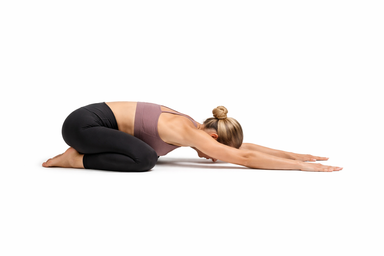
How to
A kneeling rest pose that gently stretches your back, hips, and shoulders.
- Kneel on the floor with your big toes together and knees apart.
- Sit your hips back toward your heels.
- Fold forward and reach your arms in front of you.
- Rest your forehead down and let your chest sink between your thighs.
- Hold the position and breathe slowly.
- Relax your shoulders
- Breathe into your back
- Forcing your hips down
- Holding your breath
How to
A slow breathing drill that trains relaxed belly breathing and helps you control your breath.
- Lie on your back or sit tall with one hand on your belly.
- Inhale through your nose and let your belly rise.
- Exhale slowly and let your belly fall.
- Keep your chest and shoulders quiet.
- Continue for the set time with smooth breaths.
- Breathe low into your belly
- Keep your shoulders relaxed
- Shrugging your shoulders as you inhale
- Forcing the breath or holding tension

Why Glutes and Deep Core Work Together
The glute bridge and dead bug aren't just accessory work — they load the posterior chain and deep stabilizers simultaneously, forcing the pelvic floor to co-contract under real demand. This trains the levator ani and coccygeus to function reflexively, not just in isolation during kegels.

The Intra-Abdominal Pressure Problem
Pelvic floor dysfunction is rarely about weakness alone — it's about pressure mismanagement. Diaphragmatic breathing resets your intra-abdominal pressure strategy, teaching the diaphragm and pelvic floor to move as a synchronized unit rather than letting load spike downward during movement.

Building Load Tolerance Progressively
This session sequences from breath awareness into unloaded contractions, then into gravity-resisted patterns like the bird dog and side plank — a deliberate ramp in neuromuscular demand. To personalize: during the clamshell, add a 2-second pause at peak hip abduction to increase time-under-tension without overloading the floor.