
Clean & Minimal AI Powered Fitness Routines
Download AppCore Bracing for Heavy Lifts
A 25-minute core bracing session to improve trunk stiffness and control for heavy squats, deadlifts, and presses.
Core Bracing for Heavy Lifts
A 25-minute core bracing session to improve trunk stiffness and control for heavy squats, deadlifts, and presses.
Warm-Up
Prep breathing mechanics and trunk control before bracing work. Focus on breath and spine control.
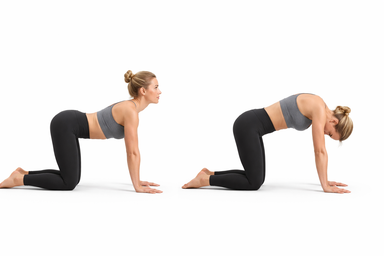
How to
A gentle spine mobility move that alternates rounding and arching your back on hands and knees.
- Start on hands and knees with wrists under shoulders and knees under hips.
- Inhale and drop your belly as you lift your chest and tailbone.
- Exhale and round your back, tucking your chin and tailbone.
- Move slowly between both positions with your breath.
- Move one vertebra at a time.
- Keep your shoulders away from your ears.
- Forcing your neck up or down.
- Rushing through the movement.
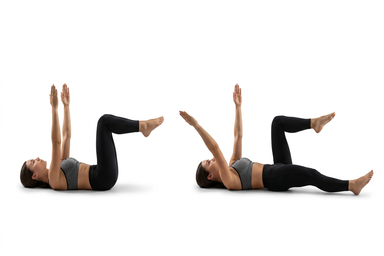
How to
A core move on your back that trains control while you move opposite arm and leg.
- Lie on your back with arms up and knees bent over hips.
- Press your lower back gently toward the floor.
- Lower one arm and the opposite leg with control.
- Return to the start, then repeat on the other side.
- Keep alternating sides for each rep.
- Move slow and stay braced
- Keep your ribs down
- Letting your lower back arch
- Rushing through the reps
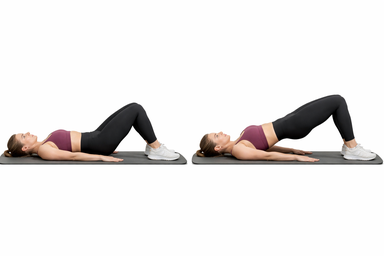
How to
A floor hip lift that trains your glutes and hamstrings with both feet planted.
- Lie on your back with knees bent and feet flat, hip-width apart.
- Brace your core and press your arms lightly into the floor.
- Drive through your heels and lift your hips until your body forms a straight line.
- Squeeze your glutes at the top, then lower with control.
- Repeat for your reps.
- Keep your ribs down
- Drive through your heels
- Arching your lower back at the top
- Pushing through your toes
Circuit A
Anti-extension and posterior chain focus. Brace first, then move the limbs without losing rib/pelvis position.
How to
A core move on your back that trains control while you move opposite arm and leg.
- Lie on your back with arms up and knees bent over hips.
- Press your lower back gently toward the floor.
- Lower one arm and the opposite leg with control.
- Return to the start, then repeat on the other side.
- Keep alternating sides for each rep.
- Move slow and stay braced
- Keep your ribs down
- Letting your lower back arch
- Rushing through the reps
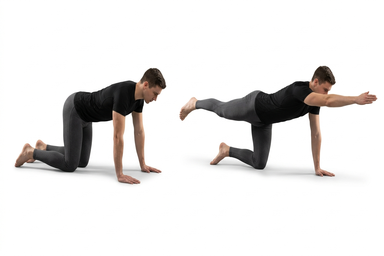
How to
A core stability move from all fours that trains your abs, back, glutes, and balance.
- Start on hands and knees with your hands under shoulders and knees under hips.
- Brace your core and keep your back flat.
- Reach one arm forward and the opposite leg back until they are straight.
- Pause briefly, then bring your hand and knee back under you.
- Repeat on the other side, alternating each rep.
- Keep your hips square
- Move slow and controlled
- Arching or sagging your lower back
- Rotating your hips as you reach
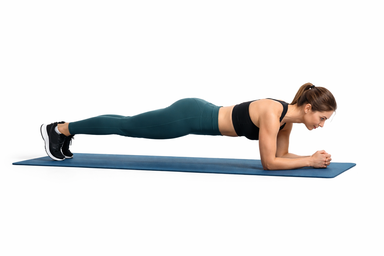
How to
A core hold that trains your abs, shoulders, and glutes while keeping your body in a straight line.
- Place your forearms on the floor with elbows under shoulders.
- Step both feet back and lift into a straight plank.
- Brace your abs and squeeze your glutes.
- Hold for the set time while breathing steadily.
- Lower your knees to the floor to finish.
- Keep your body in one straight line
- Push the floor away with your forearms
- Letting your hips sag toward the floor
- Lifting your hips too high
Circuit B
Anti-rotation and anti-lateral flexion work. Move slowly and keep hips and shoulders square.
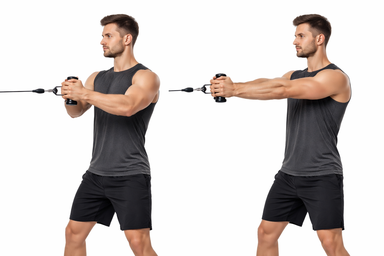
How to
An anti-rotation core hold that trains your abs and obliques to resist twisting.
- Stand sideways to an anchor with the handle at chest height.
- Hold it at your chest with both hands and step out to create tension.
- Brace your core and press your hands straight forward.
- Hold the position and breathe slowly without letting your torso turn.
- Bring your hands back to your chest with control.
- Keep your ribs down
- Stay tall and square
- Letting your torso rotate
- Shrugging your shoulders
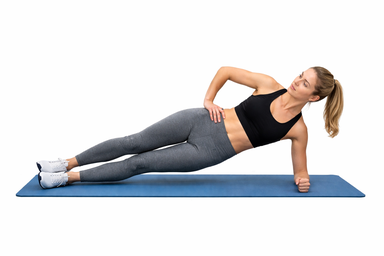
How to
A side hold that trains your obliques, hips, and shoulder stability.
- Lie on one side with your elbow under your shoulder and legs stacked.
- Lift your hips until your body forms a straight line.
- Hold the position and breathe steadily.
- Lower your hips with control.
- Finish your hold, then switch sides.
- Keep your hips stacked
- Press the floor away
- Letting your hips sag
- Rolling your chest toward the floor
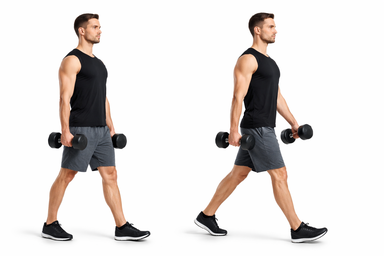
How to
A loaded walk that trains your grip, core, shoulders, and posture.
- Stand tall with a weight in each hand at your sides.
- Brace your core and pull your shoulders down and back.
- Walk forward with short, controlled steps.
- Keep the weights steady and your torso upright.
- Set the weights down with control when finished.
- Stand tall as you walk
- Keep the weights by your sides
- Leaning back or to one side
- Letting the weights swing

Anti-Movement Training Protects Your PRs
Dead Bugs and Pallof Presses train the core to resist motion rather than create it — exactly what your spine needs under a loaded barbell. Bird Dogs reinforce lumbar stability through contralateral limb loading, while Side Planks target the quadratus lumborum, your primary anti-lateral flexion anchor during heavy carries and uneven pulls.

What the Barbell Actually Demands from Your Trunk
Heavy squats and deadlifts generate compressive spinal loads exceeding 8x bodyweight, where intra-abdominal pressure — not ab strength alone — is your primary defense. The difference between a grind and a breakdown is milliseconds of bracing lag; this session trains the neuromuscular timing that closes that gap.

Stiffness Before Strength: The Right Sequencing
Cat-Cow primes segmental spinal mobility before the nervous system is asked to lock everything down — skipping this step leaves motor patterns incomplete. Progress this routine by increasing Pallof Press band tension and Farmer Carry load weekly, and cue every rep with a 360-degree brace: breathe into your belt, not just your belly.