
Clean & Minimal AI Powered Fitness Routines
Download AppIntermediate Knee Stabilizers
A 25-minute knee stability session focused on glutes, quads, calves, and balance control.
Intermediate Knee Stabilizers
A 25-minute knee stability session focused on glutes, quads, calves, and balance control.
Warm-Up
Increase blood flow and prep hips/ankles for knee-friendly mechanics. 5 minutes.
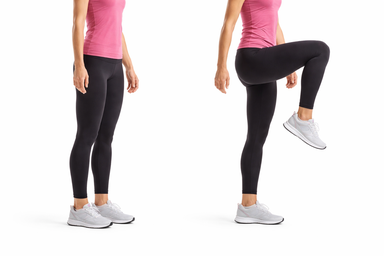
How to
A low-impact cardio move that warms up your legs and hips while raising your heart rate.
- Stand tall with your feet hip-width apart and arms at your sides.
- Lift one knee to hip height as you swing the opposite arm forward.
- Lower that foot, then lift the other knee and switch arms.
- Keep alternating sides at a steady pace.
- Slow down and plant both feet to finish.
- Stand tall with your chest up
- Land softly under your hips
- Leaning back as you lift your knees
- Stomping your feet on each step
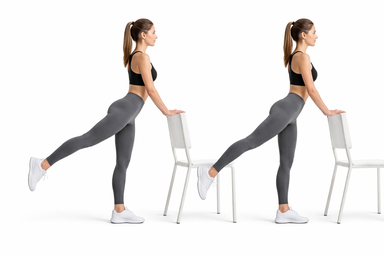
How to
A standing leg swing that warms up your hips and trains balance and leg control.
- Stand tall and hold a wall or rail for balance.
- Shift your weight to one leg and let the other leg hang relaxed.
- Swing the free leg forward and back with control.
- Keep your torso tall as the leg moves from the hip.
- Finish your reps, then switch legs.
- Keep your hips facing forward
- Use smooth, controlled swings
- Leaning your torso to make the swing bigger
- Snapping the leg or using momentum only
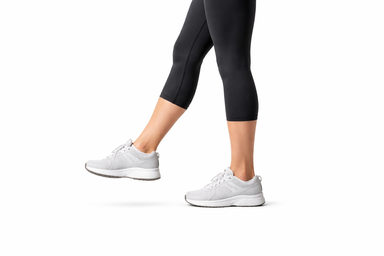
How to
A simple ankle mobility move that warms up your ankle through a full circle.
- Sit or stand tall and lift one foot slightly off the floor.
- Slowly circle your ankle in one direction.
- Reverse the circle and keep the motion smooth.
- Finish your reps, then switch legs.
- Move from your ankle, not your knee
- Keep the circles slow and controlled
- Rushing through small, choppy circles
- Letting your whole leg swing around
Circuit A
Hip-focused work. Keep pelvis steady; move with control.
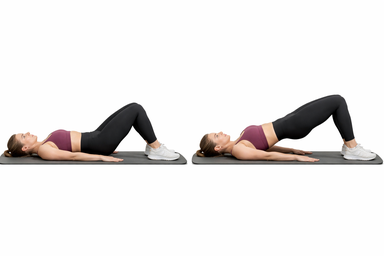
How to
A floor hip lift that trains your glutes and hamstrings with both feet planted.
- Lie on your back with knees bent and feet flat, hip-width apart.
- Brace your core and press your arms lightly into the floor.
- Drive through your heels and lift your hips until your body forms a straight line.
- Squeeze your glutes at the top, then lower with control.
- Repeat for your reps.
- Keep your ribs down
- Drive through your heels
- Arching your lower back at the top
- Pushing through your toes
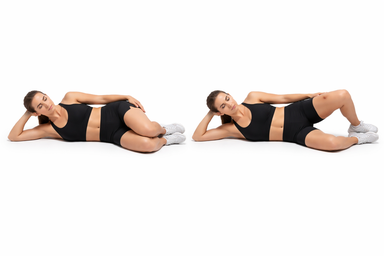
How to
A side-lying hip exercise that trains your glutes and outer hips.
- Lie on your side with knees bent and feet stacked.
- Brace your core and keep your hips stacked.
- Lift your top knee while keeping your feet together.
- Lower your knee with control to the start.
- Finish your reps, then switch sides.
- Keep your hips stacked
- Move slow and controlled
- Rolling your hips back as you lift
- Letting your feet separate
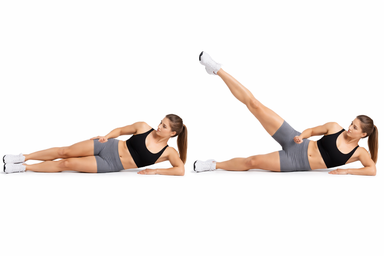
How to
A side-lying leg lift that trains your outer hips and glutes.
- Lie on your side with your legs straight and hips stacked.
- Brace your core and point your top foot straight ahead.
- Lift your top leg up without rolling your hips back.
- Lower with control to the start position.
- Finish your reps, then switch sides.
- Keep your hips stacked.
- Lead with your heel.
- Rolling your top hip back as you lift.
- Swinging the leg instead of controlling it.
Circuit B
Balance and knee control. Use a chair for light fingertip support if needed. Keep knee aligned over toes.
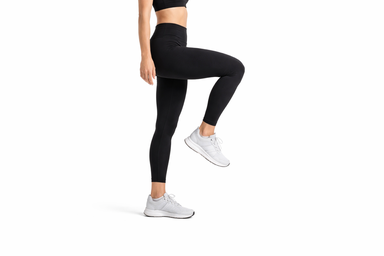
How to
A one-leg standing hold that trains balance and stability in your foot, ankle, and hips.
- Stand tall with feet hip-width apart and arms relaxed.
- Shift your weight onto one foot and lift the other foot off the floor.
- Hold steady, keep your torso tall, and breathe slowly.
- Lower your foot with control, then switch legs.
- Keep your hips level
- Look at one spot ahead
- Letting your hips twist or drop
- Holding your breath
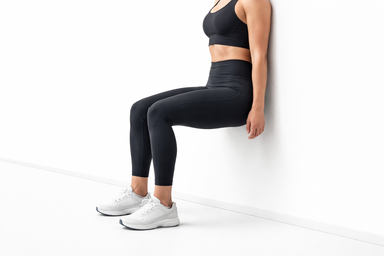
How to
An isometric squat hold against a wall that trains your quads, glutes, and endurance.
- Stand with your back against a wall and feet hip-width apart.
- Walk your feet forward and slide down until your thighs are near parallel.
- Keep your back on the wall and knees over your ankles.
- Hold the position and breathe steadily.
- Stand up by pressing through your feet when finished.
- Keep your chest tall
- Press your back into the wall
- Letting your knees cave inward
- Holding your breath
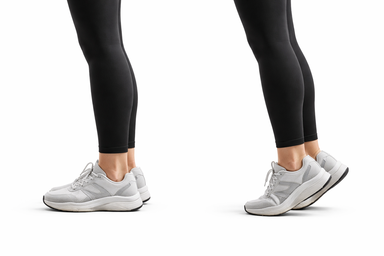
How to
A standing lower-leg move that trains your calves by lifting and lowering your heels.
- Stand tall with both feet hip-width apart.
- Press through the balls of your feet and lift your heels.
- Pause briefly at the top with control.
- Lower your heels slowly back to the floor.
- Repeat for your reps.
- Keep your ankles tracking straight.
- Move up and down with control.
- Rocking onto the outside edges of your feet.
- Bouncing at the bottom of each rep.
Finisher
Tendon-friendly work with slow, controlled reps; focus on full extension and quad squeeze.
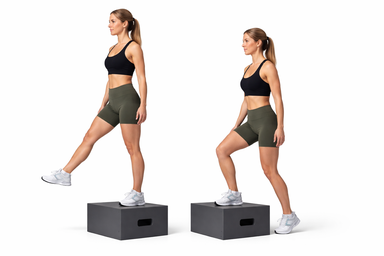
How to
A single-leg step move that trains your quads, glutes, and hip control.
- Stand sideways on a step with one foot planted and the other hanging off.
- Bend your standing knee and hip to lower the free heel toward the floor.
- Tap lightly, then press through the planted foot to stand tall.
- Finish your reps, then switch legs.
- Keep your knee tracking over your toes.
- Move slow and stay level through your hips.
- Dropping your hip as you lower.
- Letting your knee cave inward.
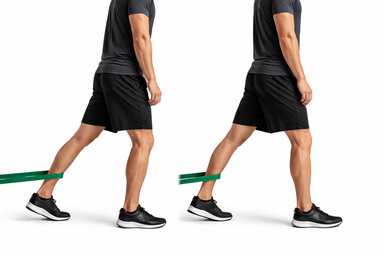
How to
A standing knee extension that trains your quads and control near lockout.
- Anchor a band at knee height and loop it behind one knee.
- Stand tall with that foot flat and your knee slightly bent.
- Press your knee straight by tightening your thigh.
- Pause, then bend your knee slightly with control.
- Finish your reps, then switch legs.
- Keep your foot flat
- Move from the knee, not the hip
- Letting your heel lift off the floor
- Snapping the knee back too fast
Cool-Down
Bring breathing down and restore comfortable range of motion. 3 minutes.
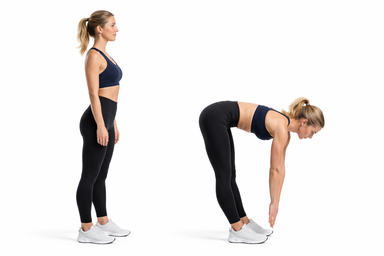
How to
A held stretch for the back of your thigh that targets your hamstrings.
- Sit tall with your target leg straight and toes up.
- Hinge at your hips and reach toward your foot.
- Stop when you feel a gentle stretch behind your thigh.
- Hold the stretch and breathe slowly.
- Release slowly, then switch sides if stretching one leg.
- Keep your back long.
- Hinge from your hips.
- Rounding your back to reach farther.
- Bouncing in the stretch.
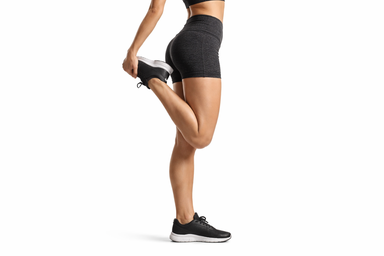
How to
A standing thigh stretch that targets the front of one leg and challenges balance.
- Stand tall and hold a wall or chair for balance if needed.
- Bend one knee and bring your heel toward your glutes.
- Grab your ankle or foot, and keep your knees close together.
- Hold the stretch and breathe slowly.
- Release with control, then switch legs.
- Stand tall with your chest up.
- Keep your knees close together.
- Arching your lower back to force the stretch.
- Letting your lifted knee flare out wide.
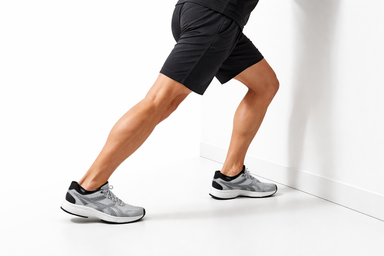
How to
A standing calf stretch that targets the back of your lower leg with a steady hold.
- Stand facing a wall and place your hands on it.
- Step one foot back and keep that heel on the floor.
- Bend your front knee until you feel a calf stretch.
- Hold and breathe slowly without bouncing.
- Finish the hold, then switch legs.
- Keep your back heel down
- Point both toes forward
- Bouncing in the stretch
- Letting the back heel lift

Closing the VMO-Glute Stability Loop
Terminal knee extensions and wall sits directly load the vastus medialis oblique, the quad's weakest link in most knee instability cases. Glute bridges and clamshells fire gluteus medius to control femoral alignment, preventing the inward knee collapse that drives most patellofemoral pain.

Why Knee Pain Lives in the Hip and Ankle
Knee instability rarely originates at the knee — it's a chain failure above and below. Single-leg balance and ankle circles train the proprioceptive feedback loop between ankle and hip, while lateral step-downs expose the exact neuromuscular gap that makes descending stairs or slopes feel unreliable.

Building Load Tolerance Before Adding Load
This routine applies the specificity principle by training stability under bodyweight before introducing external resistance, protecting connective tissue while building motor patterns. Progress lateral step-down depth by 1–2 inches when single-leg balance feels controlled past 20 seconds — that's your readiness signal.