
Clean & Minimal AI Powered Fitness Routines
Download AppIntermediate Cheerleading Routine
A 25-minute intermediate cheer session focused on jumps, conditioning, and sharp motions.
Intermediate Cheerleading Routine
A 25-minute intermediate cheer session focused on jumps, conditioning, and sharp motions.
Warm-Up
6 minutes. Raise heart rate and prep ankles, hips, shoulders for jumps and sharp motions.
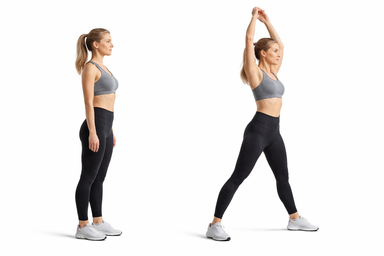
How to
A full-body cardio move that trains coordination, calves, shoulders, and hips.
- Stand tall with feet together and arms at your sides.
- Jump your feet out as you raise your arms overhead.
- Jump your feet back together as you lower your arms.
- Repeat at a steady pace, landing softly each time.
- Stay light on your toes
- Keep your chest tall
- Landing hard with locked knees
- Letting your arms swing out of control
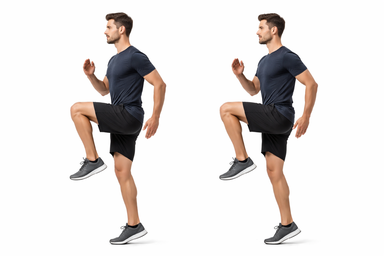
How to
A fast marching or running move that raises each knee to train your legs and raise your heart rate.
- Stand tall with feet under your hips and arms at your sides.
- Drive one knee up toward hip height as the opposite arm swings forward.
- Land softly on the ball of that foot.
- Switch quickly to the other knee and keep alternating.
- Keep a steady rhythm until the set ends.
- Stay tall through your chest
- Land light and quick
- Leaning back as your knees lift
- Stomping your feet into the floor
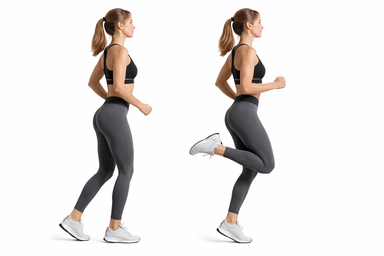
How to
A cardio drill where you jog in place and kick your heels toward your glutes. It warms your legs and raises your heart rate.
- Stand tall with your feet hip-width apart and arms relaxed.
- Jog in place, alternating heels up toward your glutes.
- Pump your arms naturally as your feet move quickly.
- Land softly on the balls of your feet each time.
- Slow down, then stand tall to finish.
- Stay tall through your chest
- Keep the steps light
- Leaning far forward as you kick
- Slapping your feet hard on the floor
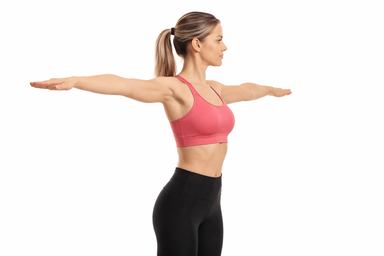
How to
A simple shoulder warm-up that moves both arms in circles and trains shoulder control.
- Stand tall with your feet about hip-width apart.
- Raise both arms out to your sides at shoulder height.
- Make small, controlled circles with both arms.
- Keep circling for the set time, then reverse direction if told.
- Lower your arms to finish.
- Keep your ribs down
- Move smoothly, not fast
- Shrugging your shoulders toward your ears
- Arching your back to keep the arms up
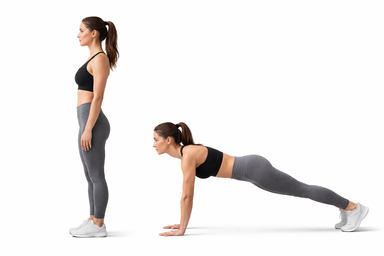
How to
A full-body walkout that trains your core, shoulders, and hamstrings.
- Stand tall with feet hip-width apart.
- Hinge at your hips and place your hands on the floor.
- Walk your hands forward to a high plank.
- Pause with your body in a straight line.
- Walk your hands back to your feet and stand up.
- Brace your core in the plank.
- Keep your legs as straight as you can.
- Letting your hips sag in the plank.
- Rushing the hand walkout.
Jump and Strength Circuit
Explode on jumps, then immediately control the strength work. Land softly and reset between reps as needed.
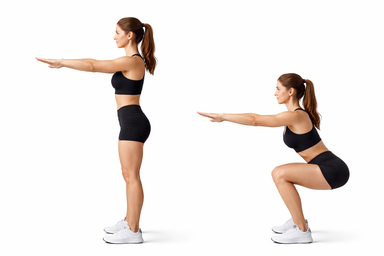
How to
A lower-body move that trains your quads, glutes, and core as you sit down and stand up.
- Stand with feet about shoulder-width apart, toes slightly out.
- Brace your core and keep your chest tall.
- Bend your knees and hips to lower into a squat.
- Lower until comfortable, keeping heels on the floor.
- Drive through your feet to stand back up.
- Keep your knees tracking over your toes.
- Keep your chest lifted.
- Letting your knees cave inward.
- Rounding your back as you lower.
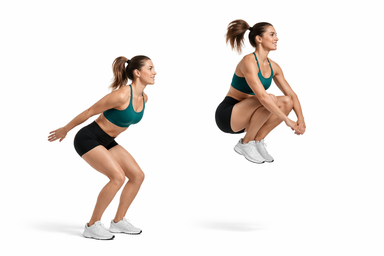
How to
A powerful jump where you drive both knees up toward your chest. It trains explosive legs and cardio.
- Stand tall with feet hip-width apart and arms at your sides.
- Dip into a shallow squat and swing your arms back.
- Jump straight up and pull both knees toward your chest.
- Land softly on both feet with knees bent.
- Reset your stance before the next rep.
- Land quietly
- Keep your chest up
- Letting your knees cave in on landing
- Landing stiff-legged
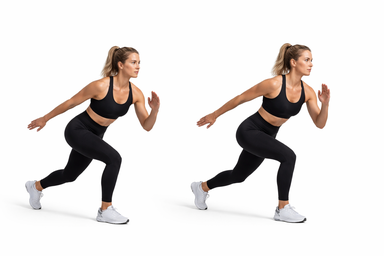
How to
A side-to-side jump that trains your glutes, legs, and balance.
- Stand on one foot with a slight bend in your knee.
- Push sideways and land softly on the other foot.
- Stick the landing, then bound back to the first side.
- Keep alternating sides for your reps.
- Keep your chest up
- Land softly and stay balanced
- Leaning your torso too far forward
- Letting your landing knee cave inward
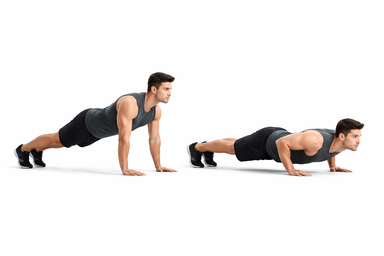
How to
A bodyweight press that trains your chest, shoulders, triceps, and core.
- Start in a high plank with hands just wider than shoulders.
- Brace your core and keep your body in a straight line.
- Bend your elbows and lower your chest toward the floor.
- Press the floor away until your arms are straight again.
- Repeat for your reps.
- Keep your ribs down
- Move your body as one piece
- Letting your hips sag
- Flaring your elbows straight out
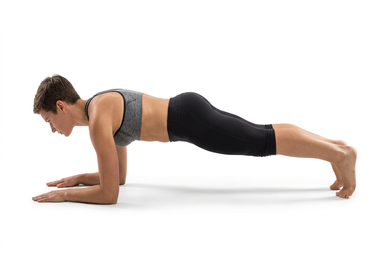
How to
A core hold that trains your abs, shoulders, and glutes while you keep a straight body line.
- Place your forearms on the floor with elbows under shoulders.
- Step both feet back and lift into a straight line from head to heels.
- Brace your abs and squeeze your glutes.
- Hold the position and breathe steadily.
- Lower your knees to the floor to finish.
- Keep your ribs pulled down
- Push the floor away
- Letting your hips sag
- Lifting your hips too high
Core and Stability Block
Focus on tight core and steady breathing; keep hips level on side planks.
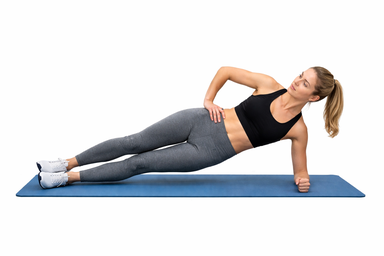
How to
A side hold that trains your obliques, hips, and shoulder stability.
- Lie on one side with your elbow under your shoulder and legs stacked.
- Lift your hips until your body forms a straight line.
- Hold the position and breathe steadily.
- Lower your hips with control.
- Finish your hold, then switch sides.
- Keep your hips stacked
- Press the floor away
- Letting your hips sag
- Rolling your chest toward the floor
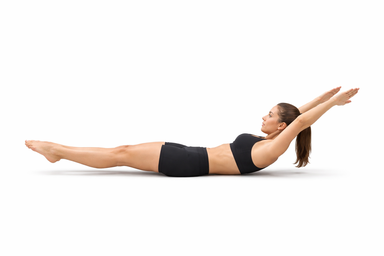
How to
A core hold on your back that trains bracing and body tension.
- Lie on your back with arms overhead and legs straight.
- Press your lower back into the floor and brace your core.
- Lift your shoulders, arms, and legs slightly off the floor.
- Hold the shape and breathe with control.
- Lower to the floor when the hold is done.
- Keep your lower back pressed down
- Reach long through hands and toes
- Letting your lower back arch off the floor
- Holding your breath
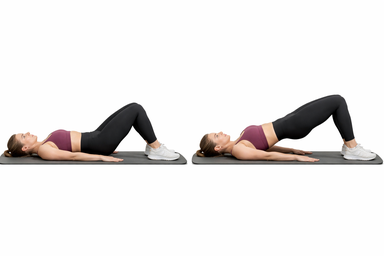
How to
A floor hip lift that trains your glutes and hamstrings with both feet planted.
- Lie on your back with knees bent and feet flat, hip-width apart.
- Brace your core and press your arms lightly into the floor.
- Drive through your heels and lift your hips until your body forms a straight line.
- Squeeze your glutes at the top, then lower with control.
- Repeat for your reps.
- Keep your ribs down
- Drive through your heels
- Arching your lower back at the top
- Pushing through your toes
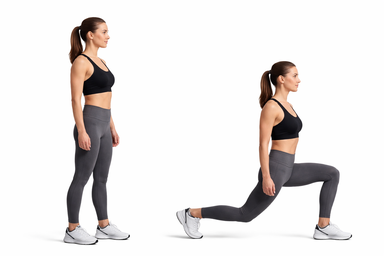
How to
A forward step lunge that trains your legs and glutes, one side at a time.
- Stand tall with your feet hip-width apart.
- Step one foot forward and plant it flat.
- Bend both knees until your back knee moves toward the floor.
- Push through your front foot to return to standing.
- Finish your reps, then switch legs.
- Keep your chest tall.
- Track your front knee over your toes.
- Letting your front knee cave inward.
- Pushing off your back foot to stand up.
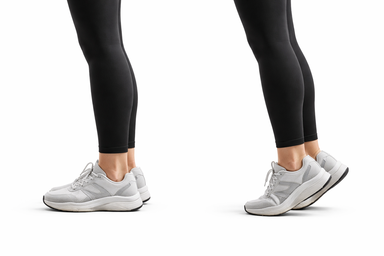
How to
A standing lower-leg move that trains your calves by lifting and lowering your heels.
- Stand tall with both feet hip-width apart.
- Press through the balls of your feet and lift your heels.
- Pause briefly at the top with control.
- Lower your heels slowly back to the floor.
- Repeat for your reps.
- Keep your ankles tracking straight.
- Move up and down with control.
- Rocking onto the outside edges of your feet.
- Bouncing at the bottom of each rep.
Cool-Down
3 minutes. Bring heart rate down and open hips/legs for better lines and safer landings.
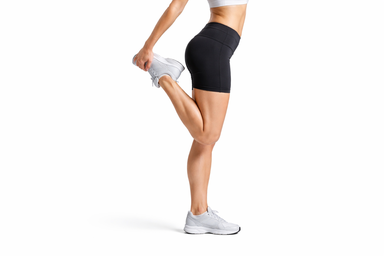
How to
A standing thigh stretch that targets the front of your hip and quad on one leg.
- Stand tall and hold a wall or chair for balance if needed.
- Bend one knee and hold your ankle or foot behind you.
- Keep your knees close and gently draw your heel toward your glute.
- Hold the stretch and breathe slowly.
- Release with control, then switch legs.
- Stand tall through your chest
- Keep your knees close
- Arching your lower back
- Pulling the knee out to the side
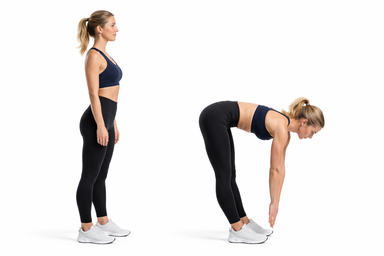
How to
A held stretch for the back of your thigh that targets your hamstrings.
- Sit tall with your target leg straight and toes up.
- Hinge at your hips and reach toward your foot.
- Stop when you feel a gentle stretch behind your thigh.
- Hold the stretch and breathe slowly.
- Release slowly, then switch sides if stretching one leg.
- Keep your back long.
- Hinge from your hips.
- Rounding your back to reach farther.
- Bouncing in the stretch.
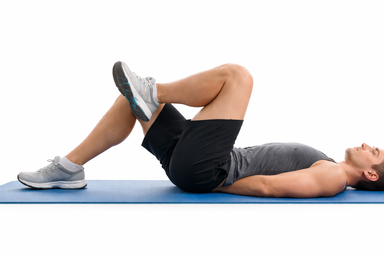
How to
A seated or lying hip stretch that targets your glutes and outer hip on one side.
- Lie on your back with both knees bent and feet flat.
- Cross one ankle over the opposite thigh, making a figure four.
- Pull the uncrossed thigh toward your chest until you feel a stretch.
- Hold and breathe, keeping your shoulders relaxed.
- Release slowly, then switch sides.
- Keep your lower back relaxed
- Flex the crossed foot
- Forcing the knee down with your hand
- Holding your breath
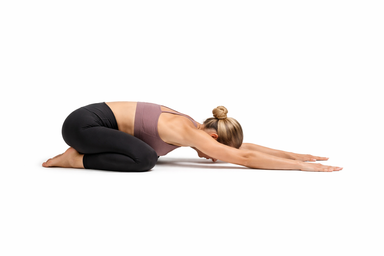
How to
A kneeling rest pose that gently stretches your back, hips, and shoulders.
- Kneel on the floor with your big toes together and knees apart.
- Sit your hips back toward your heels.
- Fold forward and reach your arms in front of you.
- Rest your forehead down and let your chest sink between your thighs.
- Hold the position and breathe slowly.
- Relax your shoulders
- Breathe into your back
- Forcing your hips down
- Holding your breath

Hip Flexor Power Behind Your Tuck Jump
Tuck jumps demand explosive triple extension through the ankles, knees, and hips — calf raises and glute bridges in this routine directly strengthen those exact links. Lateral bounds train the reactive hip abductors that keep your landings controlled and your knees tracking safely. Every ground contact exercise here is building the elastic stiffness cheerleading punches require.

What Cheer Actually Demands From Your Core
Sharp motions lose their precision the moment your midline loses tension — hollow holds and side planks train the anterior and lateral core to resist rotation under load, not just flex. Cheerleading requires isometric core bracing during jumps, stunts, and arm sequences simultaneously, which is exactly the demand hollow holds replicate. Your plank isn't rest; it's sport-specific neurological patte

Sequencing Sharpness Before Fatigue Sets In
Jumps and explosive work appear early in the main set while your neuromuscular system is fresh, maximizing motor unit recruitment and jump height quality. Lunges and glute bridges follow to reinforce hip stability under accumulated fatigue — mimicking the late-routine conditioning demands of a real cheer performance. To personalize, add a half-second pause at the top of each tuck jump to build aer