
Clean & Minimal AI Powered Fitness Routines
Download AppIntermediate Hip Fracture Recovery
A low-impact strength + mobility routine to support hip fracture recovery (about 25 minutes).
Intermediate Hip Fracture Recovery
A low-impact strength + mobility routine to support hip fracture recovery (about 25 minutes).
Warm-Up
Gentle activation. Improve circulation and wake up hip/leg muscles without stressing the joint.
How to
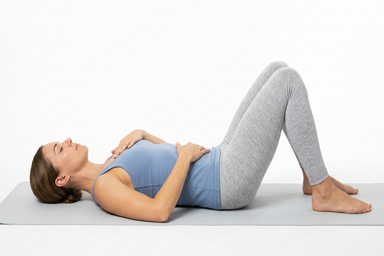
A slow breathing drill that trains relaxed belly breathing and helps you control your breath.
- Lie on your back or sit tall with one hand on your belly.
- Inhale through your nose and let your belly rise.
- Exhale slowly and let your belly fall.
- Keep your chest and shoulders quiet.
- Continue for the set time with smooth breaths.
- Breathe low into your belly
- Keep your shoulders relaxed
- Shrugging your shoulders as you inhale
- Forcing the breath or holding tension
How to
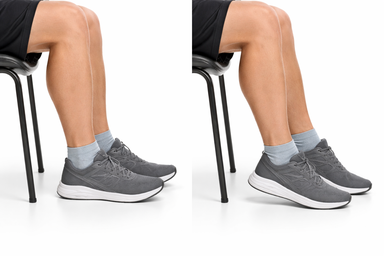
A simple ankle movement that warms your calves and shins and moves both ankles through flex and point.
- Sit or lie down with both legs extended and relaxed.
- Pull your toes toward your shins on both feet.
- Point your toes away from you on both feet.
- Move smoothly back and forth for the set.
- Keep your knees still
- Use a full, smooth range
- Bouncing or jerking the ankles
- Letting your legs tense up
How to
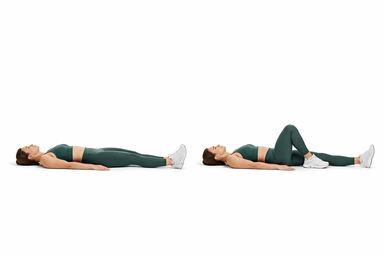
A lying leg slide that trains core control and hip movement one side at a time.
- Lie on your back with knees bent and feet flat.
- Brace your core and keep your low back steady.
- Slide one heel away until your leg is almost straight.
- Pull the heel back to the start with control.
- Finish your reps, then switch legs.
- Move slowly and stay braced.
- Keep your pelvis still.
- Arching your lower back as the leg slides out.
- Letting your hips rock side to side.
How to
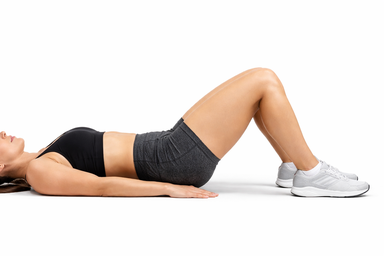
An isometric glute squeeze that trains you to engage both glutes without moving your hips.
- Lie on your back with your legs relaxed and feet hip-width apart.
- Squeeze both glutes as if pinching a coin between them.
- Hold for the set time, breathing slowly.
- Relax fully before the next hold.
- Keep your thighs and hips still.
- Breathe while you squeeze.
- Arching your lower back to make the squeeze stronger.
- Holding your breath during the hold.
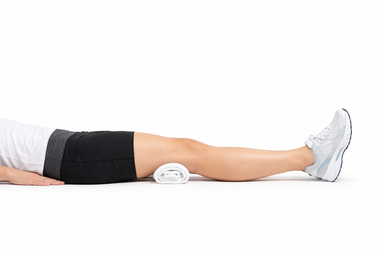
How to
An isometric thigh squeeze that trains your quad with your leg straight.
- Sit or lie with one leg straight and toes up.
- Tighten your thigh and press the back of your knee down.
- Hold the squeeze and breathe steadily.
- Relax, then repeat for your reps or time.
- Finish your set, then switch legs.
- Keep your kneecap facing up
- Squeeze the front of your thigh
- Lifting your hip off the floor
- Holding your breath
Strength Circuit A
Controlled tempo. Use a chair for sit-to-stand; stop 1–2 reps before form breaks.
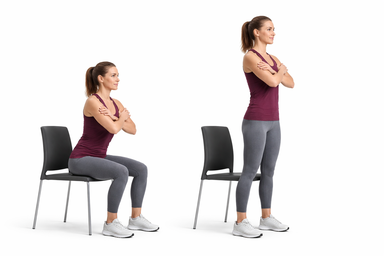
How to
A chair-based squat pattern that trains your thighs and glutes for standing strength.
- Sit near the front of a chair with feet flat and hip-width apart.
- Lean slightly forward and brace your core.
- Press through both feet and stand tall.
- Push your hips back and sit down with control.
- Keep your knees tracking over your toes
- Stand tall at the top
- Letting your knees cave inward
- Dropping hard onto the chair
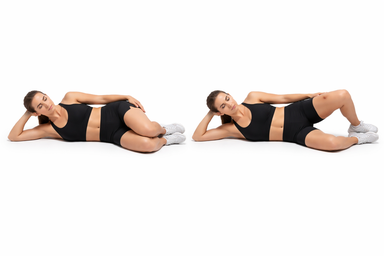
How to
A side-lying hip exercise that trains your glutes and outer hips.
- Lie on your side with knees bent and feet stacked.
- Brace your core and keep your hips stacked.
- Lift your top knee while keeping your feet together.
- Lower your knee with control to the start.
- Finish your reps, then switch sides.
- Keep your hips stacked
- Move slow and controlled
- Rolling your hips back as you lift
- Letting your feet separate
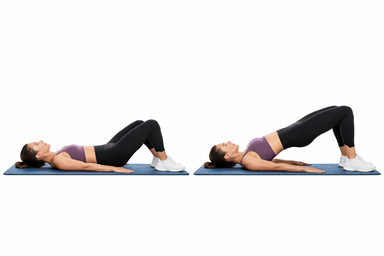
How to
A floor hip lift that trains your glutes, hamstrings, and core.
- Lie on your back with knees bent and feet flat, hip-width apart.
- Brace your core and press your arms into the floor.
- Drive through your heels and lift your hips until your body forms a straight line.
- Squeeze your glutes at the top, then lower with control.
- Repeat for all reps.
- Keep your ribs down
- Drive through your heels
- Arching your lower back at the top
- Letting your knees cave in
Gait Support
Strength and gait support. Hold onto a stable surface for standing exercises. Keep pelvis level.
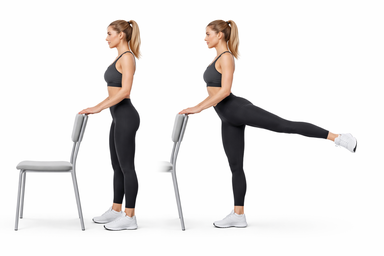
How to
A standing leg raise to the side that trains your outer hips and balance.
- Stand tall with one hand on a wall or chair for balance.
- Shift your weight onto one leg and brace your core.
- Lift the other leg out to the side without leaning your torso.
- Lower the leg with control to the start position.
- Finish your reps, then switch legs.
- Keep your toes facing forward.
- Stand tall through each rep.
- Leaning your torso to lift the leg.
- Turning your toes outward as you raise.
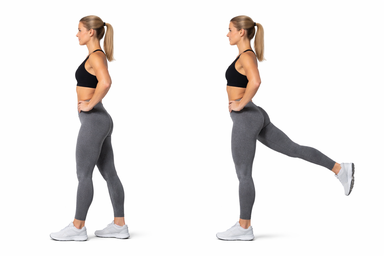
How to
A standing leg lift to the back that trains your glutes and hip control.
- Stand tall and hold a stable support if needed.
- Shift your weight onto one leg and brace your core.
- Squeeze your glute and lift the other leg straight behind you.
- Lower the leg with control to the floor.
- Finish your reps, then switch legs.
- Keep your hips facing forward.
- Move from your hip, not your lower back.
- Arching your lower back to lift higher.
- Letting your torso lean forward.
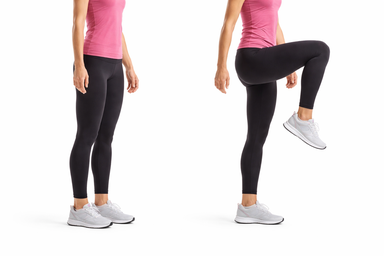
How to
A low-impact cardio move that warms up your legs and hips while raising your heart rate.
- Stand tall with your feet hip-width apart and arms at your sides.
- Lift one knee to hip height as you swing the opposite arm forward.
- Lower that foot, then lift the other knee and switch arms.
- Keep alternating sides at a steady pace.
- Slow down and plant both feet to finish.
- Stand tall with your chest up
- Land softly under your hips
- Leaning back as you lift your knees
- Stomping your feet on each step
Balance Practice
Stay tall, light grip on support if needed. Switch lead foot each round.
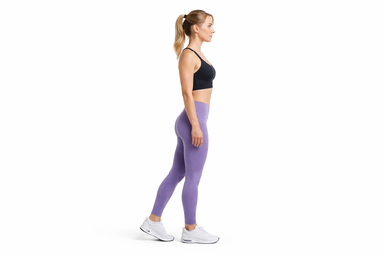
How to
A narrow heel-to-toe balance hold that trains steady posture and control.
- Stand tall near support if needed.
- Place one foot directly in front of the other, heel to toe.
- Keep your weight even and eyes forward.
- Hold the stance and breathe slowly.
- Stand tall through your head
- Keep your feet in one line
- Leaning your body to one side
- Looking down the whole time
Cool-Down
Mobility and stretch. Gentle stretching to reduce stiffness after strengthening.
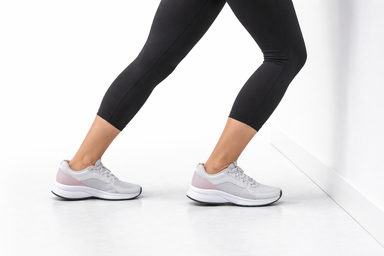
How to
A wall-supported calf stretch that targets one lower leg at a time.
- Stand facing a wall and place your hands on it at chest height.
- Step one foot back with that heel down and toes pointing forward.
- Bend your front knee and lean in until you feel a calf stretch.
- Hold the position and breathe slowly.
- Release, then switch legs.
- Keep your back heel down
- Keep both toes facing forward
- Letting the back heel lift
- Turning the back foot out
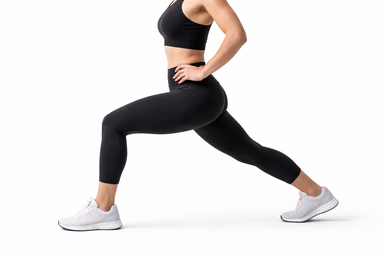
How to
A standing stretch for the front of your hip and thigh on one side.
- Stand tall and hold a wall or sturdy support for balance.
- Step one foot back and tuck that hip slightly under you.
- Bend your front knee until you feel a stretch in the back hip.
- Hold the stretch and breathe slowly.
- Finish the hold, then switch sides.
- Keep your torso tall
- Squeeze the back-side glute
- Arching your lower back
- Letting the back foot turn far outward

Every Exercise Targets Fracture-Site Stability
Glute bridges and clamshells directly load the gluteus medius and maximus — the muscles most responsible for protecting the repaired hip joint during weight transfer. Quad sets and heel slides reactivate the quadriceps without compressive joint loading, rebuilding the neuromuscular control that atrophies fastest post-fracture.

Hip Fracture Recovery Demands Relearning Trust
The hardest adaptation after a hip fracture isn't strength — it's overcoming protective muscle guarding that persists long after bone healing. Tandem stance and march in place specifically retrain single-leg proprioception and vestibular confidence, the two factors most predictive of fall prevention and functional independence.

Sequenced Loading for Bone-Safe Progression
This routine follows a proximal-to-distal activation sequence: breathing and ankle pumps prime circulation before any load reaches the hip. Sit-to-stand is the cornerstone functional milestone — as it becomes easier, increase chair height incrementally to add controlled eccentric demand without changing the movement pattern.