
Clean & Minimal AI Powered Fitness Routines
Download AppIntermediate Snowshoeing Session
A 25-minute intermediate snowshoe workout with warm-up, steady effort, and cool-down.
Intermediate Snowshoeing Session
A 25-minute intermediate snowshoe workout with warm-up, steady effort, and cool-down.
Warm-Up
Gradually raise heart rate and warm the legs before harder efforts. — 5 minutes.
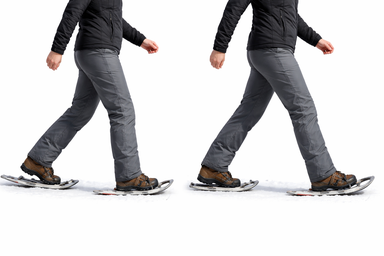
How to
A wide, steady walk that trains your hips, glutes, and legs while raising your heart rate.
- Stand tall with feet hip-width apart and arms relaxed.
- Step forward and slightly wide, like clearing snowshoes.
- Shift your weight onto the front foot and bring the back foot through.
- Keep walking with smooth, even steps for the set time or distance.
- Stay tall through your chest.
- Keep knees tracking over toes.
- Letting your knees cave inward.
- Dragging your feet or rushing each step.
Main Set
Steady snowshoeing with short intervals to build endurance and strength. — 16 minutes.
How to
A wide, steady walk that trains your hips, glutes, and legs while raising your heart rate.
- Stand tall with feet hip-width apart and arms relaxed.
- Step forward and slightly wide, like clearing snowshoes.
- Shift your weight onto the front foot and bring the back foot through.
- Keep walking with smooth, even steps for the set time or distance.
- Stay tall through your chest.
- Keep knees tracking over toes.
- Letting your knees cave inward.
- Dragging your feet or rushing each step.
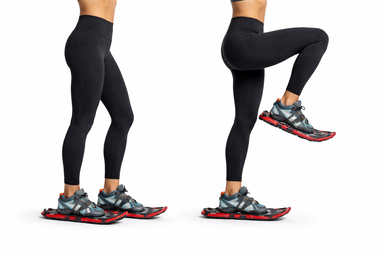
How to
A marching cardio move that drives knees high and trains your hips, legs, and coordination.
- Stand tall with feet hip-width apart and arms bent by your sides.
- Lift one knee toward hip height as you swing the opposite arm forward.
- Step that foot down softly, then lift the other knee.
- Keep alternating knees at a steady pace for the set.
- Stay tall through your chest
- Land softly under your hips
- Leaning back as your knee lifts
- Stomping your feet on each step
How to
A wide, steady walk that trains your hips, glutes, and legs while raising your heart rate.
- Stand tall with feet hip-width apart and arms relaxed.
- Step forward and slightly wide, like clearing snowshoes.
- Shift your weight onto the front foot and bring the back foot through.
- Keep walking with smooth, even steps for the set time or distance.
- Stay tall through your chest.
- Keep knees tracking over toes.
- Letting your knees cave inward.
- Dragging your feet or rushing each step.
Cool-Down
Bring your heart rate down and finish with relaxed, controlled steps. — 4 minutes.
How to
A wide, steady walk that trains your hips, glutes, and legs while raising your heart rate.
- Stand tall with feet hip-width apart and arms relaxed.
- Step forward and slightly wide, like clearing snowshoes.
- Shift your weight onto the front foot and bring the back foot through.
- Keep walking with smooth, even steps for the set time or distance.
- Stay tall through your chest.
- Keep knees tracking over toes.
- Letting your knees cave inward.
- Dragging your feet or rushing each step.

Float, Drive, Stabilize: The Snowshoe Triad
High Knees recruit hip flexors and tibialis anterior to clear the exaggerated frame of each snowshoe, while Step-Ups target the glute medius and VMO—the exact muscles that prevent valgus collapse on uneven, compacted snow. Every movement here mirrors the neuromuscular demands of real terrain navigation.

Why Cold-Weather Cardio Hits Differently
Snowshoeing demands 40–50% more caloric output than walking at equivalent speeds due to frame weight, postural bracing, and thermogenic load on working muscles. Your core fires continuously to counteract lateral sway, making hip stability and ankle proprioception the true performance limiters—not aerobic capacity.

Pacing the 16-Minute Main Set
The 5-minute warm-up primes synovial fluid in cold, stiff ankle and knee joints before the main set elevates heart rate into a moderate aerobic zone via progressive intensity. To personalize, increase Step-Up height by 2–4 inches once your cadence on High Knees stays controlled and rhythmic through the final 4 minutes.