
Clean & Minimal AI Powered Fitness Routines
Download AppIntermediate Middle Splits Mobility
A 25-minute intermediate mobility session to improve middle splits range of motion and control.
Intermediate Middle Splits Mobility
A 25-minute intermediate mobility session to improve middle splits range of motion and control.
Warm-Up
Raise tissue temperature and open hips before deeper adductor work. — Focus on spine and hips.
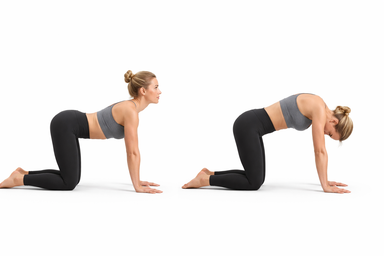
How to
A gentle spine mobility move that alternates rounding and arching your back on hands and knees.
- Start on hands and knees with wrists under shoulders and knees under hips.
- Inhale and drop your belly as you lift your chest and tailbone.
- Exhale and round your back, tucking your chin and tailbone.
- Move slowly between both positions with your breath.
- Move one vertebra at a time.
- Keep your shoulders away from your ears.
- Forcing your neck up or down.
- Rushing through the movement.
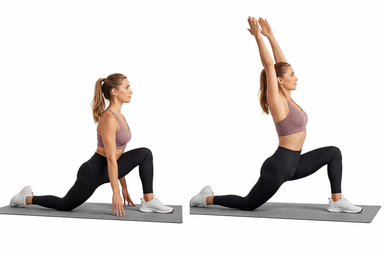
How to
A kneeling lunge hold that opens the front hip and trains steady lower-body control.
- Step one foot forward and lower your back knee to the floor.
- Stack your front knee over your ankle and point both hips forward.
- Lift your chest and let your hips sink gently forward.
- Hold and breathe slowly without bouncing.
- Release with control, then switch sides.
- Keep your chest tall
- Hips face forward
- Letting your front knee collapse inward
- Arching your lower back to go deeper
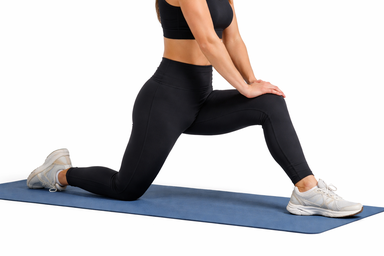
How to
A unilateral isometric stretch for your hamstrings and calves.
- Start in a half split with one leg forward and one back.
- Hinge at the hips and fold over the front leg.
- Hold the stretch and breathe steadily.
- Finish your hold, then switch sides.
- Keep your back long
- Stay relaxed and breathe
- Rounding your lower back
- Bouncing in and out of the stretch
Openers
Use your hands for support and keep breathing.
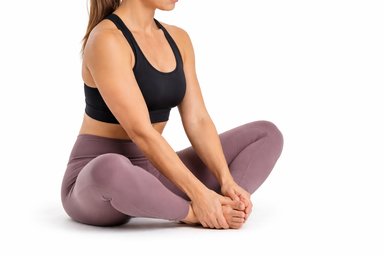
How to
A seated hip stretch that targets your inner thighs and groin.
- Sit tall and bring the soles of your feet together.
- Let your knees fall out to the sides.
- Hold your feet or ankles and lengthen through your spine.
- Relax your thighs and hold, breathing slowly.
- Keep your chest lifted
- Let your knees drop naturally
- Forcing your knees down with your hands
- Rounding your back to reach your feet
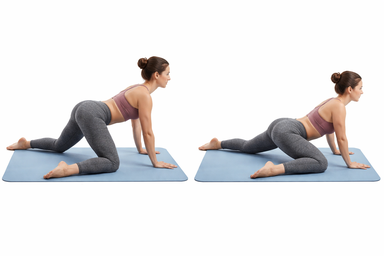
How to
A floor mobility drill that opens your inner thighs and hips with a gentle rock back.
- Start on hands and knees with your knees wide and toes turned out.
- Keep your hands under your shoulders and your spine long.
- Slowly push your hips back toward your heels.
- Pause briefly when you feel a stretch in your inner thighs.
- Rock forward to the start and repeat.
- Move slowly and stay relaxed
- Keep your back long
- Forcing into a painful range
- Rounding your back as you rock back
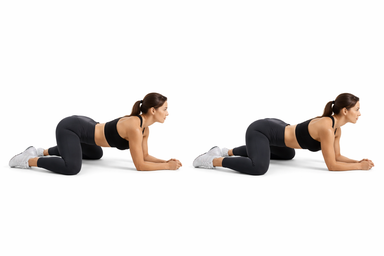
How to
A floor hip stretch with knees wide that targets your inner thighs and hips.
- Start on hands and knees with your knees set wide.
- Turn your feet out so your inner feet rest on the floor.
- Ease your hips back until you feel a steady stretch.
- Hold the position and breathe slowly.
- Come out by shifting forward and bringing your knees in.
- Keep your back flat
- Move slowly into the stretch
- Forcing your hips too far back
- Holding your breath
Strength Through Range
Controlled reps; pause briefly at the bottom position.
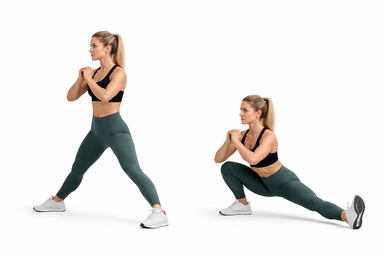
How to
A side-to-side squat that trains your legs, hips, and groin mobility.
- Stand wide with toes slightly turned out.
- Shift your weight to one side and bend that knee.
- Keep the other leg straight with its heel down if you can.
- Push through the bent leg to return to center.
- Repeat to the other side, alternating each rep.
- Keep your chest lifted.
- Track your knee over your toes.
- Letting the bent knee cave inward.
- Rounding your back at the bottom.
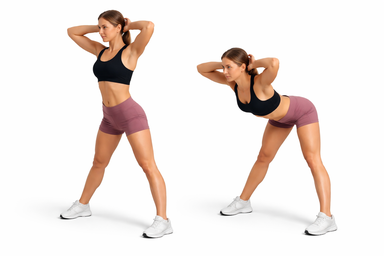
How to
A wide-stance hip hinge that trains your hamstrings, glutes, and back control.
- Stand with your feet wide and toes slightly out.
- Place your hands on your hips or behind your head.
- Push your hips back and hinge forward with a long spine.
- Lower until you feel a stretch, then pause briefly.
- Drive your hips forward to stand tall again.
- Keep your chest open
- Move from your hips, not your waist
- Rounding your back as you hinge
- Letting your knees cave inward
Straddle Series
Sit tall first, then hinge forward without rounding aggressively.
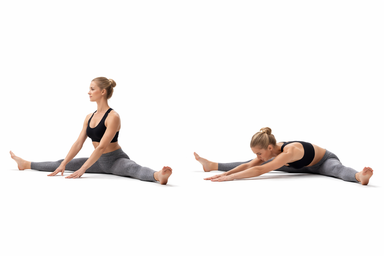
How to
A seated wide-leg stretch that targets your inner thighs and hamstrings.
- Sit tall with your legs wide and knees facing up.
- Flex your feet and place your hands on the floor.
- Hinge forward from your hips until you feel a stretch.
- Hold the position and breathe slowly.
- Ease back up to seated when done.
- Keep your spine long
- Point knees and toes up
- Rounding your back to reach farther
- Letting your knees roll inward
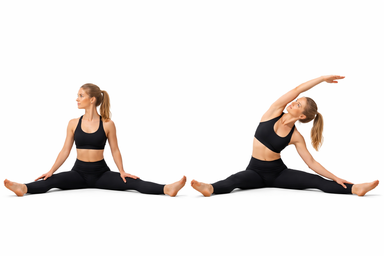
How to
A seated straddle stretch with a side bend that opens your inner thighs and sides of your torso.
- Sit tall with your legs wide and toes pointing up.
- Place one hand on the floor or shin inside your leg.
- Reach your other arm overhead and lean toward your posted hand.
- Hold the stretch and breathe slowly.
- Return to center, then hold on the other side.
- Keep both sit bones heavy.
- Lengthen before you lean.
- Rounding forward instead of bending sideways.
- Forcing the reach or holding your breath.
Middle Split Practice
Use blocks under hands (or forearms on a chair) to control depth. Gentle isometric: lightly press heels down and try to 'drag' them inward without moving.
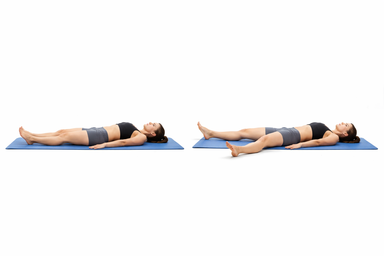
How to
A lying straddle hold that stretches your inner thighs and hamstrings with both legs supported.
- Lie on your back with your legs straight up.
- Open both legs out to a comfortable straddle.
- Keep your low back heavy on the floor.
- Hold the position and breathe slowly.
- Bring your legs back together, then lower them down.
- Keep your low back down
- Move slowly and stay relaxed
- Forcing your legs wider than comfortable
- Lifting your hips or arching your back
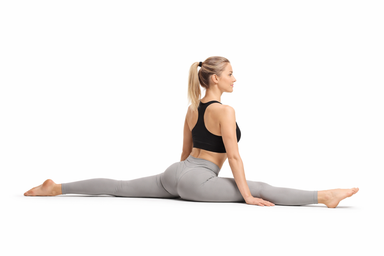
How to
A static middle split hold that stretches your inner thighs and hips.
- Sit or lower into a wide straddle position.
- Slide your legs out until you feel a strong inner-thigh stretch.
- Hold still and breathe slowly through your nose.
- Keep the stretch even on both sides.
- Come out of the hold slowly when done.
- Keep your chest tall
- Breathe steadily
- Forcing the stretch too far
- Holding your breath

Adductor Chain Loading, Layer by Layer
This sequence targets all three adductor heads — brevis, longus, and magnus — by progressing from hip-flexed positions like Butterfly and Frog into hip-neutral end-range work like Middle Split Hold and Supine Straddle. Cossack Squat adds lateral hip loading under bodyweight, training the adductors eccentrically through their full working range.

Why Middle Splits Demand Passive AND Active Tissue
Middle splits stall not from lack of flexibility alone, but from the nervous system guarding uncontrolled end-range positions. Adductor Rock Back and Seated Straddle Side Bend train proprioceptive awareness at your current limit, signaling safety to the CNS and unlocking passive range that already exists but feels inaccessible.

End-Range Exposure as the Core Principle
The warm-up mobilizes the spine and hip capsule first so adductor tissue receives load without compensatory pelvic tilt — a common block in straddle progress. Increase the hold duration on Middle Split Hold by 5–10 seconds each week as your primary progressive overload lever for connective tissue adaptation.