
Clean & Minimal AI Powered Fitness Routines
Download AppIntermediate Balance Routine for Benign Vertigo
A ~25-minute, intermediate balance and gaze-stability session designed to support benign vertigo symptoms.
Intermediate Balance Routine for Benign Vertigo
A ~25-minute, intermediate balance and gaze-stability session designed to support benign vertigo symptoms.
Warm-Up
Gentle activation. Gradually raise alertness and prepare balance systems without provoking symptoms.
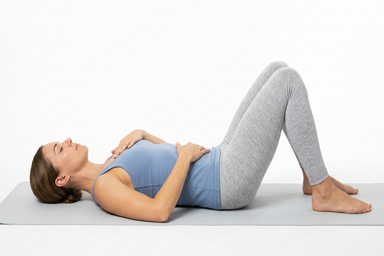
How to
A slow breathing drill that trains relaxed belly breathing and helps you control your breath.
- Lie on your back or sit tall with one hand on your belly.
- Inhale through your nose and let your belly rise.
- Exhale slowly and let your belly fall.
- Keep your chest and shoulders quiet.
- Continue for the set time with smooth breaths.
- Breathe low into your belly
- Keep your shoulders relaxed
- Shrugging your shoulders as you inhale
- Forcing the breath or holding tension
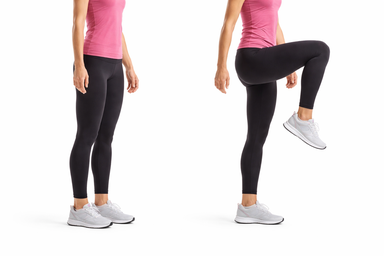
How to
A low-impact cardio move that warms up your legs and hips while raising your heart rate.
- Stand tall with your feet hip-width apart and arms at your sides.
- Lift one knee to hip height as you swing the opposite arm forward.
- Lower that foot, then lift the other knee and switch arms.
- Keep alternating sides at a steady pace.
- Slow down and plant both feet to finish.
- Stand tall with your chest up
- Land softly under your hips
- Leaning back as you lift your knees
- Stomping your feet on each step
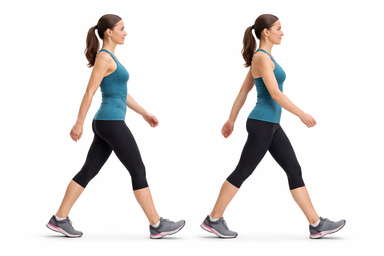
How to
A simple walking movement that trains your legs and builds steady full-body rhythm.
- Stand tall with your feet under your hips.
- Step forward with one foot and roll from heel to toe.
- Swing the opposite arm naturally as you step.
- Push off your back foot and step forward with the other foot.
- Keep alternating steps at a steady pace.
- Stand tall
- Let your arms swing naturally
- Looking down the whole time
- Taking steps that feel too long
Gaze Stabilization Block
Focus on a target at eye level. Turn head while keeping target clear. Rest briefly if symptoms spike.
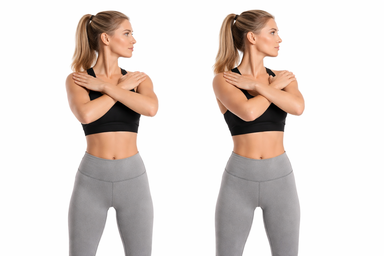
How to
A standing core move that rotates your torso side to side and trains control through your trunk.
- Stand tall with feet hip-width apart and knees slightly bent.
- Bring your hands together in front of your chest.
- Rotate your torso to one side while keeping your hips mostly forward.
- Rotate back through center, then turn to the other side.
- Move smoothly side to side for the set.
- Keep your chest tall.
- Turn from your upper body.
- Twisting your knees with each turn.
- Leaning back instead of rotating.
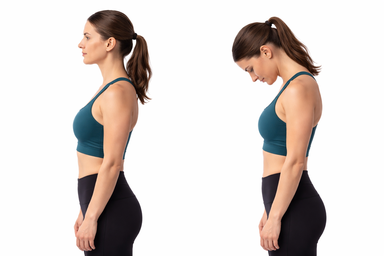
How to
A gentle neck control hold that trains your deep neck flexors and posture.
- Sit or lie tall with your neck long and shoulders relaxed.
- Gently nod your chin toward your throat, like a small yes.
- Hold the small nod and breathe slowly.
- Release back to neutral with control.
- Keep the nod small.
- Relax your jaw and shoulders.
- Forcing your chin hard into your neck.
- Letting your shoulders tense up.
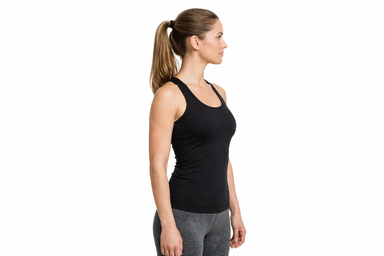
How to
A gentle neck mobility move that turns your head side to side and trains controlled range of motion.
- Sit or stand tall with your shoulders relaxed.
- Look straight ahead and keep your chin level.
- Slowly turn your head to one side as far as comfortable.
- Return to center, then turn to the other side.
- Move smoothly side to side for each rep.
- Keep your shoulders still.
- Move slowly and stay relaxed.
- Tilting your chin up as you turn.
- Forcing the range of motion.
Strength and Postural Control
Move at a steady pace. Use chair support as needed; avoid rushing transitions.
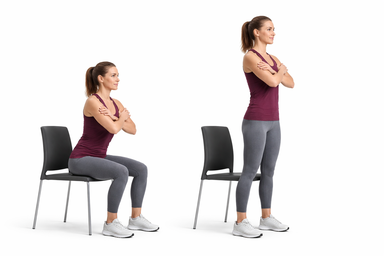
How to
A chair-based squat pattern that trains your thighs and glutes for standing strength.
- Sit near the front of a chair with feet flat and hip-width apart.
- Lean slightly forward and brace your core.
- Press through both feet and stand tall.
- Push your hips back and sit down with control.
- Keep your knees tracking over your toes
- Stand tall at the top
- Letting your knees cave inward
- Dropping hard onto the chair
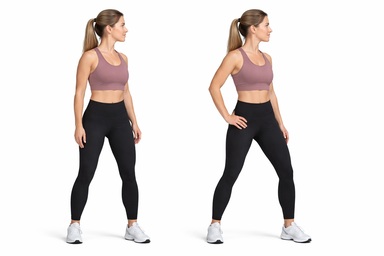
How to
A simple balance drill that shifts your weight from foot to foot to train control and stability.
- Stand tall with your feet hip-width apart.
- Shift your weight slowly onto one foot.
- Let the other foot get light, but keep it near the floor.
- Shift back through center and repeat to the other side.
- Move slowly and stay tall.
- Keep your hips level.
- Leaning your chest far to the side.
- Rushing the shift or losing control.
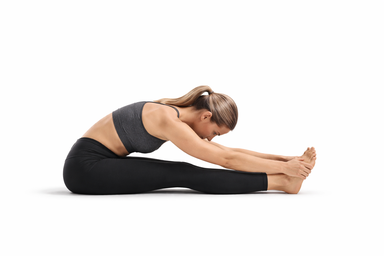
How to
A seated hamstring stretch that also eases your lower back and hips.
- Sit tall with both legs straight in front of you.
- Flex your feet and reach your arms toward your toes.
- Fold forward from your hips until you feel a gentle stretch.
- Hold the position and breathe slowly.
- Keep your knees soft
- Lengthen your spine
- Forcing your head toward your knees
- Bouncing in the stretch
Balance Holds
Stay tall, eyes forward. Light fingertip support is OK; prioritize safety over difficulty.
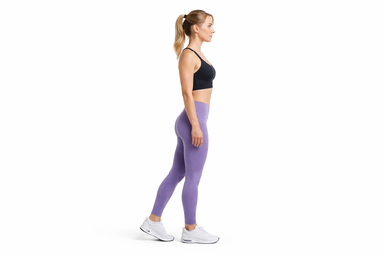
How to
A narrow heel-to-toe balance hold that trains steady posture and control.
- Stand tall near support if needed.
- Place one foot directly in front of the other, heel to toe.
- Keep your weight even and eyes forward.
- Hold the stance and breathe slowly.
- Stand tall through your head
- Keep your feet in one line
- Leaning your body to one side
- Looking down the whole time
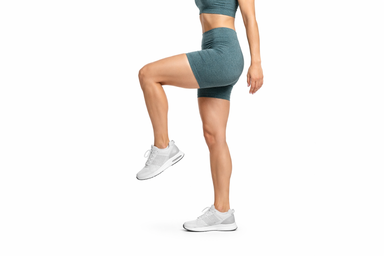
How to
A one-leg balance hold that trains foot, ankle, hip, and core control.
- Stand tall with your feet hip-width apart.
- Shift your weight onto one foot and lift the other foot off the floor.
- Hold steady and breathe slowly.
- Lower your foot with control.
- Finish your hold, then switch legs.
- Keep your hips level.
- Stand tall through your head.
- Leaning your body to one side.
- Letting your lifted foot touch down repeatedly.
Cool-Down
Settle symptoms. Bring your nervous system back down and reduce residual dizziness.
How to
A slow breathing drill that trains relaxed belly breathing and helps you control your breath.
- Lie on your back or sit tall with one hand on your belly.
- Inhale through your nose and let your belly rise.
- Exhale slowly and let your belly fall.
- Keep your chest and shoulders quiet.
- Continue for the set time with smooth breaths.
- Breathe low into your belly
- Keep your shoulders relaxed
- Shrugging your shoulders as you inhale
- Forcing the breath or holding tension

Vestibulo-Ocular Reflex Retraining
Head Turns, Head Nods, and Gaze Stabilization (X1) directly challenge the vestibulo-ocular reflex, training your brainstem to match eye movement speed with head movement speed. Single-Leg Stance and Tandem Hold then force your cerebellum to integrate that recalibrated vestibular signal with proprioceptive input from the ankles and hips.

Why BPPV Demands Gradual Provocation
Benign vertigo symptoms worsen when the vestibular system is overwhelmed too quickly — so every provocation here is intentional and controlled. The progression from seated Head Nods to upright Weight Shifts mirrors how displaced otoconia destabilize canal fluid, letting your brain adapt incrementally rather than compensate with avoidance patterns.

Symptom-Gated Progressive Loading
This session follows a habituation model: repeated, sub-threshold vestibular challenges reduce neural hypersensitivity over time through central compensation. If Tandem Stance or Gaze Stabilization triggers mild symptoms, that's the target stimulus — reduce hold duration rather than skipping it, and track symptom recovery time as your true progress metric.