
Clean & Minimal AI Powered Fitness Routines
Download App25-Minute Neck Pain Relief
A neck-friendly mobility + strengthening session to reduce stiffness and improve posture in ~25 minutes.
25-Minute Neck Pain Relief
A neck-friendly mobility + strengthening session to reduce stiffness and improve posture in ~25 minutes.
Warm-Up
Gentle mobility to reduce guarding and improve upper-back and neck movement without aggravation.
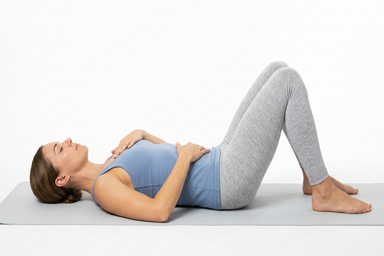
How to
A slow breathing drill that trains relaxed belly breathing and helps you control your breath.
- Lie on your back or sit tall with one hand on your belly.
- Inhale through your nose and let your belly rise.
- Exhale slowly and let your belly fall.
- Keep your chest and shoulders quiet.
- Continue for the set time with smooth breaths.
- Breathe low into your belly
- Keep your shoulders relaxed
- Shrugging your shoulders as you inhale
- Forcing the breath or holding tension
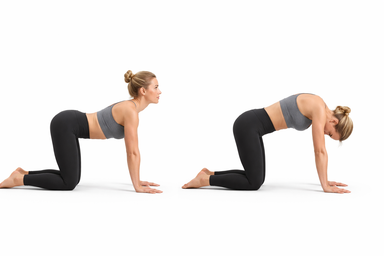
How to
A gentle spine mobility move that alternates rounding and arching your back on hands and knees.
- Start on hands and knees with wrists under shoulders and knees under hips.
- Inhale and drop your belly as you lift your chest and tailbone.
- Exhale and round your back, tucking your chin and tailbone.
- Move slowly between both positions with your breath.
- Move one vertebra at a time.
- Keep your shoulders away from your ears.
- Forcing your neck up or down.
- Rushing through the movement.
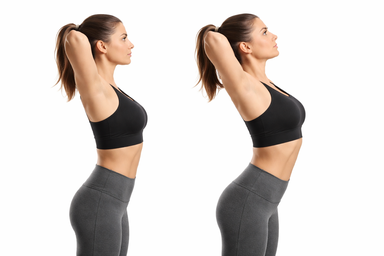
How to
A held upper-back extension that trains thoracic mobility and postural control.
- Sit or kneel tall with your hands behind your head.
- Brace lightly and lift your chest without flaring your ribs.
- Gently extend through your upper back and hold.
- Breathe slowly, then return to tall posture.
- Move from your upper back
- Keep your neck relaxed
- Cranking your neck back
- Flaring your ribs to fake the arch
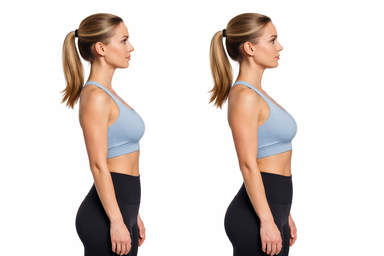
How to
A small neck position hold that trains the front of your neck and helps control head position.
- Sit or stand tall with your eyes looking straight ahead.
- Gently slide your chin straight back, like making a double chin.
- Keep your head level and your jaw relaxed.
- Hold the tuck and breathe slowly.
- Release to neutral, then repeat for the set.
- Move straight back, not down.
- Keep your shoulders relaxed.
- Tilting your head up or down.
- Forcing the tuck or clenching your jaw.
Circuit A
Scapula and neck support. Keep chin gently tucked and ribs stacked over pelvis throughout.
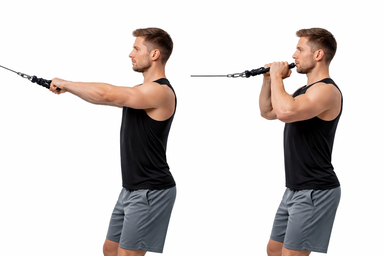
How to
A pulling exercise that trains your upper back and rear shoulders.
- Set a cable or band at face height and hold the handles with both hands.
- Step back with arms straight and palms facing in.
- Pull the handles toward your face, elbows high and wide.
- Squeeze your shoulder blades, then slowly extend your arms.
- Repeat for all reps.
- Keep your ribs down
- Pull elbows back, not down
- Shrugging your shoulders toward your ears
- Leaning back to move the weight
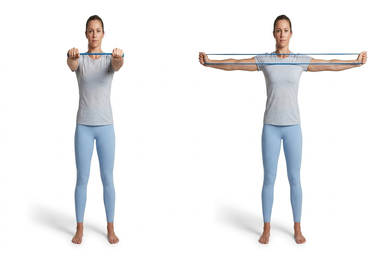
How to
A band upper-back move that trains your rear shoulders and mid-back.
- Stand tall and hold a band at chest height with both hands.
- Start with arms straight and hands shoulder-width apart.
- Pull the band apart until your hands move out to your sides.
- Pause briefly with shoulder blades squeezed together.
- Control the band back to the start and repeat.
- Keep your ribs down.
- Move from your shoulders, not your lower back.
- Shrugging your shoulders toward your ears.
- Arching your back to finish the pull.
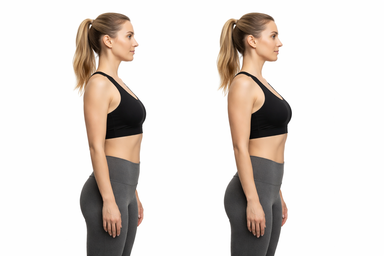
How to
A small shoulder blade squeeze that trains your upper back and shoulder control.
- Stand or sit tall with your arms relaxed by your sides.
- Pull your shoulder blades back and slightly down.
- Pause briefly while keeping your ribs stacked.
- Release with control to the start position.
- Repeat for the set.
- Keep your neck relaxed
- Move from your shoulder blades
- Shrugging your shoulders toward your ears
- Arching your lower back to create the squeeze
Circuit B
Neck isometrics. Press gently into your hand at ~30–50% effort; no shaking or pain.
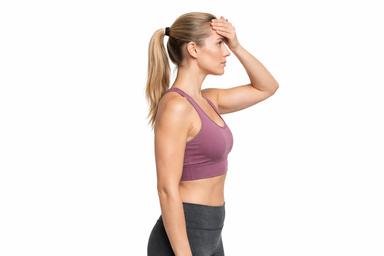
How to
An isometric neck exercise that trains the front of your neck without moving your head.
- Sit or stand tall and place both palms on your forehead.
- Gently press your forehead into your palms.
- Keep your head still and hold for the set time.
- Breathe steadily, then relax slowly.
- Keep your neck long
- Use gentle pressure
- Letting your chin jut forward
- Holding your breath
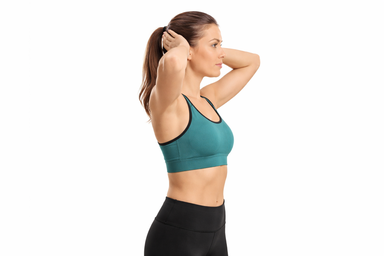
How to
An isometric neck hold that trains the muscles at the back of your neck without moving your head.
- Sit or stand tall with your chin level.
- Place both hands behind your head.
- Press your head back into your hands without letting it move.
- Hold steady and breathe slowly.
- Relax, then repeat for the set time.
- Keep your neck long.
- Use gentle, steady pressure.
- Tilting your chin up as you press.
- Holding your breath during the hold.
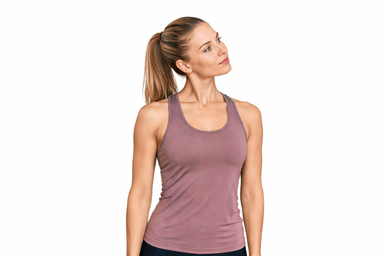
How to
An isometric side neck press that trains neck stability and the side of your neck.
- Stand tall with one hand against the side of your head.
- Press your head gently into your hand without moving it.
- Hold the tension and breathe steadily.
- Relax, finish your reps, then switch sides.
- Keep your neck tall
- Press without letting the head move
- Pushing too hard
- Tilting or twisting your head
Posture Finisher
Slow, controlled reps; stop short of any pinching.
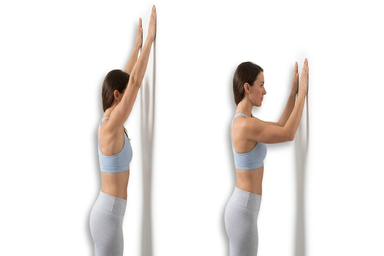
How to
A wall-based shoulder move that trains shoulder control and upper-back posture.
- Stand with your back to a wall and feet a small step out.
- Press your head, upper back, and hips gently into the wall.
- Place your arms on the wall in a goalpost shape.
- Slide your arms up the wall as far as you can control.
- Slide back down to the start and repeat.
- Keep your ribs down.
- Move slowly and stay in control.
- Arching your lower back to reach higher.
- Shrugging your shoulders toward your ears.
Cool-Down
Downshift the nervous system and reduce lingering neck/shoulder tension through stretching and reset.
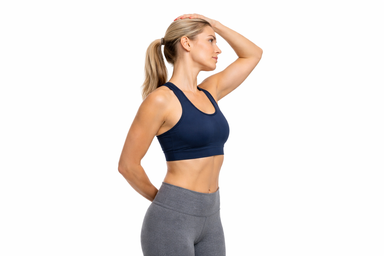
How to
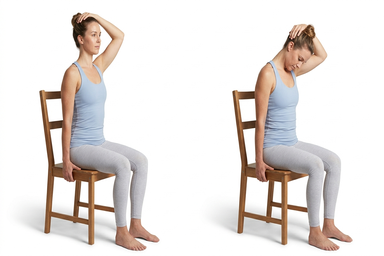
A gentle neck stretch for one upper trapezius at a time. Hold it and breathe.
- Sit or stand tall with your shoulders relaxed.
- Hold a chair with the hand on the side you will stretch.
- Tilt your ear away from that shoulder until you feel a gentle stretch.
- Add light pressure with your other hand, if needed.
- Hold and breathe slowly, then switch sides.
- Keep both shoulders down.
- Use gentle pressure only.
- Pulling your head hard with your hand.
- Lifting the shoulder you are stretching.
How to
A seated neck stretch for one side that targets the levator scapulae near the neck and upper shoulder.
- Sit tall and place one hand behind your back to anchor that shoulder.
- Turn your head about 45 degrees away from that shoulder.
- Look down toward your opposite armpit.
- Use your other hand to gently guide your head down.
- Hold and breathe slowly, then switch sides.
- Keep the stretch gentle
- Keep your anchored shoulder down
- Pulling hard on your head
- Rounding your upper back
How to
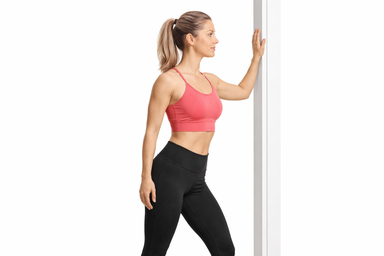
A doorway chest stretch that opens your pecs and front shoulders.
- Stand in a doorway and place one forearm on the frame.
- Step one foot through and gently turn your body away.
- Hold the stretch and breathe slowly.
- Finish your reps, then switch sides.
- Keep your shoulder down
- Breathe into the stretch
- Forcing the stretch too hard
- Shrugging your shoulder up
How to
A small neck position hold that trains the front of your neck and helps control head position.
- Sit or stand tall with your eyes looking straight ahead.
- Gently slide your chin straight back, like making a double chin.
- Keep your head level and your jaw relaxed.
- Hold the tuck and breathe slowly.
- Release to neutral, then repeat for the set.
- Move straight back, not down.
- Keep your shoulders relaxed.
- Tilting your head up or down.
- Forcing the tuck or clenching your jaw.

Why Chin Tucks Precede Every Load
Chin tucks reposition the cervical spine into neutral before any strengthening work, reducing shear force on C4-C7 discs. Band face pulls and scapular retractions then fire the deep cervical flexors and lower trapezius simultaneously — the exact muscles that chronic neck pain sufferers lose first.

Forward Head Posture's Hidden Toll
Every inch your head drifts forward adds roughly 10 lbs of effective load on cervical extensors, accelerating upper trap and levator scapulae dominance. The doorway pec stretch and thoracic floor extension directly counteract the anterior chest tightness that locks you into that posture all day.

Isometrics First, Then Movement
Hand-resisted isometric holds build cervical stability without compressive spinal loading — the safest entry point for intermediate-level neck work before progressing to dynamic resistance. As pain decreases, increase hold duration by 2-3 seconds weekly before adding external load, keeping wall slides as your postural benchmark.