
Clean & Minimal AI Powered Fitness Routines
Download AppIntermediate Fall Prevention
A balance, strength, and gait-control routine to reduce fall risk in ~25 minutes.
Intermediate Fall Prevention
A balance, strength, and gait-control routine to reduce fall risk in ~25 minutes.
Warm-Up
5 minutes. Raise temperature, mobilize ankles/hips, and prepare for balance work.
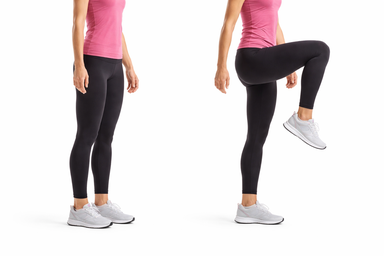
How to
A low-impact cardio move that warms up your legs and hips while raising your heart rate.
- Stand tall with your feet hip-width apart and arms at your sides.
- Lift one knee to hip height as you swing the opposite arm forward.
- Lower that foot, then lift the other knee and switch arms.
- Keep alternating sides at a steady pace.
- Slow down and plant both feet to finish.
- Stand tall with your chest up
- Land softly under your hips
- Leaning back as you lift your knees
- Stomping your feet on each step
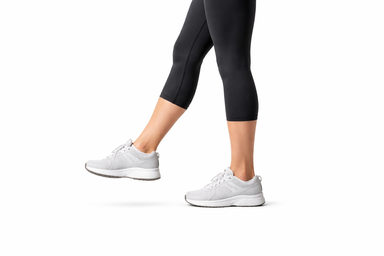
How to
A simple ankle mobility move that warms up your ankle through a full circle.
- Sit or stand tall and lift one foot slightly off the floor.
- Slowly circle your ankle in one direction.
- Reverse the circle and keep the motion smooth.
- Finish your reps, then switch legs.
- Move from your ankle, not your knee
- Keep the circles slow and controlled
- Rushing through small, choppy circles
- Letting your whole leg swing around
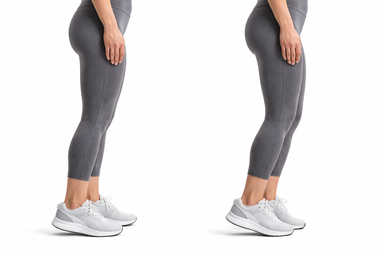
How to
A standing ankle rock that trains ankle mobility and balance.
- Stand tall with feet hip-width apart.
- Lift your toes, then rock back onto your heels.
- Lift your heels, then rock onto the balls of your feet.
- Keep rocking smoothly for your reps.
- Stay tall through your torso
- Move through your ankles, not your hips
- Leaning your upper body forward or back
- Letting your feet collapse inward
Circuit A
Controlled tempo. Light fingertip support is okay.
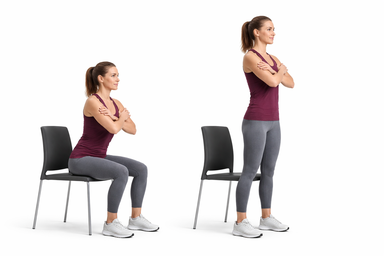
How to
A chair-based squat pattern that trains your thighs and glutes for standing strength.
- Sit near the front of a chair with feet flat and hip-width apart.
- Lean slightly forward and brace your core.
- Press through both feet and stand tall.
- Push your hips back and sit down with control.
- Keep your knees tracking over your toes
- Stand tall at the top
- Letting your knees cave inward
- Dropping hard onto the chair
How to
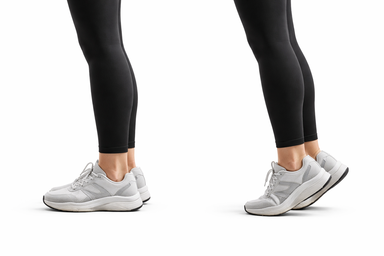
A standing lower-leg move that trains your calves by lifting and lowering your heels.
- Stand tall with both feet hip-width apart.
- Press through the balls of your feet and lift your heels.
- Pause briefly at the top with control.
- Lower your heels slowly back to the floor.
- Repeat for your reps.
- Keep your ankles tracking straight.
- Move up and down with control.
- Rocking onto the outside edges of your feet.
- Bouncing at the bottom of each rep.
How to
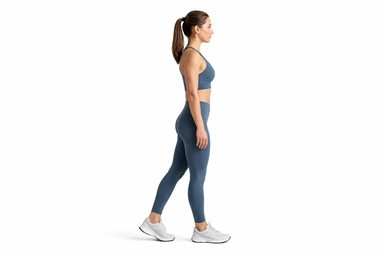
A heel-to-toe standing balance hold that trains stability and posture control.
- Stand tall near a wall or chair for support if needed.
- Place one foot in front of the other, heel to toe.
- Set your eyes forward and brace lightly.
- Hold the stance and breathe steadily.
- Step out of the stance to finish.
- Stand tall with soft knees
- Keep your gaze fixed ahead
- Looking down at your feet
- Locking your knees
Circuit B
Focus on hip stability and safe foot placement. Keep the step low.
How to
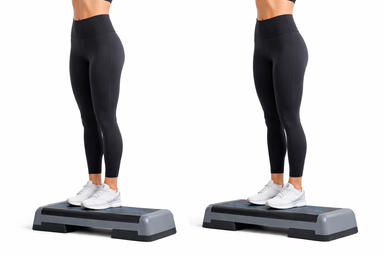
Step side to side over an obstacle to train your legs, hips, and coordination.
- Stand beside a low step or line.
- Step over it sideways with one foot.
- Bring the other foot over, then step back.
- Keep alternating sides for your reps.
- Stay tall and brace your core
- Land softly and control each step
- Rushing and losing balance
- Twisting your torso as you step
How to
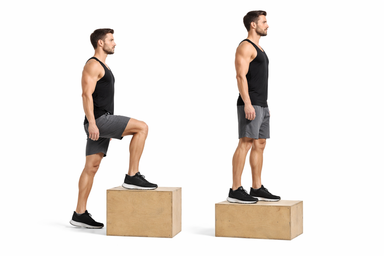
A single-leg climb onto a step that trains your quads, glutes, and balance.
- Stand facing a sturdy step with one foot fully on top.
- Lean slightly forward and drive through the front foot to stand up.
- Bring your back foot onto the step with control.
- Step back down with the same back foot, then lower the front foot.
- Finish your reps, then switch legs.
- Keep your chest tall
- Drive through your whole front foot
- Pushing off too much with the back foot
- Letting your front knee cave inward
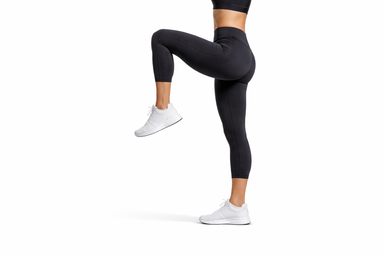
How to
A one-leg balance hold that trains foot, ankle, and hip stability.
- Stand tall with feet hip-width apart and arms relaxed.
- Shift your weight onto one foot and lift the other foot off the floor.
- Hold steady and breathe slowly for the target time.
- Lower your foot with control, then switch sides.
- Keep your hips level
- Stand tall through your head
- Leaning your torso far to one side
- Letting the lifted foot touch down repeatedly
Gait & Cool-Down
3 minutes. Reinforce steady walking mechanics and finish with calm breathing.
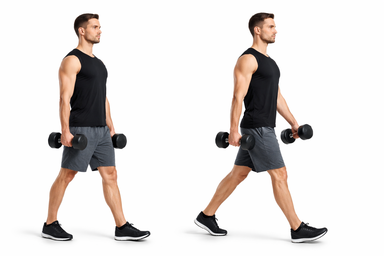
How to
A loaded walk that trains your grip, core, shoulders, and posture.
- Stand tall with a weight in each hand at your sides.
- Brace your core and pull your shoulders down and back.
- Walk forward with short, controlled steps.
- Keep the weights steady and your torso upright.
- Set the weights down with control when finished.
- Stand tall as you walk
- Keep the weights by your sides
- Leaning back or to one side
- Letting the weights swing

Proprioception Before Power, Always
March in Place and Ankle Circles prime the mechanoreceptors in your ankles and feet before any loading begins — the same sensors that fire in the milliseconds between a stumble and a fall. Heel-to-Toe Rocks then train the anterior tibialis and soleus to control the exact rocking motion your foot makes with every step.

The Neuromuscular Truth About Falls
Most falls happen not from weakness alone, but from delayed motor response — the gap between sensing instability and correcting it. Single-Leg Stance and Tandem Stance Hold directly stress your vestibular and proprioceptive systems under low-risk conditions, building the reactive stability that protects you in real environments.

Load Progression Disguised as Daily Life
Sit to Stand, Step Up, and Farmer Carry aren't random — they replicate the exact movement demands of chairs, curbs, and grocery bags, using your own bodyweight as calibrated resistance. Add one second of pause at the top of each Calf Raise or Step Up as your baseline improves to continuously challenge your neuromuscular control.