
Clean & Minimal AI Powered Fitness Routines
Download App25-Minute Sleep Quality Improvement Routine
A 25-minute downshift routine to reduce tension, calm your nervous system, and prepare for sleep.
25-Minute Sleep Quality Improvement Routine
A 25-minute downshift routine to reduce tension, calm your nervous system, and prepare for sleep.
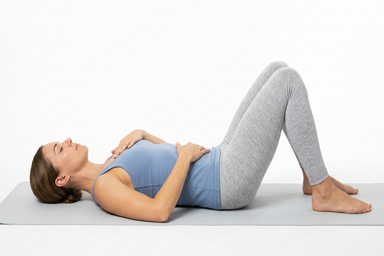
Downshift Breathing
Start by slowing your breath to signal safety and reduce stress.
How to
A slow breathing drill that trains relaxed belly breathing and helps you control your breath.
- Lie on your back or sit tall with one hand on your belly.
- Inhale through your nose and let your belly rise.
- Exhale slowly and let your belly fall.
- Keep your chest and shoulders quiet.
- Continue for the set time with smooth breaths.
- Breathe low into your belly
- Keep your shoulders relaxed
- Shrugging your shoulders as you inhale
- Forcing the breath or holding tension
Spine & Shoulder Mobility
Gentle movement to release the back and shoulders without elevating heart rate.
How to
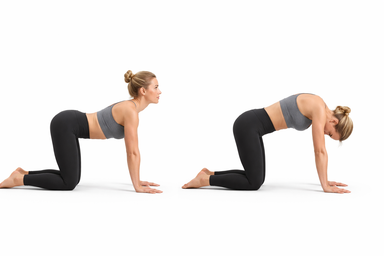
A gentle spine mobility move that alternates rounding and arching your back on hands and knees.
- Start on hands and knees with wrists under shoulders and knees under hips.
- Inhale and drop your belly as you lift your chest and tailbone.
- Exhale and round your back, tucking your chin and tailbone.
- Move slowly between both positions with your breath.
- Move one vertebra at a time.
- Keep your shoulders away from your ears.
- Forcing your neck up or down.
- Rushing through the movement.
How to
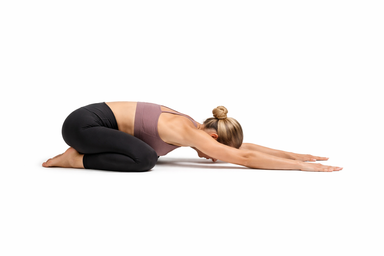
A kneeling rest pose that gently stretches your back, hips, and shoulders.
- Kneel on the floor with your big toes together and knees apart.
- Sit your hips back toward your heels.
- Fold forward and reach your arms in front of you.
- Rest your forehead down and let your chest sink between your thighs.
- Hold the position and breathe slowly.
- Relax your shoulders
- Breathe into your back
- Forcing your hips down
- Holding your breath
How to
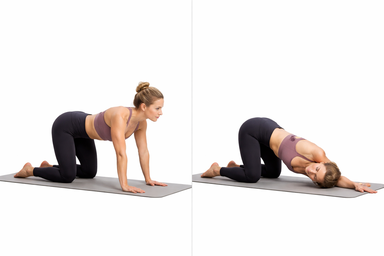
A floor stretch that opens your upper back and shoulder while you hold one side at a time.
- Start on all fours with your hands under shoulders and knees under hips.
- Slide one arm under your chest, palm up, and lower your shoulder toward the floor.
- Rest your head down if comfortable, and keep your hips over your knees.
- Hold the stretch and breathe slowly.
- Press into your top hand to return to all fours, then switch sides.
- Keep your hips stacked over your knees
- Breathe into your upper back
- Letting your hips drift far to one side
- Forcing your shoulder lower than comfortable
Hip Release & Bedtime Holds
Longer holds to reduce hip tension and finish with a calming inversion. Intermediate level.
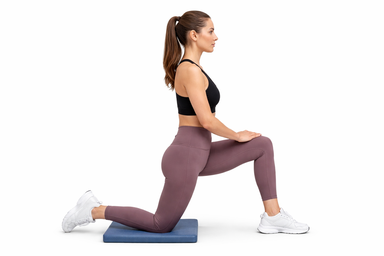
How to
A kneeling stretch for the front of your hip. It targets the hip flexors on one side at a time.
- Kneel with one knee down and the other foot in front.
- Tuck your pelvis slightly and keep your chest tall.
- Shift your hips forward until you feel a gentle stretch.
- Hold the position and breathe steadily.
- Finish the hold, then switch sides.
- Squeeze the glute on the back leg
- Keep your ribs stacked over your hips
- Arching your lower back to get deeper
- Letting the front knee cave inward
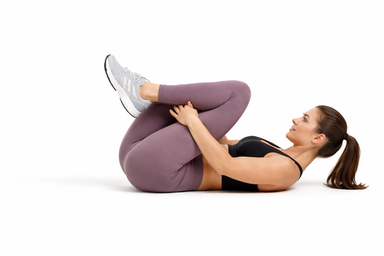
How to
A lying hip stretch that targets your glutes and outer hip on one side at a time.
- Lie on your back with knees bent and feet flat.
- Cross one ankle over the opposite thigh, making a figure four.
- Hold behind the thigh or shin and gently pull toward you.
- Hold the stretch and breathe slowly.
- Release with control, then switch sides.
- Keep your head and shoulders relaxed
- Flex the crossed foot
- Pulling so hard your hips lift off the floor
- Twisting your pelvis to one side
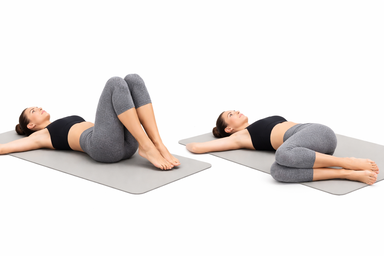
How to
A lying spinal twist that stretches your trunk and hips while you hold and breathe.
- Lie on your back with arms out and knees bent.
- Draw one knee toward your chest.
- Guide that knee across your body toward the floor.
- Keep both shoulders heavy and hold while breathing slowly.
- Return to center, then switch sides.
- Keep both shoulders down
- Move into the twist gently
- Forcing your knee to the floor
- Letting your shoulder lift and roll over
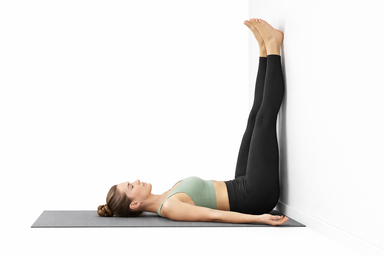
How to
A supported floor hold with your legs up a wall that gently stretches your hamstrings and calves.
- Sit sideways with one hip close to a wall.
- Lie back and swing both legs up the wall.
- Rest your arms by your sides and let your back settle.
- Hold the position and breathe slowly.
- Bend your knees, roll to one side, and sit up slowly.
- Keep your knees soft
- Let your shoulders relax
- Forcing your hips tight against the wall
- Locking your knees hard

Parasympathetic Triggers in Every Movement
Diaphragmatic breathing directly activates the vagus nerve, dropping cortisol and heart rate before a single stretch begins. Cat-Cow and Thread the Needle mobilize the thoracic spine where postural tension accumulates, releasing the erector spinae and rhomboids that stay braced during desk-bound days.

Why Sleep Debt Starts in Your Hips
The psoas muscle — your primary hip flexor — attaches directly to the lumbar spine and stays chronically shortened from sitting, signaling low-grade threat to your nervous system. The Kneeling Hip Flexor and Supine Figure-Four Stretch target the psoas and piriformis specifically, quieting the tension loop that keeps your brain in alert mode at night.

Hold Duration Is the Whole Game Here
Unlike mobility work, pre-sleep stretching earns its effect through long, passive holds that shift your autonomic state — not just tissue length. Legs Up the Wall uses gravity-assisted venous return to lower blood pressure, while Supine Spinal Twist signals bilateral nervous system downregulation. Extend any hold by 15–30 seconds wherever you feel the most resistance.