
Clean & Minimal AI Powered Fitness Routines
Download AppDe Quervain's Tenosynovitis Intermediate Routine
A guided 25-minute wrist & thumb-friendly mobility + strengthening session to support De Quervain's symptoms.
De Quervain's Tenosynovitis Intermediate Routine
A guided 25-minute wrist & thumb-friendly mobility + strengthening session to support De Quervain's symptoms.
Warm-Up & Mobility
Increase circulation and prepare the wrist/thumb with low-irritation mobility. Gentle approach.
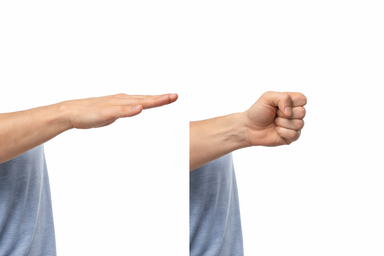
How to
A gentle hand mobility drill that moves both wrists and fingers through a smooth range of motion.
- Sit or stand tall with both arms in front of you, palms facing down.
- Open your hands with fingers straight and wrists neutral.
- Curl fingers into a hook, then into a full fist.
- Open your hands again and gently extend the wrists.
- Move slowly through the sequence for each rep.
- Move smoothly, not forcefully
- Keep your shoulders relaxed
- Forcing the fingers into tight positions
- Shrugging your shoulders as you move
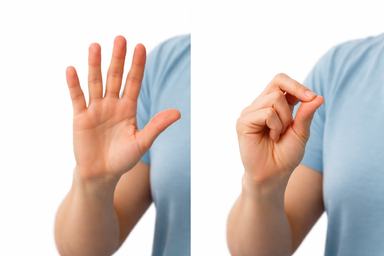
How to
A finger mobility drill that moves your thumb to each fingertip to train hand control.
- Hold one hand up with your palm facing you.
- Touch your thumb to your index fingertip.
- Move finger to finger, making an O shape each time.
- Go back toward the index finger with smooth control.
- Finish your reps, then switch hands.
- Keep the other fingers relaxed.
- Move slowly and with control.
- Forcing a painful range of motion.
- Letting your wrist bend or tense up.
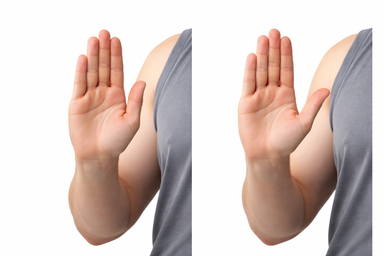
How to
A small thumb movement that trains the muscles that lift your thumb away from your palm.
- Rest your forearm on a table with your palm facing up.
- Start with your thumb relaxed beside your hand.
- Lift your thumb up and away from your palm.
- Lower it back with control to the start position.
- Finish your reps, then switch hands.
- Move only your thumb.
- Keep your wrist relaxed.
- Lifting the whole hand instead of the thumb.
- Rushing through the lowering phase.
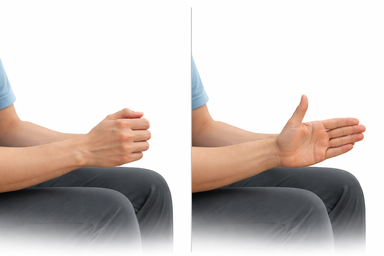
How to
A small thumb movement that trains the muscles that lift your thumb and support grip control.
- Rest one forearm on a table with your palm facing up.
- Start with your thumb relaxed near your palm.
- Lift your thumb up and away from your palm.
- Lower it with control to the start.
- Finish your reps, then switch hands.
- Keep your wrist still
- Move only your thumb
- Letting your wrist bend with each rep
- Rushing the lift and drop
Isometric Foundation
Use gentle pressure into the table/hand (about 30–50% effort).
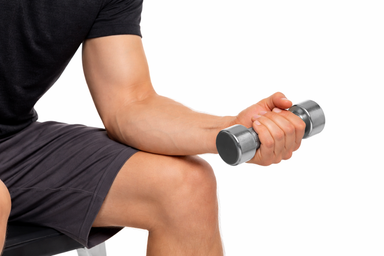
How to
An isometric wrist hold that trains the muscles that pull your wrist toward the thumb side.
- Sit with your forearm supported and your thumb pointing up.
- Place your other hand against the thumb side of your hand.
- Press your wrist toward your thumb side without letting it move.
- Hold and breathe, keeping your forearm still.
- Relax, finish your holds, then switch sides.
- Keep your forearm planted
- Press without moving your wrist
- Letting your elbow or forearm lift
- Twisting your wrist instead of pressing sideways
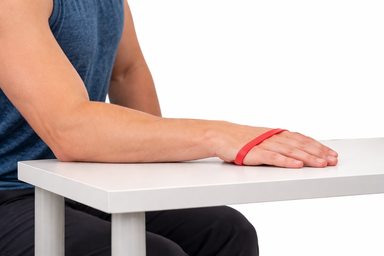
How to
A wrist isometric that trains the muscles that pull your hand toward the pinky side.
- Sit with your forearm supported and your wrist straight.
- Place your other hand against the pinky side of your working hand.
- Press your working hand outward into the resistance without moving it.
- Hold steady and breathe, keeping your forearm still.
- Finish the hold, then switch sides.
- Keep your wrist straight
- Use gentle, steady pressure
- Letting the wrist bend during the hold
- Lifting your forearm off the support

How to
A resisted thumb hold that trains your thumb extensors and forearm control.
- Rest your forearm on a table with your palm facing down.
- Place your other hand over the back of your thumb.
- Try to lift your thumb while your other hand blocks it.
- Hold steady and breathe, keeping your wrist still.
- Relax, finish your holds, then switch thumbs.
- Use gentle, steady pressure.
- Keep your wrist still.
- Letting your wrist lift or twist.
- Holding your breath.
Band and Putty Strength
Control the motion; stop 1–2 reps before form breaks. Keep the wrist mostly neutral.
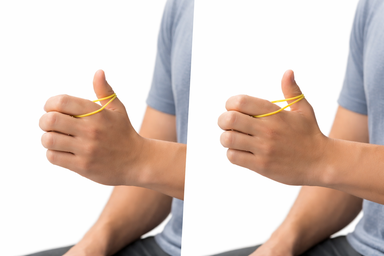
How to
A band move that pulls your thumb away from your palm to train thumb and hand control.
- Place a light band around your thumb and anchor it with your other hand.
- Keep your wrist straight and palm relaxed.
- Move your thumb out and away from your palm against the band.
- Slowly return your thumb to the start.
- Finish your reps, then switch hands.
- Keep your wrist still.
- Move only your thumb.
- Letting your wrist bend with the band.
- Snapping your thumb back to start.
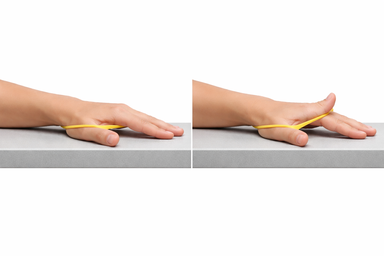
How to
An isometric thumb exercise using a band to train thumb extension and hand control.
- Loop a light band around your thumb and anchor the other end with your hand.
- Start with your palm relaxed and your thumb slightly bent in.
- Extend your thumb out against the band until you feel tension.
- Hold the position and breathe, keeping your wrist still.
- Relax your thumb with control, then switch sides.
- Move only your thumb.
- Keep your wrist neutral.
- Letting your wrist bend with the pull.
- Using a band that is too heavy to hold still.
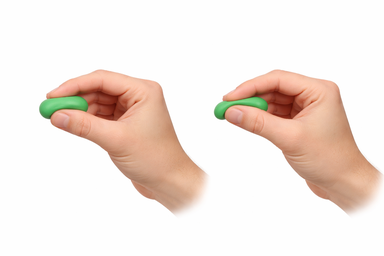
How to
An isometric pinch using putty that trains your thumb and finger grip on both hands.
- Place a small piece of putty between your thumb and fingertips in each hand.
- Pinch the putty gently until you feel steady tension.
- Hold the pinch and breathe normally.
- Relax both hands, then repeat for the next hold.
- Keep your wrists relaxed
- Pinch without squeezing your palm
- Holding your breath during the pinch
- Letting your wrists bend or tense up
Cool-Down & Symptom Calm
Gentle stretching to finish; avoid aggressive thumb pulls.
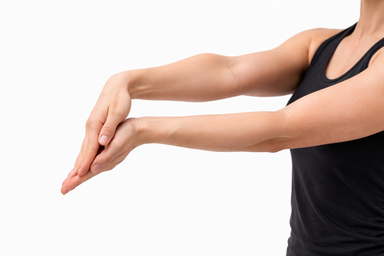
How to
A forearm stretch that targets the wrist flexors on one arm at a time.
- Extend one arm in front of you, palm up.
- Keep your elbow straight and gently pull your fingers back.
- Hold the stretch and breathe slowly.
- Release gently, then switch sides.
- Keep your shoulder relaxed
- Use gentle pressure
- Bending your elbow
- Pulling into sharp pain
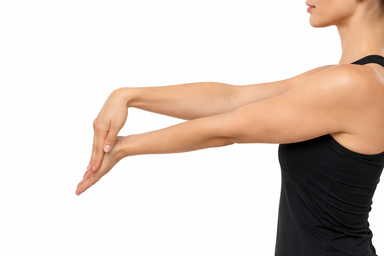
How to
A forearm stretch that targets the wrist extensors on the top of your forearm.
- Extend one arm in front with your palm down.
- Use your other hand to gently bend your wrist down.
- Keep your elbow straight and hold while breathing slowly.
- Release slowly, then switch sides.
- Use gentle pressure
- Keep your shoulder relaxed
- Forcing the wrist into pain
- Bending your elbow during the stretch

Why Isometrics Anchor This Protocol
Radial and ulnar deviation isometrics target the extensor pollicis brevis and abductor pollicis longus — the exact tendons compressed in De Quervain's — without provocative gliding that inflames the first dorsal compartment. Isometric loading at submaximal intensity reduces tendon pain via cortical inhibition while beginning to restore load tolerance before dynamic resistance is introduced.

The Tendon Gliding Demand You're Fighting
De Quervain's restricts the synovial sheath surrounding the thumb's extensor and abductor tendons, creating friction with every pinch, grip, or radial deviation — movements woven into nearly every daily task. The progressive sequencing from opposition to putty pinch mirrors the functional grip hierarchy your hand must reclaim, addressing both the mobility deficit and the fear-avoidance pattern tha

Load Before Length, Then Integrate
This routine follows a tissue-tolerance progression: mobilize the wrist flexors and extensors first to reduce antagonist tension, then introduce isometric holds, then progress to banded and putty resistance — each phase building the tendon's capacity before the next demand. To personalize, track your pain level (0–10) during Band Thumb Abduction; if it stays below 3, you're ready to increase band