
Clean & Minimal AI Powered Fitness Routines
Download App10lb Kettlebell Glute and Hinge
Build glutes and a stronger, steadier hinge with 10lb kettlebell work.
10lb Kettlebell Glute and Hinge
Build glutes and a stronger, steadier hinge with 10lb kettlebell work.
Warm-up
Mobility and low-intensity activation for posterior chain, back, biceps, and core.
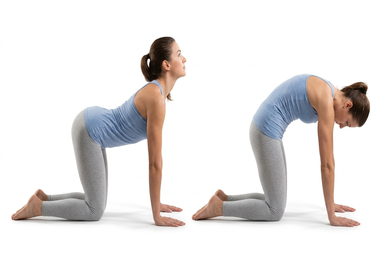
How to
A gentle spine mobility move on hands and knees that warms up your back, neck, and hips.
- Start on hands and knees with wrists under shoulders and knees under hips.
- Inhale and drop your belly as you lift your chest and tailbone.
- Exhale and round your back as you tuck your chin and tailbone.
- Move slowly between positions with your breath.
- Move one vertebra at a time
- Keep your hands and knees planted
- Shrugging your shoulders toward your ears
- Forcing your neck at the end range
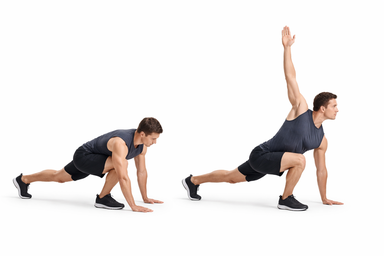
How to
A dynamic lunge stretch that opens your hips, hamstrings, and upper back as you alternate sides.
- Start in a high plank with hands under shoulders.
- Step your right foot outside your right hand.
- Drop your hips, then rotate your right arm up toward the ceiling.
- Place your hand down and step back to plank.
- Repeat on the left side, alternating sides each rep.
- Keep your front foot flat.
- Reach long through your top hand.
- Letting your front heel lift off the floor.
- Rushing the rotation without control.
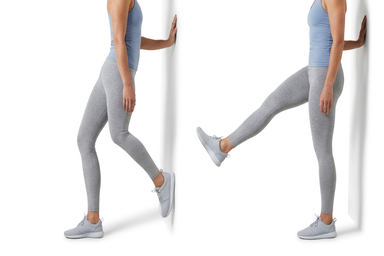
How to
A dynamic hip mobility move that swings each leg to warm up your hips, glutes, and hamstrings.
- Stand tall beside a wall or stable support.
- Brace lightly and shift your weight to one foot.
- Swing the other leg forward and back under control.
- Place it down, then repeat with the other leg.
- Alternate legs for the set.
- Keep your torso tall
- Move from the hip
- Arching your back to swing higher
- Letting the leg swing out of control
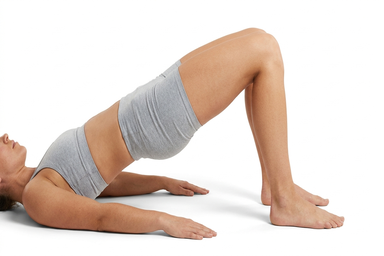
How to
A floor bridge hold that trains your glutes and hamstrings with steady hip extension.
- Lie on your back with knees bent and feet flat, hip-width apart.
- Brace your core and press your feet into the floor.
- Lift your hips until your body forms a straight line from shoulders to knees.
- Hold at the top and breathe steadily.
- Lower your hips with control when the hold is done.
- Squeeze your glutes at the top
- Keep your ribs down
- Arching your lower back at the top
- Letting your knees cave inward
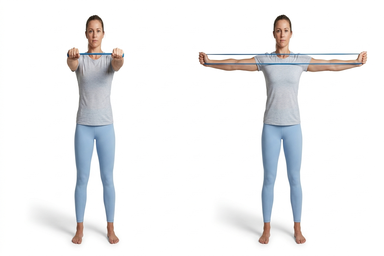
How to
A band upper-back move that trains your rear shoulders and mid-back.
- Stand tall and hold a band at chest height with both hands.
- Start with arms straight and hands shoulder-width apart.
- Pull the band apart until your hands move out to your sides.
- Pause briefly with shoulder blades squeezed together.
- Control the band back to the start and repeat.
- Keep your ribs down.
- Move from your shoulders, not your lower back.
- Shrugging your shoulders toward your ears.
- Arching your back to finish the pull.
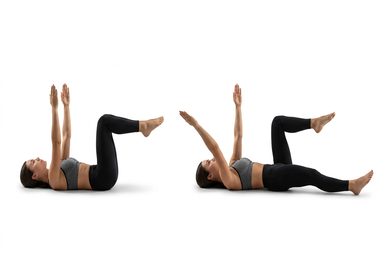
How to
A core move on your back that trains control while you move opposite arm and leg.
- Lie on your back with arms up and knees bent over hips.
- Press your lower back gently toward the floor.
- Lower one arm and the opposite leg with control.
- Return to the start, then repeat on the other side.
- Keep alternating sides for each rep.
- Move slow and stay braced
- Keep your ribs down
- Letting your lower back arch
- Rushing through the reps
Deadlift Pattern Triples
Brace first, hinge back, keep ribs down; drive up with glutes, not a rounded back.
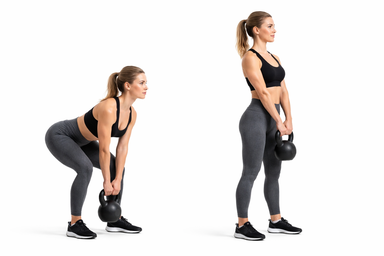
How to
A two-leg hip hinge with a kettlebell that trains your glutes, hamstrings, and back.
- Stand with feet hip-width, kettlebell between your feet.
- Hinge at your hips and grip the handle with both hands.
- Brace your core, then stand tall by driving your hips forward.
- Lower the kettlebell back to the floor with control.
- Keep your back flat.
- Push the floor away.
- Squatting instead of hinging at the hips.
- Letting the kettlebell drift away from you.
Two-Hand Swing Controlled
Hip snap only; stop the backswing when form slips—no squatting, no yanking with arms.
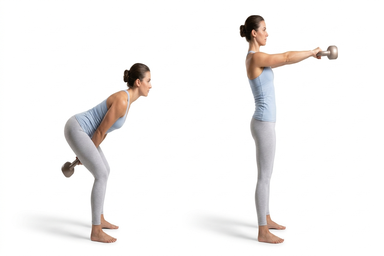
How to
A two-hand kettlebell swing that trains your glutes, hamstrings, hips, and core power.
- Stand with feet hip-width and hold the kettlebell with both hands.
- Hinge at your hips and hike the bell back between your legs.
- Snap your hips forward and let the bell swing to chest height.
- Let the bell fall, hinge again, and repeat with a steady rhythm.
- Keep your back flat.
- Power the swing with your hips.
- Squatting instead of hinging.
- Lifting the bell with your arms.
Single-Leg Glute Bridge
Push through the heel, keep hips level; exhale through the top and avoid back arching.
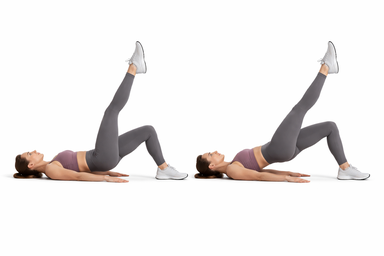
How to
A one-leg bridge that trains your glutes and hamstrings while challenging hip control.
- Lie on your back with one knee bent and the other leg lifted.
- Brace your core and press the planted foot into the floor.
- Lift your hips until your body forms a straight line.
- Lower your hips with control back to the floor.
- Finish your reps, then switch legs.
- Keep your hips level.
- Drive through your heel.
- Letting one hip drop as you lift.
- Arching your lower back at the top.
Seated Row for Posture
Pull elbows back with a long spine; pause when shoulder blades squeeze without shrugging.
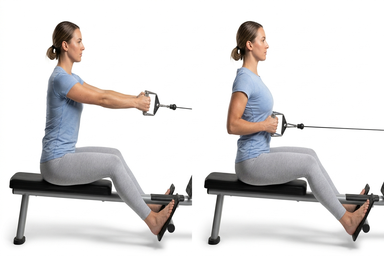
How to
A seated pulling move that trains your upper back, lats, and biceps.
- Sit tall with your feet braced and hold the handles with straight arms.
- Pull the handles toward your lower ribs.
- Squeeze your shoulder blades back without leaning far.
- Slowly extend your arms to return to the start.
- Keep your chest tall
- Pull elbows back, not out
- Shrugging your shoulders toward your ears
- Rocking your torso to move the weight
Kettlebell RDL Tempo
Slow down the hinge, keep the bell close; stop if low-back sensation turns sharp.
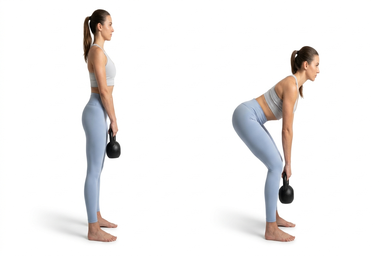
How to
A hip hinge with a kettlebell that trains your hamstrings, glutes, and back control.
- Stand with feet hip-width apart and hold the kettlebell in both hands.
- Soften your knees and brace your core.
- Push your hips back and lower the kettlebell close to your legs.
- Stop when you feel a hamstring stretch or your back wants to round.
- Drive your hips forward to stand tall again.
- Keep your back long
- Keep the kettlebell close
- Squatting instead of hinging at the hips
- Rounding your back as you lower
Front Plank Brace
Hold a firm brace; keep hips level and ribs stacked—no sagging or piking.
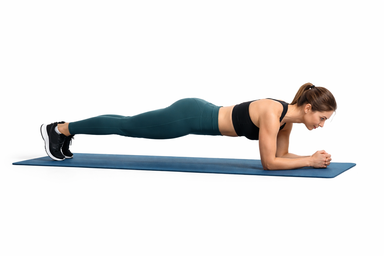
How to
A core hold that trains your abs, shoulders, and glutes while keeping your body in a straight line.
- Place your forearms on the floor with elbows under shoulders.
- Step both feet back and lift into a straight plank.
- Brace your abs and squeeze your glutes.
- Hold for the set time while breathing steadily.
- Lower your knees to the floor to finish.
- Keep your body in one straight line
- Push the floor away with your forearms
- Letting your hips sag toward the floor
- Lifting your hips too high

Hip Hinge Mechanics Behind Each Move
The Kettlebell Deadlift and Romanian Deadlift train the posterior chain through controlled hip flexion and extension, loading the glutes and hamstrings at different ranges. The Two Hand Swing adds a ballistic demand, forcing the glutes to fire explosively at lockout — building both strength and rate of force development in one pattern.

Why the Hinge Pattern Is Harder Than It Looks
A clean hip hinge requires dissociating lumbar movement from hip movement — something most people have never been coached on. The Cat-Cow and World's Greatest Stretch directly address spinal segmentation and hip mobility, the two most common limiters that turn a hinge into a squat or a lower back strain.

Stability Before Load: The Sequencing Logic
The Single Leg Glute Bridge and Glute Bridge Hold isolate glute max and medius under low load, building the neuromuscular activation needed before the heavier hinge sets. The Dead Bug and Front Plank reinforce anterior core stiffness — the counterforce that keeps your spine neutral when the kettlebell pulls you forward. Increase RDL range of motion only once your bridge holds feel effortless.