
Clean & Minimal AI Powered Fitness Routines
Download AppIntermediate Hamstring Strain Rehab
A progressive hamstring rehab session focusing on pain-free mobility, isometrics, and controlled strengthening.
Intermediate Hamstring Strain Rehab
A progressive hamstring rehab session focusing on pain-free mobility, isometrics, and controlled strengthening.
Warm-Up
Gentle mobility. Increase blood flow and reduce stiffness without provoking symptoms.
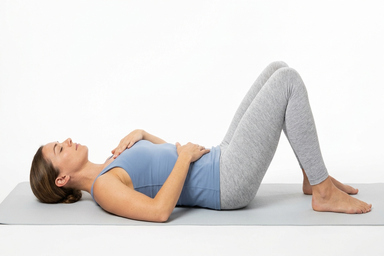
How to
A slow breathing drill that trains relaxed belly breathing and helps you control your breath.
- Lie on your back or sit tall with one hand on your belly.
- Inhale through your nose and let your belly rise.
- Exhale slowly and let your belly fall.
- Keep your chest and shoulders quiet.
- Continue for the set time with smooth breaths.
- Breathe low into your belly
- Keep your shoulders relaxed
- Shrugging your shoulders as you inhale
- Forcing the breath or holding tension
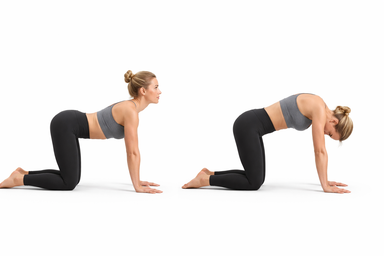
How to
A gentle spine mobility move that alternates rounding and arching your back on hands and knees.
- Start on hands and knees with wrists under shoulders and knees under hips.
- Inhale and drop your belly as you lift your chest and tailbone.
- Exhale and round your back, tucking your chin and tailbone.
- Move slowly between both positions with your breath.
- Move one vertebra at a time.
- Keep your shoulders away from your ears.
- Forcing your neck up or down.
- Rushing through the movement.
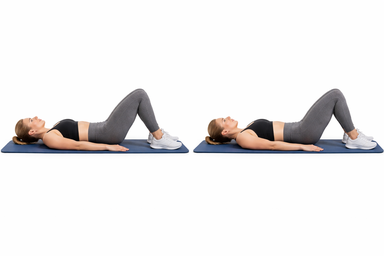
How to
A gentle floor move that trains pelvic control and engages your lower abs and glutes.
- Lie on your back with knees bent and feet flat on the floor.
- Exhale and tilt your pelvis to press your lower back toward the floor.
- Inhale and slowly return to your starting curve.
- Repeat with smooth, controlled movement.
- Move from your pelvis, not your ribs.
- Keep your shoulders relaxed.
- Holding your breath during the tilt.
- Pushing hard through your feet.
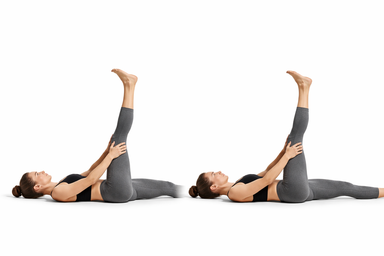
How to
A dynamic hamstring mobility drill that targets the back of your thigh and calf.
- Stand tall and place one heel forward with toes lifted.
- Bend your other knee and hinge at your hips.
- Reach your hips back until you feel a gentle stretch.
- Ease out, then repeat in a smooth back-and-forth motion.
- Finish your reps, then switch legs if needed.
- Keep your back long.
- Move slowly and stay relaxed.
- Rounding your back to reach lower.
- Forcing into a sharp or painful stretch.
Isometric Prep
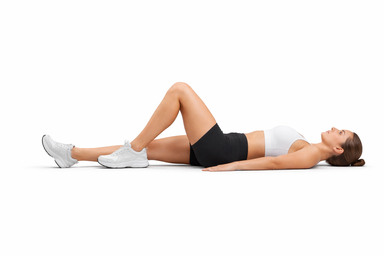
Press heel into the floor as if trying to bend the knee; keep pelvis level.
How to
An isometric hamstring squeeze that trains the back of your thigh without joint movement.
- Sit or lie with your knee bent and heel planted.
- Gently dig your heel down and back without moving it.
- Build tension in your hamstring and hold.
- Breathe steadily, then relax fully before the next hold.
- Keep your foot still
- Use smooth, steady pressure
- Cramping by pushing too hard too fast
- Letting your heel slide during the hold
Strength Circuit
Slow tempo (about 2 seconds up, 2 seconds down). Choose a range that stays comfortable.
How to
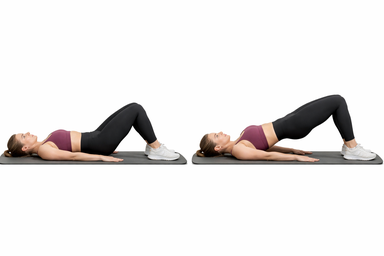
A floor hip lift that trains your glutes and hamstrings with both feet planted.
- Lie on your back with knees bent and feet flat, hip-width apart.
- Brace your core and press your arms lightly into the floor.
- Drive through your heels and lift your hips until your body forms a straight line.
- Squeeze your glutes at the top, then lower with control.
- Repeat for your reps.
- Keep your ribs down
- Drive through your heels
- Arching your lower back at the top
- Pushing through your toes
How to
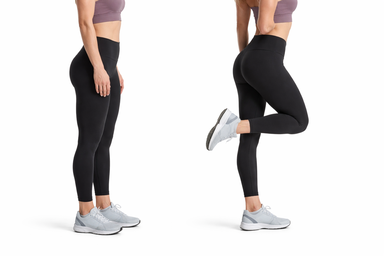
A standing leg curl that trains your hamstrings and challenges single-leg balance.
- Stand tall and hold a wall or chair for balance if needed.
- Shift your weight onto one leg and keep your thighs in line.
- Bend your working knee and curl your heel toward your glutes.
- Lower your foot with control to the floor.
- Finish your reps, then switch legs.
- Keep your knees close together
- Move slow and controlled
- Arching your back to lift the heel
- Letting the working knee drift forward
How to
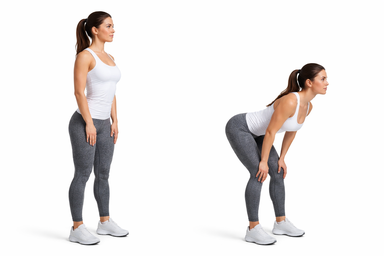
A standing hip hinge that trains your glutes and hamstrings and builds the pattern for deadlifts.
- Stand with feet hip-width apart and knees slightly bent.
- Brace your core and keep your chest open.
- Push your hips back as your torso tips forward.
- Lower until you feel your hamstrings, keeping your back flat.
- Drive your hips forward to stand tall again.
- Move from your hips, not your waist.
- Keep your back long.
- Squatting instead of hinging your hips back.
- Rounding your back as you lower.
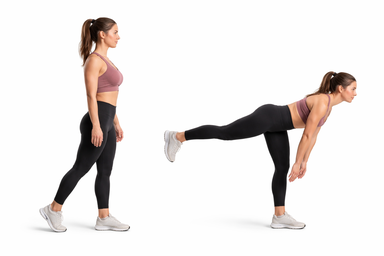
How to
A hip hinge on one leg that trains your hamstrings and glutes while challenging balance.
- Stand tall with weight on one foot and a soft bend in that knee.
- Hinge at your hips as your other leg reaches back behind you.
- Lower your torso until you feel a stretch, keeping your back flat.
- Drive through your standing foot to return to standing.
- Finish your reps, then switch legs.
- Keep your hips square
- Reach long from head to heel
- Rounding your back as you lower
- Opening your hips toward the side
Bridge Progression
Optional. Only if symptom-free during the circuit. Keep hips level; stop before cramping.
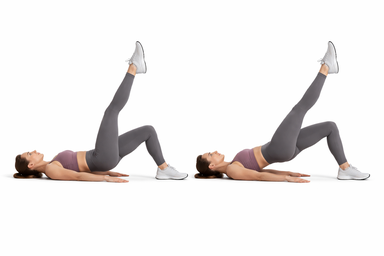
How to
A one-leg bridge that trains your glutes and hamstrings while challenging hip control.
- Lie on your back with one knee bent and the other leg lifted.
- Brace your core and press the planted foot into the floor.
- Lift your hips until your body forms a straight line.
- Lower your hips with control back to the floor.
- Finish your reps, then switch legs.
- Keep your hips level.
- Drive through your heel.
- Letting one hip drop as you lift.
- Arching your lower back at the top.
Cool-Down
Restore length with gentle stretching to finish; avoid aggressive pulling.
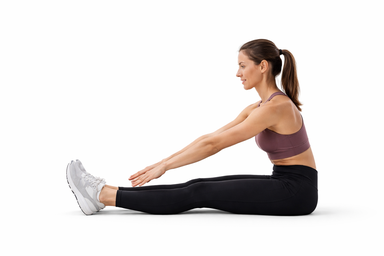
How to
A seated stretch for your hamstrings that helps you practice a relaxed forward fold.
- Sit tall with your legs extended in front of you.
- Flex your feet and keep a soft bend in your knees.
- Hinge forward from your hips and reach toward your feet.
- Hold the stretch and breathe slowly.
- Ease back up to seated when the hold is done.
- Keep your spine long
- Relax your shoulders
- Rounding hard through your back
- Forcing the reach or bouncing
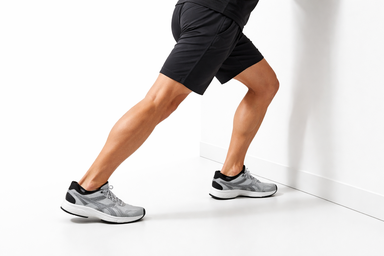
How to
A standing calf stretch that targets the back of your lower leg with a steady hold.
- Stand facing a wall and place your hands on it.
- Step one foot back and keep that heel on the floor.
- Bend your front knee until you feel a calf stretch.
- Hold and breathe slowly without bouncing.
- Finish the hold, then switch legs.
- Keep your back heel down
- Point both toes forward
- Bouncing in the stretch
- Letting the back heel lift

Isometrics First, Then Lengthening Load
Heel Dig isometrics recruit the biceps femoris and semimembranosus under zero movement stress, rebuilding neuromuscular activation before tissue is challenged. The progression to Single-Leg Deadlift then loads the hamstring eccentrically at increasing muscle lengths — exactly where strain injuries are most vulnerable and most in need of retraining.

Strain Rehab Demands Neural Reset First
Hamstring strains disrupt the muscle-tendon unit's stretch reflex, leaving the tissue strong but neurologically guarded — which is why re-injury rates are so high without proper rehab. The Nerve Flosser targets sciatic nerve mobility to reduce protective tension that limits range, while Pelvic Tilt and Cat-Cow recalibrate lumbopelvic control that compensates after injury.

Sequencing That Mirrors Tissue Healing Phases
This session maps directly to intermediate-stage rehab: isometrics protect healing fibers while maintaining contractile capacity, Glute Bridge progressions restore proximal hip force transfer, and the Hip Hinge pattern reintroduces the functional movement most likely to have caused the original strain. Personalize intensity by stopping any exercise at the first sign of a pulling sensation above a