
Clean & Minimal AI Powered Fitness Routines
Download AppIntermediate Ankle Sprain Rehab
A progressive ankle sprain rehab session focusing on mobility, strength, balance, and a controlled return to impact (~25 min).
Intermediate Ankle Sprain Rehab
A progressive ankle sprain rehab session focusing on mobility, strength, balance, and a controlled return to impact (~25 min).
Warm-Up & Mobility
Restore range of motion and warm the ankle/foot before strengthening.
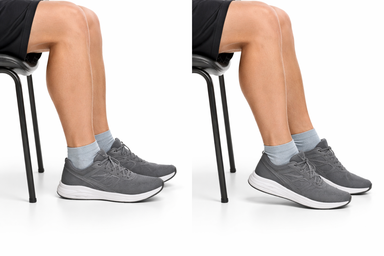
How to
A simple ankle movement that warms your calves and shins and moves both ankles through flex and point.
- Sit or lie down with both legs extended and relaxed.
- Pull your toes toward your shins on both feet.
- Point your toes away from you on both feet.
- Move smoothly back and forth for the set.
- Keep your knees still
- Use a full, smooth range
- Bouncing or jerking the ankles
- Letting your legs tense up
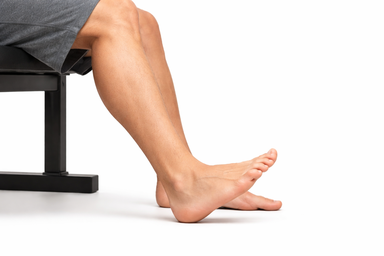
How to
A simple ankle mobility drill where you trace letters with your foot to move the ankle in many directions.
- Sit tall or lie down with one leg extended.
- Lift one foot slightly off the floor.
- Use your big toe to trace the alphabet in the air.
- Move from the ankle, not from your whole leg.
- Finish the alphabet, then switch sides.
- Keep the movement slow and controlled.
- Make each letter as large as you can.
- Swinging your whole leg to draw the letters.
- Rushing through the alphabet.
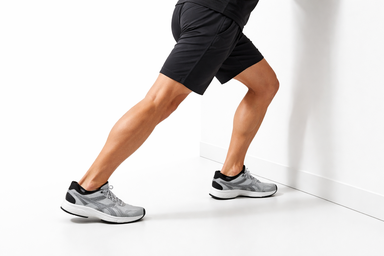
How to
A standing calf stretch that targets the back of your lower leg with a steady hold.
- Stand facing a wall and place your hands on it.
- Step one foot back and keep that heel on the floor.
- Bend your front knee until you feel a calf stretch.
- Hold and breathe slowly without bouncing.
- Finish the hold, then switch legs.
- Keep your back heel down
- Point both toes forward
- Bouncing in the stretch
- Letting the back heel lift
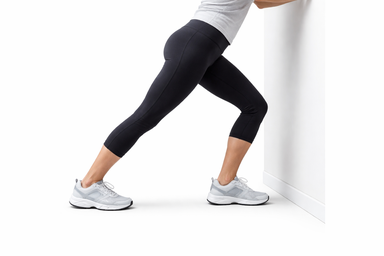
How to
A bent-knee calf stretch that targets the soleus in your lower calf.
- Stand facing a wall with one foot back and hands on the wall.
- Bend both knees and keep your back heel on the floor.
- Lean forward until you feel a stretch in your lower calf.
- Hold the stretch and breathe steadily.
- Finish the hold, then switch legs.
- Keep your back heel down
- Keep your toes pointing forward
- Letting the back heel lift
- Turning the back foot outward
Band Strength Circuit
Use a moderate band; pause briefly at end range. Do both sides if needed, but prioritize the injured side.
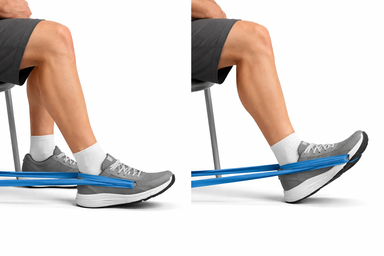
How to
A band-resisted ankle move that trains the muscles that lift your foot and control your ankle.
- Sit with one leg straight and loop a band over the top of one foot.
- Anchor the band in front of your toes so it pulls your foot away.
- Pull your toes toward your shin against the band.
- Slowly point your foot back to the start.
- Finish your reps, then switch sides.
- Move only at the ankle.
- Control the band both ways.
- Letting the knee or hip twist.
- Snapping the foot back too fast.
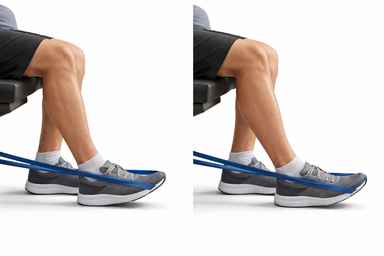
How to
A band-resisted ankle move that trains your calf as you point your toes.
- Sit with one leg straight and loop the band around the ball of your foot.
- Hold the band ends to create light tension.
- Point your toes away from you against the band.
- Slowly return to a flexed foot with control.
- Finish your reps, then switch legs.
- Move only at the ankle.
- Keep steady band tension.
- Letting the band snap your foot back.
- Bending your knee to start each rep.
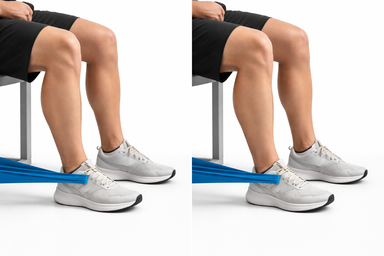
How to
A band ankle move that trains your inner lower leg and ankle control.
- Sit and loop the band around one foot, anchored to the outside.
- Start with your foot neutral and your leg still.
- Turn your foot inward against the band.
- Slowly return to neutral.
- Finish your reps, then switch sides.
- Keep your shin still
- Move only at the ankle
- Twisting your whole leg
- Using a fast, jerky motion
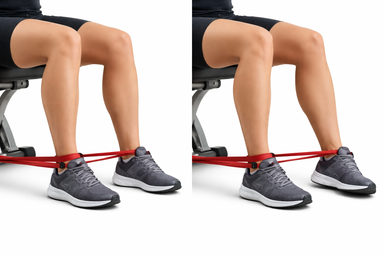
How to
A band-resisted ankle move that trains the outer lower leg and ankle control.
- Sit with one leg extended and loop a band around the forefoot.
- Anchor the band so it pulls your foot inward.
- Turn your foot outward against the band, keeping your leg still.
- Slowly return to the start with control.
- Finish your reps, then switch sides.
- Move only at the ankle.
- Keep the motion slow and controlled.
- Letting your knee or hip rotate.
- Snapping the foot back to the start.
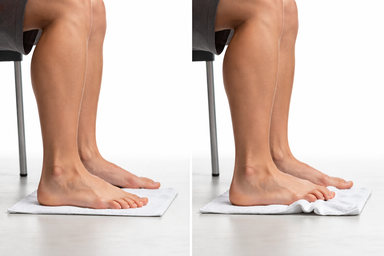
How to
A seated toe exercise that trains the small muscles of your feet and arches.
- Sit tall with both feet flat on a towel.
- Keep your heels down and scrunch the towel toward you with your toes.
- Release your toes and spread them back out.
- Repeat until you finish the set.
- Keep your heels planted
- Move from your toes, not your ankles
- Lifting your heels off the floor
- Curling your whole foot instead of using your toes
Calf Strength
Use a chair for light fingertip support. Rise up in 1–2 sec, lower in 2–3 sec.
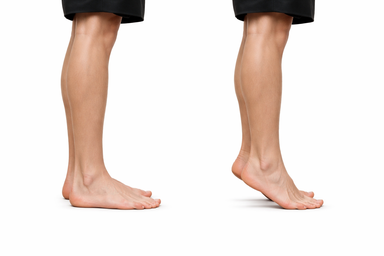
How to
A standing calf raise that trains your calves using bodyweight or added load.
- Stand tall with feet hip-width apart and toes pointing forward.
- Press through the balls of your feet and lift your heels high.
- Pause briefly at the top with control.
- Lower your heels slowly back to the floor.
- Keep your knees softly straight.
- Rise straight up, not forward.
- Bouncing through the reps.
- Letting your ankles roll outward or inward.
Balance & Dynamic Control
Stay tall; keep the arch gently active. Use a chair if needed.
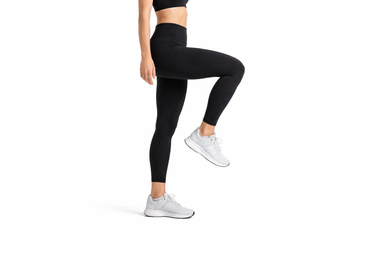
How to
A one-leg standing hold that trains balance and stability in your foot, ankle, and hips.
- Stand tall with feet hip-width apart and arms relaxed.
- Shift your weight onto one foot and lift the other foot off the floor.
- Hold steady, keep your torso tall, and breathe slowly.
- Lower your foot with control, then switch legs.
- Keep your hips level
- Look at one spot ahead
- Letting your hips twist or drop
- Holding your breath
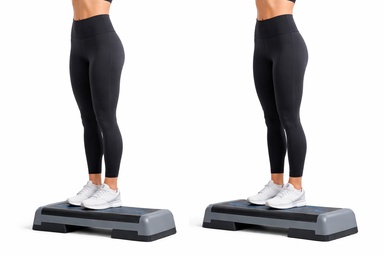
How to
Step side to side over an obstacle to train your legs, hips, and coordination.
- Stand beside a low step or line.
- Step over it sideways with one foot.
- Bring the other foot over, then step back.
- Keep alternating sides for your reps.
- Stay tall and brace your core
- Land softly and control each step
- Rushing and losing balance
- Twisting your torso as you step
Low-Level Plyometric Prep
Only if pain-free: land softly and quietly, knees slightly bent, stop if you feel instability.
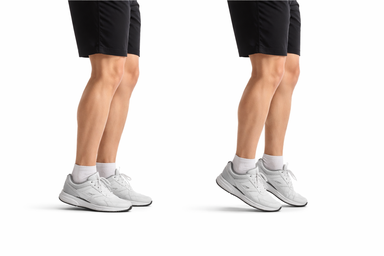
How to
A quick bouncing drill that trains your calves, ankles, and foot speed in place.
- Stand tall with feet hip-width apart and knees slightly bent.
- Rise onto the balls of your feet and brace your core.
- Hop quickly in place using mostly your ankles.
- Land softly on the balls of your feet each time.
- Keep the rhythm steady until the set is done.
- Stay light and quick
- Keep your knees soft
- Landing flat-footed or heavy
- Letting your knees lock out

Restoring the Full Ankle Force Couple
Band eversion and inversion directly retrain the peroneals and tibialis posterior — the two muscles most compromised in lateral sprains. Heel raises load the soleus and gastrocnemius eccentrically, rebuilding the tensile capacity the Achilles complex loses during immobilization.

Why Ligament Rehab Outlasts the Pain
Lateral ankle sprains disrupt mechanoreceptors in the ATFL and CFL, degrading proprioceptive feedback long after swelling resolves. Single-leg balance and lateral step-overs specifically re-educate these sensory pathways, which is why resprains are so common when rehab stops at pain relief.

Impact Reintroduction on Your Terms
Ankle hops in place are sequenced last because ground reaction forces must be absorbed by a neuromuscularly prepared system, not just healed tissue. Use the single-leg balance as your readiness gate — if you can hold 30 seconds without compensation, you're primed to progress hop volume by one set each session.