
Clean & Minimal AI Powered Fitness Routines
Download AppIntermediate Stand-Up Paddleboarding
A balanced 25-minute SUP session: warm-up, technique-focused paddling, and a short cool-down.
Intermediate Stand-Up Paddleboarding
A balanced 25-minute SUP session: warm-up, technique-focused paddling, and a short cool-down.
Warm-Up
Gradually raise heart rate and dial in balance and stroke mechanics. — 5 minutes
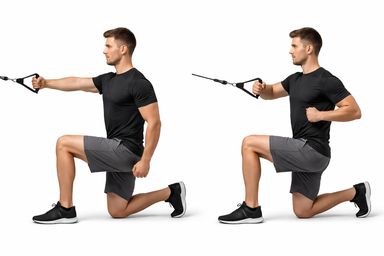
How to
A kneeling paddle stroke on a board that trains your core, shoulders, and back.
- Kneel in the center of the board with knees hip-width apart.
- Hold the paddle with one hand on top and one on the shaft.
- Reach forward and plant the blade beside the board.
- Pull the blade back toward your knees as your torso stays tall.
- Lift the blade, reset forward, and repeat smoothly.
- Keep your chest tall
- Brace your core lightly
- Leaning too far over the side
- Pulling with only your arms
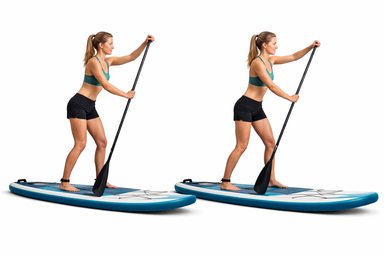
How to
A standing paddle motion that trains your core, shoulders, and upper back with controlled rotation.
- Stand tall with feet hip-width and hold your hands like a paddle.
- Reach both hands forward and slightly to one side.
- Pull your top hand down and back as you rotate through your torso.
- Return to the start with control and repeat on the other side.
- Rotate your ribs, not just your arms.
- Keep your knees soft and chest tall.
- Shrugging your shoulders toward your ears.
- Twisting your knees instead of your torso.
Main Session
Interval-based paddling to build endurance and speed while maintaining form. — 18 minutes
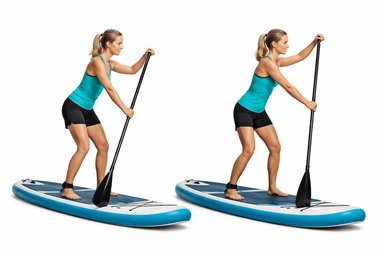
How to
A stand-up paddle interval that trains your back, shoulders, core, and cardio.
- Stand tall with feet hip-width apart and knees slightly bent.
- Hold the paddle with one hand on top and one hand on the shaft.
- Reach the blade forward, plant it in the water, and pull past your feet.
- Paddle hard for the work interval, switching sides as needed.
- Ease your pace when the interval ends.
- Keep your chest tall
- Brace your core as you pull
- Hunching your shoulders as you paddle
- Pulling with only your arms
Cool-Down
Bring effort down gradually and focus on relaxed breathing and smooth strokes. — 2 minutes
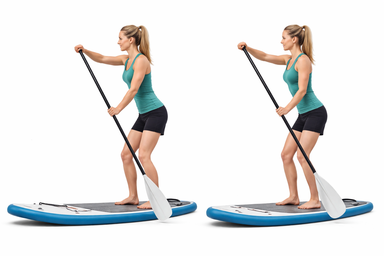
How to
An easy stand-up paddle cool-down that lowers intensity and keeps your shoulders and core moving.
- Stand tall on the board with soft knees and feet hip-width apart.
- Hold the paddle with relaxed hands and set an easy pace.
- Reach forward, place the blade in the water, and pull smoothly past your feet.
- Alternate sides as needed to keep a straight, relaxed line.
- Keep paddling gently, then slow to a stop.
- Keep your shoulders relaxed
- Use smooth, easy strokes
- Gripping the paddle too tightly
- Rushing the strokes instead of cooling down

Rotational Power From Kneel to Stand
The progression from SUP Kneeling Paddle to Standing Paddle systematically loads the hip flexors, obliques, and thoracic rotators with increasing demand on your center of gravity. Kneeling isolates your paddle catch and pull mechanics before your stabilizer chain—glutes, tibialis anterior, and deep spinal erectors—must manage full upright balance.

Balance Fatigue Is Your Real Opponent
SUP at the intermediate level exposes the neuromuscular gap between paddle power and postural endurance—your peroneal muscles and ankle proprioceptors tire before your arms do. Chop, wake interference, and your own stroke asymmetry compound this drift, making unilateral weakness visible in real time on the water.

Interval Placement Drives Stroke Efficiency
The SUP Paddle Interval sits mid-session after technique work has primed your catch angle and exit timing, so power output reinforces correct mechanics rather than overriding them. Apply progressive overload by counting strokes per side before switching—if you're matching counts without board yaw, increase your cadence or resistance by shortening your rest window next session.