
Clean & Minimal AI Powered Fitness Routines
Download AppIntermediate Lat Strength
A focused lat strength session using pull and row patterns with moderate rest.
Intermediate Lat Strength
A focused lat strength session using pull and row patterns with moderate rest.
Warm-Up
Prime the scapular stabilizers and groove lat engagement before heavier pulling. Focus on shoulders and scapula.
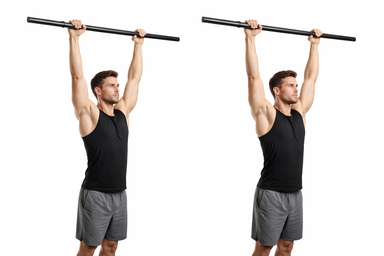
How to
A small pull-up prep that trains shoulder blade control and upper back strength from a dead hang.
- Hang from a bar with hands overhand and arms straight.
- Brace your body and let your shoulders rise toward your ears.
- Pull your shoulder blades down to lift your chest slightly.
- Keep your elbows straight as you pause at the top.
- Lower under control back to the hang and repeat.
- Move from your shoulder blades.
- Keep your ribs down.
- Bending your elbows to turn it into a pull-up.
- Swinging your body between reps.
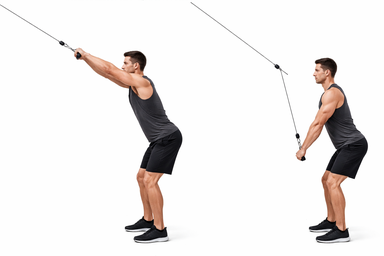
How to
A straight-arm pull that trains your lats and upper back with your core braced.
- Stand facing the anchor with both hands on the handle or band.
- Step back, hinge slightly, and keep your arms straight but not locked.
- Pull your hands down toward your thighs in a smooth arc.
- Pause briefly, then let your arms rise with control.
- Repeat for all reps.
- Keep your ribs down
- Move from your shoulders, not your elbows
- Bending your elbows to turn it into a row
- Arching your back as you pull
Block A
Quality reps. Full range, controlled lowering.
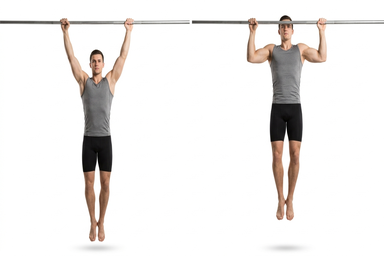
How to
A bodyweight upper-body pull that trains your back, shoulders, and arms.
- Grip the bar with hands just wider than shoulder width.
- Hang with arms straight and brace your body.
- Pull your chest toward the bar by driving elbows down.
- Pause briefly at the top with chin over the bar.
- Lower with control until your arms are straight again.
- Keep your ribs down
- Lead with your chest
- Kicking your legs to start the pull
- Shrugging your shoulders toward your ears
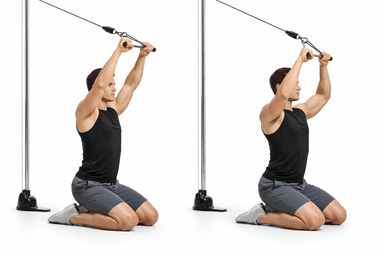
How to
A kneeling upper-body pull that trains your lats, upper back, and arms.
- Kneel under a high anchor and grip the handle with both hands.
- Sit tall with your ribs down and arms reaching up.
- Pull your elbows down and in until the handle nears your upper chest.
- Pause briefly, then control the handle back overhead.
- Repeat for your planned reps.
- Keep your chest tall
- Pull elbows toward your ribs
- Leaning far back to start the pull
- Shrugging your shoulders up
Block B
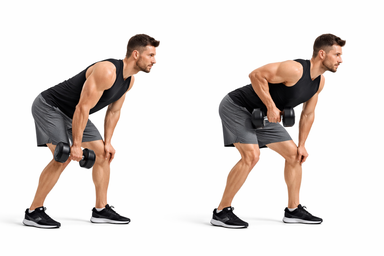
Keep torso stable; avoid twisting on one-arm rows.
How to
A single-arm pulling move that trains your back, shoulders, and arms.
- Hold a dumbbell in one hand and hinge forward with your other hand supported.
- Let the weight hang under your shoulder with your back flat.
- Pull your elbow up and back toward your ribs.
- Lower the weight with control until your arm is straight.
- Finish your reps, then switch sides.
- Keep your chest facing the floor.
- Pull with your elbow, not your hand.
- Twisting your torso as you row.
- Shrugging your shoulder toward your ear.
How to
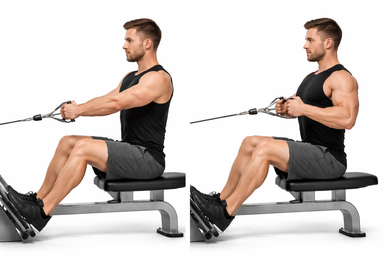
A seated or standing pull that trains your upper back, lats, and arms.
- Set the cable at about waist height and hold the handle with both hands.
- Step back or sit tall with arms straight and shoulders down.
- Pull the handle toward your ribs, squeezing your shoulder blades back.
- Pause briefly, then straighten your arms with control.
- Repeat for all reps.
- Keep your chest tall
- Pull elbows back, not up
- Leaning far back to move the weight
- Shrugging your shoulders as you pull

Scapular Control Before Raw Pulling Power
Scapular Pull-Ups prime serratus anterior and lower trapezius before heavier vertical pulls, ensuring your shoulder blades move through full depression and retraction arcs. Straight-Arm Pulldowns then isolate the lat's long head in a lengthened position — a neurological primer that makes every subsequent Pull-Up recruit more muscle fiber from the first rep.

Why Lats Fail Before They're Truly Fatigued
Most intermediate lifters lose lat tension mid-set because the teres major and rear delt compensate when scapular stability degrades. This routine's pairing of vertical pulls (Pull-Up, Kneeling Lat Pulldown) with horizontal rows (One-Arm Dumbbell Row, Cable Row) attacks both lat fiber orientations, closing the coordination gap that stalls lat development for months.

Horizontal + Vertical Loading Is the Key Variable
Combining pull and row patterns within one session applies the specificity principle across two distinct force vectors, accelerating hypertrophy faster than single-pattern programming. As adaptation occurs, add load to the Cable Row and One-Arm Row first — they tolerate progressive overload with less joint stress than weighted Pull-Ups at this training stage.