
Clean & Minimal AI Powered Fitness Routines
Download AppIntermediate Backpack Commute
A 25-minute commute-friendly strength + posture routine using a backpack as your weight.
Intermediate Backpack Commute
A 25-minute commute-friendly strength + posture routine using a backpack as your weight.
Warm-Up
5 minutes. Raise your temperature and prep hips, shoulders, and core for loaded work.
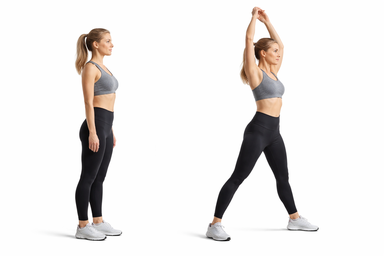
How to
A full-body cardio move that trains coordination, calves, shoulders, and hips.
- Stand tall with feet together and arms at your sides.
- Jump your feet out as you raise your arms overhead.
- Jump your feet back together as you lower your arms.
- Repeat at a steady pace, landing softly each time.
- Stay light on your toes
- Keep your chest tall
- Landing hard with locked knees
- Letting your arms swing out of control
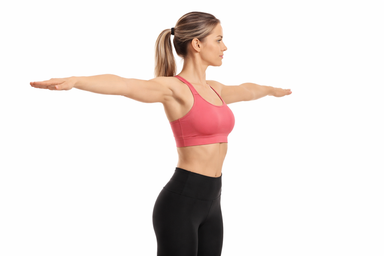
How to
A simple shoulder warm-up that moves both arms in circles and trains shoulder control.
- Stand tall with your feet about hip-width apart.
- Raise both arms out to your sides at shoulder height.
- Make small, controlled circles with both arms.
- Keep circling for the set time, then reverse direction if told.
- Lower your arms to finish.
- Keep your ribs down
- Move smoothly, not fast
- Shrugging your shoulders toward your ears
- Arching your back to keep the arms up
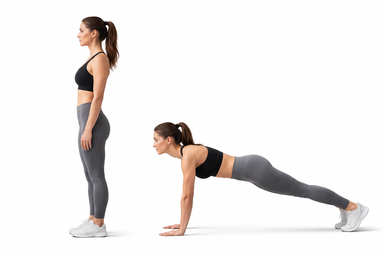
How to
A full-body walkout that trains your core, shoulders, and hamstrings.
- Stand tall with feet hip-width apart.
- Hinge at your hips and place your hands on the floor.
- Walk your hands forward to a high plank.
- Pause with your body in a straight line.
- Walk your hands back to your feet and stand up.
- Brace your core in the plank.
- Keep your legs as straight as you can.
- Letting your hips sag in the plank.
- Rushing the hand walkout.
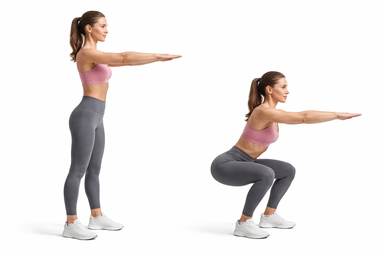
How to
A bodyweight lower-body move that trains your quads, glutes, and hips.
- Stand with feet about shoulder-width apart and toes slightly out.
- Brace your core and keep your chest tall.
- Bend your knees and hips to lower into a squat.
- Push through your feet to stand back up.
- Keep your knees tracking over your toes
- Keep your chest up
- Letting your knees cave in
- Rounding your back as you lower
Circuit A
Moderate pace. Focus on form and controlled tempo.
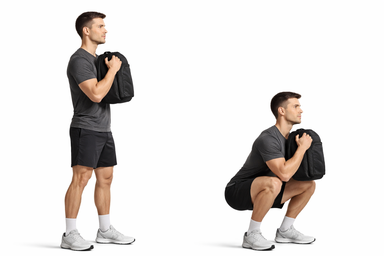
How to
A squat holding a backpack at your chest. It trains your quads, glutes, and core.
- Stand with feet about shoulder-width and hold the backpack at your chest.
- Brace your core and keep your chest tall.
- Bend your knees and hips to squat down under control.
- Pause briefly, then drive through your feet to stand up.
- Repeat for all reps.
- Keep your knees tracking over your toes
- Hold the backpack close to your chest
- Letting your heels lift off the floor
- Rounding your back as you squat
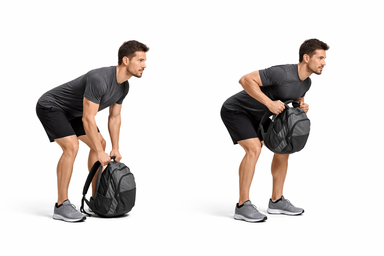
How to
A bent-over pull using a backpack that trains your upper back, lats, and arms.
- Hold the backpack with both hands and stand with feet hip-width apart.
- Hinge at your hips with a flat back and let the backpack hang below you.
- Pull the backpack toward your lower ribs, squeezing your shoulder blades.
- Lower it with control until your arms are straight again.
- Repeat for all reps, keeping the same hinge position.
- Keep your chest proud.
- Pull elbows back, not out.
- Rounding your back as you row.
- Shrugging your shoulders toward your ears.
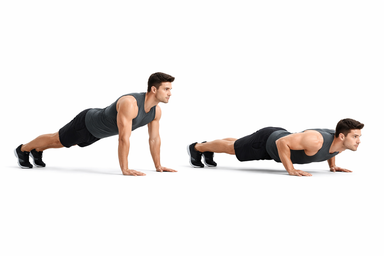
How to
A bodyweight press that trains your chest, shoulders, triceps, and core.
- Start in a high plank with hands just wider than shoulders.
- Brace your core and keep your body in a straight line.
- Bend your elbows and lower your chest toward the floor.
- Press the floor away until your arms are straight again.
- Repeat for your reps.
- Keep your ribs down
- Move your body as one piece
- Letting your hips sag
- Flaring your elbows straight out
Circuit B
Unilateral strength and core stability. Keep torso tall.
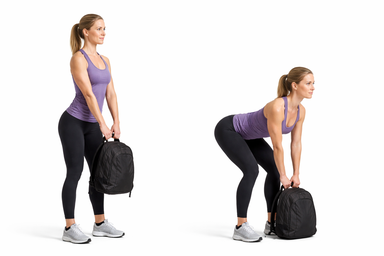
How to
A hip hinge with a backpack that trains your hamstrings, glutes, and back control.
- Stand with feet hip-width and hold the backpack in front of your thighs.
- Soften your knees and brace your torso.
- Push your hips back and lower the backpack close to your legs.
- Stop when you feel a hamstring stretch, keeping your back flat.
- Drive your hips forward to stand tall, then repeat.
- Keep the backpack close to you.
- Push your hips back, not your knees forward.
- Rounding your lower back as you lower.
- Squatting instead of hinging at the hips.
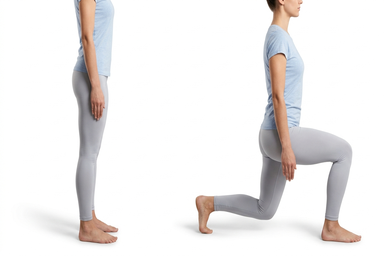
How to
A backward-stepping lunge that trains your quads, glutes, and balance.
- Stand tall with your feet hip-width apart.
- Step one foot back and lower until both knees bend.
- Push through your front foot to stand back up.
- Finish your reps, then switch legs.
- Keep your chest tall.
- Track your front knee over your toes.
- Letting your front knee cave inward.
- Pushing off the back foot to stand.
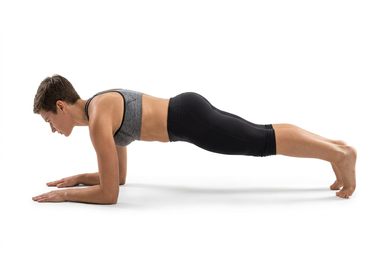
How to
A core hold that trains your abs, shoulders, and glutes while you keep a straight body line.
- Place your forearms on the floor with elbows under shoulders.
- Step both feet back and lift into a straight line from head to heels.
- Brace your abs and squeeze your glutes.
- Hold the position and breathe steadily.
- Lower your knees to the floor to finish.
- Keep your ribs pulled down
- Push the floor away
- Letting your hips sag
- Lifting your hips too high
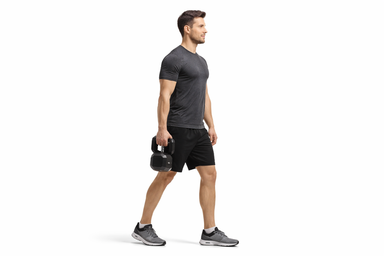
How to
A one-arm loaded carry that trains grip, core, and posture while you walk.
- Hold a weight at one side with your arm straight.
- Stand tall with ribs down and shoulders level.
- Walk forward with slow, controlled steps.
- Keep the weight off your thigh as you move.
- Finish the distance or time, then switch sides.
- Stay tall and level
- Brace like you expect a bump
- Leaning away from the weight
- Letting the weight swing or rest on your leg
Cool-Down
3 minutes. Bring your breathing down and open up common commute tight spots.
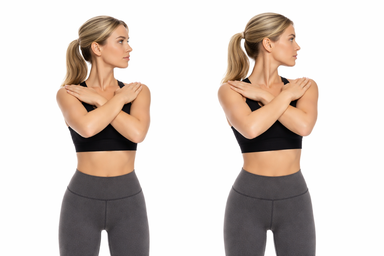
How to
A controlled upper-back rotation that trains thoracic mobility and trunk control.
- Sit or stand tall with your feet steady.
- Cross your arms over your chest or reach them forward.
- Rotate your chest to one side while your hips stay still.
- Return to center, then rotate to the other side.
- Move slowly and breathe through each turn.
- Keep your hips still
- Rotate through your upper back
- Letting your hips follow the turn
- Twisting mostly from your lower back
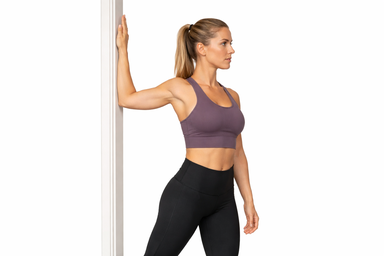
How to
A static chest opener that stretches your chest and front shoulders.
- Stand tall and clasp your hands behind your back.
- Straighten your arms and gently lift your hands.
- Open your chest until you feel a comfortable stretch.
- Hold and breathe slowly, then release with control.
- Keep your ribs down
- Relax your shoulders
- Arching your lower back to force the stretch
- Shrugging your shoulders up toward your ears
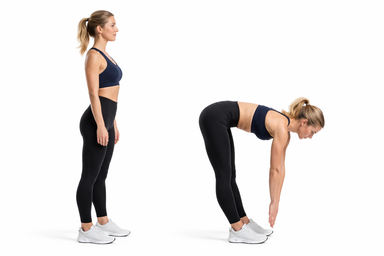
How to
A held stretch for the back of your thigh that targets your hamstrings.
- Sit tall with your target leg straight and toes up.
- Hinge at your hips and reach toward your foot.
- Stop when you feel a gentle stretch behind your thigh.
- Hold the stretch and breathe slowly.
- Release slowly, then switch sides if stretching one leg.
- Keep your back long.
- Hinge from your hips.
- Rounding your back to reach farther.
- Bouncing in the stretch.

Why Your Backpack Replaces the Barbell
Goblet squats load your anterior core and thoracic spine into extension — exactly the counterforce to a forward-flexed commute posture. Romanian deadlifts eccentrically lengthen the hamstrings and glutes under load, while the bent-over row recruits mid-trapezius and rhomboids to pull your shoulders back where they belong.

What Daily Carrying Does to Your Body
Asymmetrical loading from a single-shoulder bag chronically shortens the ipsilateral quadratus lumborum and rotates the pelvis — the suitcase carry here directly trains lateral core stability to undo that pattern. Prolonged sitting compresses lumbar discs and inhibits glute activation, making the Romanian deadlift and reverse lunge critical resets for hip hinge mechanics.

Compact Volume, Maximum Postural ROI
Thoracic rotation and inchworms prime spinal mobility before load is introduced, following the joint-by-joint principle — mobile segments before stable ones. Progressive overload here is simple: add books or a water bottle to increase backpack weight by 2–5% weekly. If the bent-over row feels easy before the plank fatigues you, your load is too light — match the challenge across all planes.