
Clean & Minimal AI Powered Fitness Routines
Download AppLong-Haul Flight Circulation — 25 Minutes
A seated, low-impact circulation and mobility routine to reduce stiffness on long flights.
Long-Haul Flight Circulation — 25 Minutes
A seated, low-impact circulation and mobility routine to reduce stiffness on long flights.
Seated Warm-Up
Settle your posture, then start pumping blood flow through the lower legs. Focus on breath work and ankle mobility.
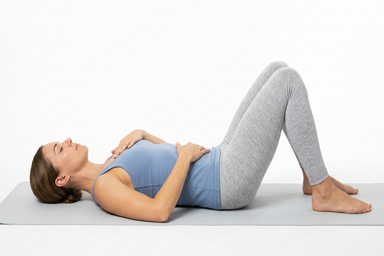
How to
A slow breathing drill that trains relaxed belly breathing and helps you control your breath.
- Lie on your back or sit tall with one hand on your belly.
- Inhale through your nose and let your belly rise.
- Exhale slowly and let your belly fall.
- Keep your chest and shoulders quiet.
- Continue for the set time with smooth breaths.
- Breathe low into your belly
- Keep your shoulders relaxed
- Shrugging your shoulders as you inhale
- Forcing the breath or holding tension
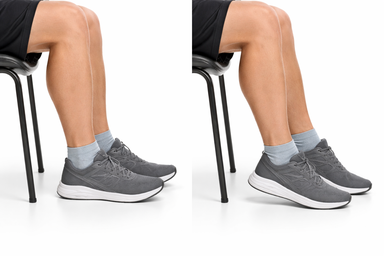
How to
A simple ankle movement that warms your calves and shins and moves both ankles through flex and point.
- Sit or lie down with both legs extended and relaxed.
- Pull your toes toward your shins on both feet.
- Point your toes away from you on both feet.
- Move smoothly back and forth for the set.
- Keep your knees still
- Use a full, smooth range
- Bouncing or jerking the ankles
- Letting your legs tense up
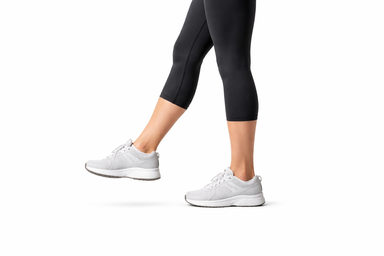
How to
A simple ankle mobility move that warms up your ankle through a full circle.
- Sit or stand tall and lift one foot slightly off the floor.
- Slowly circle your ankle in one direction.
- Reverse the circle and keep the motion smooth.
- Finish your reps, then switch legs.
- Move from your ankle, not your knee
- Keep the circles slow and controlled
- Rushing through small, choppy circles
- Letting your whole leg swing around
Main Circulation Circuit
Build heat gently in the legs and hips and reduce stiffness from prolonged sitting. Perform seated movements continuously at an easy-to-moderate pace.
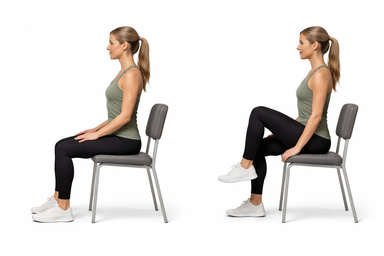
How to
A seated leg lift that trains your hip flexors and core while keeping you upright.
- Sit tall near the front of a chair with feet flat.
- Brace your core and keep your chest lifted.
- Lift one knee toward your chest without leaning back.
- Lower that foot with control, then lift the other knee.
- Keep alternating legs for all reps.
- Sit tall through your spine
- Move with control
- Leaning back as you lift your knee
- Letting your foot drop to the floor
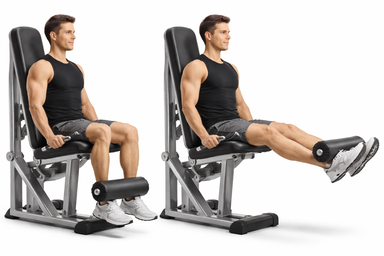
How to
A seated leg lift that trains your quads by straightening one knee at a time.
- Sit tall with one foot flat and the other knee bent.
- Brace lightly and extend one leg until the knee is straight.
- Pause briefly with your thigh still on the seat.
- Lower your foot back down with control.
- Finish your reps, then switch legs.
- Sit tall through your torso.
- Move slowly and control the lowering.
- Leaning back to lift the leg.
- Snapping the knee straight.
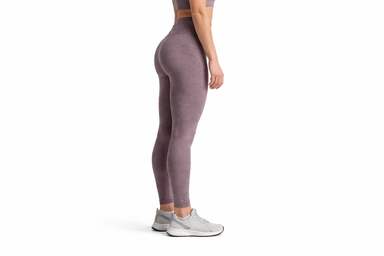
How to
An isometric glute contraction that trains you to engage both sides of your glutes.
- Stand or lie tall with both feet grounded and hips level.
- Squeeze both glutes as if pinching a coin between them.
- Hold the squeeze and breathe steadily.
- Relax fully, then repeat for the next hold.
- Keep your ribs stacked over your hips
- Squeeze both sides evenly
- Arching your lower back to create the squeeze
- Holding your breath during the hold
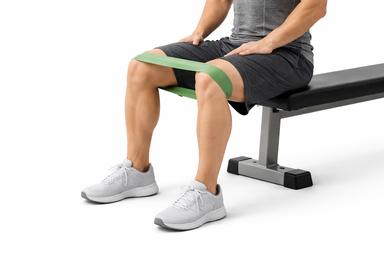
How to
A seated outward knee press that trains your outer hips and glutes without moving.
- Sit tall on a chair with feet flat and knees bent.
- Place your hands on the outside of your knees.
- Press your knees out into your hands without moving your feet.
- Hold steady and breathe, then relax.
- Sit tall
- Press both knees out evenly
- Letting your feet lift or slide
- Leaning back as you press
Upper-Body Mobility
Keep shoulders down and away from ears; breathe slowly.
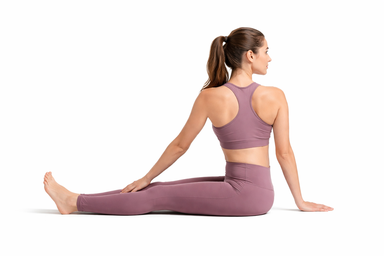
How to
A seated twist that gently works spinal rotation and posture while you hold and breathe.
- Sit tall with both legs extended or crossed.
- Place one hand behind you and the other on your opposite knee.
- Rotate your chest toward the back hand.
- Hold the twist and breathe slowly.
- Release to center, then switch sides.
- Sit tall through your spine
- Twist from your upper back
- Forcing the twist with your arms
- Slumping or rounding your back
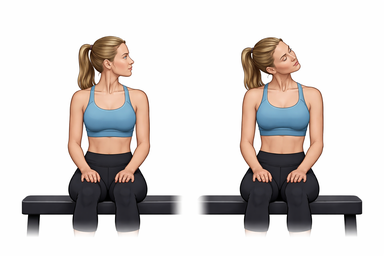
How to
A seated neck side bend held on one side to work gentle neck control and mobility.
- Sit tall with your feet flat and shoulders relaxed.
- Look straight ahead and brace lightly through your core.
- Slowly tip one ear toward the same-side shoulder.
- Hold the position and breathe slowly.
- Return to center, finish your hold, then switch sides.
- Keep both shoulders down
- Move slowly and gently
- Shrugging the shoulder toward your ear
- Twisting or turning your head
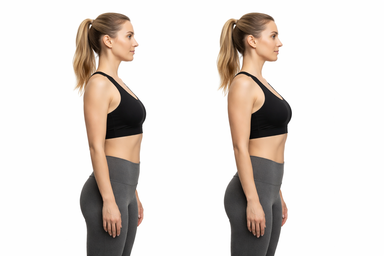
How to
A small shoulder blade squeeze that trains your upper back and shoulder control.
- Stand or sit tall with your arms relaxed by your sides.
- Pull your shoulder blades back and slightly down.
- Pause briefly while keeping your ribs stacked.
- Release with control to the start position.
- Repeat for the set.
- Keep your neck relaxed
- Move from your shoulder blades
- Shrugging your shoulders toward your ears
- Arching your lower back to create the squeeze
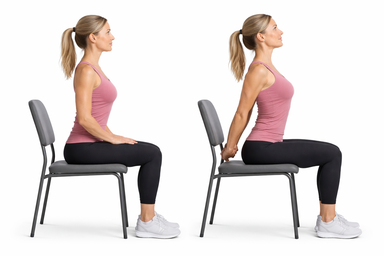
How to
A seated chest-opening stretch that targets your chest and front shoulders.
- Sit tall on a chair or bench with your feet flat.
- Reach both arms behind you and clasp your hands if comfortable.
- Gently draw your hands back and lift your chest.
- Hold the position and breathe slowly.
- Release your arms and relax your shoulders.
- Keep your ribs down
- Keep your neck relaxed
- Arching your lower back to lift your chest
- Shrugging your shoulders toward your ears
Standing Aisle Break
Optional — only if the seatbelt sign is off and you have space. Use the seatback for balance if needed.
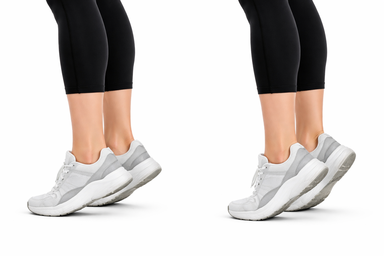
How to
A standing lower-leg move that trains your calves by lifting and lowering your heels.
- Stand tall with feet hip-width apart and toes pointing forward.
- Press through the balls of your feet and lift your heels high.
- Pause briefly at the top without leaning forward.
- Lower your heels with control to the floor.
- Keep your knees softly straight.
- Rise straight up, not forward.
- Bouncing through the reps.
- Letting your ankles roll outward.
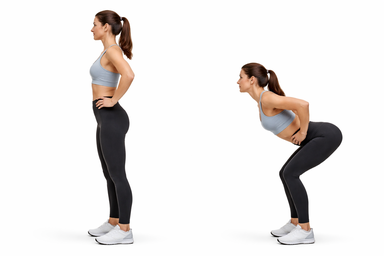
How to
A basic hip hinge that trains your glutes and hamstrings while practicing a strong spine position.
- Stand with feet hip-width apart and knees soft.
- Push your hips back as your chest tips forward.
- Lower until you feel tension in your hamstrings.
- Drive through your feet and squeeze your glutes to stand tall.
- Keep your spine long
- Hips move back, not down
- Squatting instead of hinging
- Rounding your back as you lower
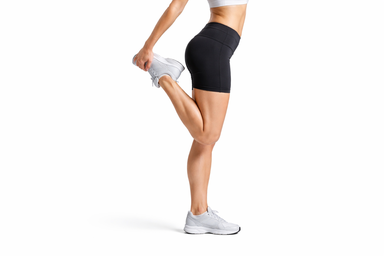
How to
A standing thigh stretch that targets the front of your hip and quad on one leg.
- Stand tall and hold a wall or chair for balance if needed.
- Bend one knee and hold your ankle or foot behind you.
- Keep your knees close and gently draw your heel toward your glute.
- Hold the stretch and breathe slowly.
- Release with control, then switch legs.
- Stand tall through your chest
- Keep your knees close
- Arching your lower back
- Pulling the knee out to the side

Venous Return: Your In-Flight Priority
Ankle pumps and calf raises directly activate the soleus muscle pump — your body's primary mechanism for pushing blood back toward the heart against gravity during prolonged sitting. Seated knee extensions and the standing hip hinge re-engage the quadriceps and posterior chain, preventing the venous pooling that causes that heavy, swollen-leg feeling at altitude.

What Cabin Pressure Actually Does to You
At cruising altitude, cabin pressure equivalent to 6,000–8,000 feet subtly reduces circulation efficiency and accelerates fluid retention in the lower extremities. The hip flexors and thoracic spine bear the brunt of sustained seat compression, which is exactly why the seated spinal twist and chest opener target thoracic rotation and anterior shoulder mobility before immobility becomes dysfunction

Circuit Sequencing for a Confined Space
This routine uses a proximal-to-distal warm-up logic — diaphragmatic breathing primes parasympathetic tone first, then ankle mobility unlocks peripheral circulation before larger movements like the seated march and hip hinge demand it. Add one extra set of ankle pumps every 90 minutes between sessions, and use the isometric glute squeeze as a stealth rep whenever you're stuck in your seat.