
Clean & Minimal AI Powered Fitness Routines
Download AppIntermediate Hamstring Flexibility
A 25-minute flexibility session to improve hamstring length and posterior-chain mobility.
Intermediate Hamstring Flexibility
A 25-minute flexibility session to improve hamstring length and posterior-chain mobility.
Warm-Up
Dynamic preparation. Increase blood flow and gently prepare the hamstrings and hips for longer holds.
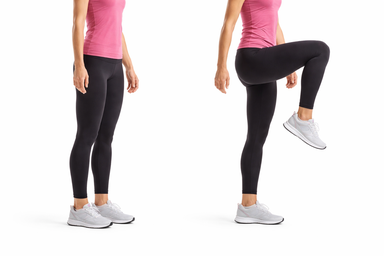
How to
A low-impact cardio move that warms up your legs and hips while raising your heart rate.
- Stand tall with your feet hip-width apart and arms at your sides.
- Lift one knee to hip height as you swing the opposite arm forward.
- Lower that foot, then lift the other knee and switch arms.
- Keep alternating sides at a steady pace.
- Slow down and plant both feet to finish.
- Stand tall with your chest up
- Land softly under your hips
- Leaning back as you lift your knees
- Stomping your feet on each step
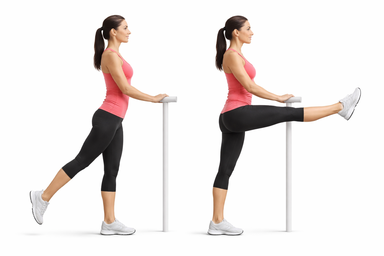
How to
A dynamic leg swing that warms up your hips, hamstrings, and glutes while challenging balance.
- Stand tall and hold a wall or rail for light support if needed.
- Lift one leg slightly off the floor with a soft knee.
- Swing it forward and back with control.
- Set it down, then switch legs on the next rep.
- Keep your torso tall.
- Swing from the hip, not the low back.
- Leaning back as the leg swings forward.
- Forcing the range of motion.
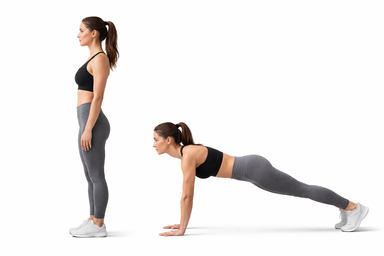
How to
A full-body walkout that trains your core, shoulders, and hamstrings.
- Stand tall with feet hip-width apart.
- Hinge at your hips and place your hands on the floor.
- Walk your hands forward to a high plank.
- Pause with your body in a straight line.
- Walk your hands back to your feet and stand up.
- Brace your core in the plank.
- Keep your legs as straight as you can.
- Letting your hips sag in the plank.
- Rushing the hand walkout.
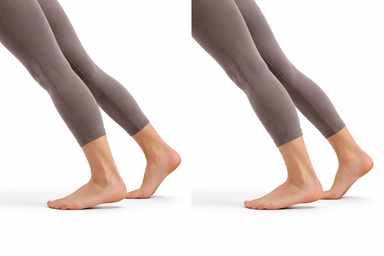
How to
A moving downward dog that stretches your calves and hamstrings while warming your shoulders.
- Start on hands and knees, then lift your hips up and back.
- Press your hands into the floor and lengthen your spine.
- Bend one knee as you press the other heel toward the floor.
- Switch sides smoothly, pedaling your feet at a steady pace.
- To finish, lower your knees back to the floor.
- Keep your spine long
- Move with steady breaths
- Rounding your back to force your heels down
- Shrugging your shoulders toward your ears
Supine Floss
Keep the low back neutral; use the strap/towel to avoid yanking on the leg.
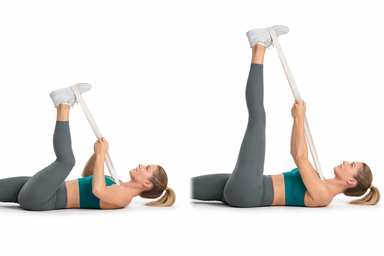
How to
A lying hamstring stretch that uses a steady hold to target the back of your thigh.
- Lie on your back with one leg flat and the other lifted.
- Hold behind your thigh or use a towel around your foot.
- Straighten your raised leg until you feel a gentle stretch.
- Hold the position and breathe slowly.
- Lower your leg, then change sides if your set calls for it.
- Keep your hips heavy on the floor.
- Relax your shoulders and neck.
- Forcing the leg past a gentle stretch.
- Letting your hips roll off the floor.
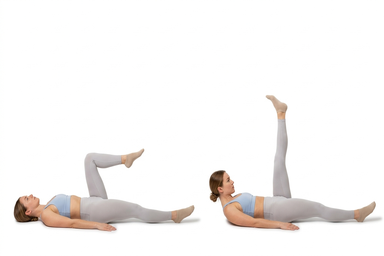
How to
A gentle leg extension drill that moves your hamstring through range on one side at a time.
- Lie on your back and hold one thigh with your hip bent.
- Keep that thigh still and slowly straighten your knee.
- Point and flex your foot as the leg lengthens.
- Bend your knee to return to the start with control.
- Finish your reps, then switch legs.
- Move slowly and stay relaxed.
- Keep your low back on the floor.
- Forcing the knee fully straight.
- Lifting your hips as you extend.
Hip Hinge Half Split
Hinge from the hips; keep a soft knee if needed.
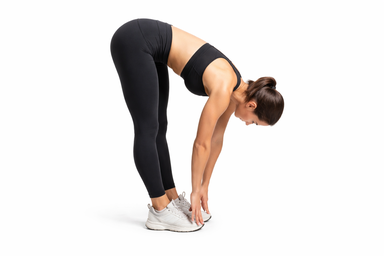
How to
A standing hamstring stretch that uses a hip hinge to stretch the back of your thigh.
- Stand tall and step one foot forward with your heel down and toes up.
- Bend your back knee slightly and hinge at your hips.
- Keep your back long as you lower your chest toward your thigh.
- Hold the stretch and breathe slowly.
- Release, then switch legs.
- Keep your hips square
- Point your toes up
- Rounding your back to reach lower
- Locking the standing knee
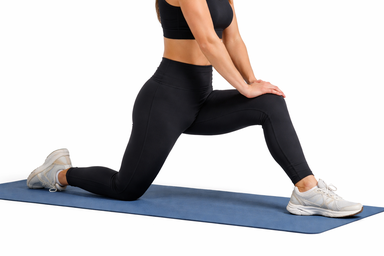
How to
A unilateral isometric stretch for your hamstrings and calves.
- Start in a half split with one leg forward and one back.
- Hinge at the hips and fold over the front leg.
- Hold the stretch and breathe steadily.
- Finish your hold, then switch sides.
- Keep your back long
- Stay relaxed and breathe
- Rounding your lower back
- Bouncing in and out of the stretch
Long Holds
Relax the shoulders and jaw; exhale to ease deeper without forcing.
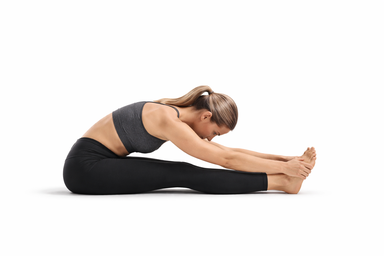
How to
A seated hamstring stretch that also eases your lower back and hips.
- Sit tall with both legs straight in front of you.
- Flex your feet and reach your arms toward your toes.
- Fold forward from your hips until you feel a gentle stretch.
- Hold the position and breathe slowly.
- Keep your knees soft
- Lengthen your spine
- Forcing your head toward your knees
- Bouncing in the stretch
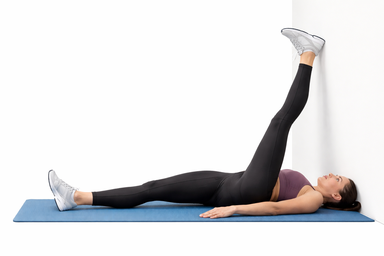
How to
A lying wall stretch that uses the wall to lengthen your hamstrings with a steady hold.
- Sit beside a wall, then lie back and place one heel up the wall.
- Straighten that leg until you feel a gentle hamstring stretch.
- Keep your other leg bent or straight on the floor.
- Hold the stretch and breathe slowly.
- Ease out, then switch legs if you are stretching one side.
- Keep your hips level.
- Relax your shoulders.
- Forcing the stretch or bouncing.
- Letting your hips twist away from the wall.

Neural vs. Muscular Tension in Your Stretches
This routine separates contractile tissue work from neural mobilization — the Hamstring Nerve Glide targets sciatic nerve mobility, while the Half Split and Seated Forward Fold address actual muscle extensibility. Most hamstring tightness is 60% neural guarding, which is why the nerve floss earns its place before your deepest passive holds.

Why Hamstrings Resist Lengthening So Stubbornly
The hamstrings cross two joints — hip and knee — making them uniquely prone to chronic shortening from seated postures and repetitive hip-flexion-dominant movement. The Wall Hamstring Stretch and Supine Strap work exploit this dual-joint architecture by isolating pelvic tilt, removing lumbar compensation that masks true hamstring range.

Dynamic-to-Static Sequencing Is Doing Real Work
March in Place and Leg Swings elevate tissue temperature and synovial fluid viscosity before any loaded lengthening begins — cold connective tissue resists deformation and risks micro-tearing. To personalize, extend your Inchworm hold by 3–5 seconds when posterior-chain stiffness feels high; this amplifies the myofascial release before your passive floor work.