
Clean & Minimal AI Powered Fitness Routines
Download AppPeripheral Neuropathy Balance Routine — 25 Minutes
A low-impact balance + lower-leg strength session to improve stability with peripheral neuropathy.
Peripheral Neuropathy Balance Routine — 25 Minutes
A low-impact balance + lower-leg strength session to improve stability with peripheral neuropathy.
Warm-Up
Increase circulation and gently wake up ankles/feet for better balance input. 5 minutes.
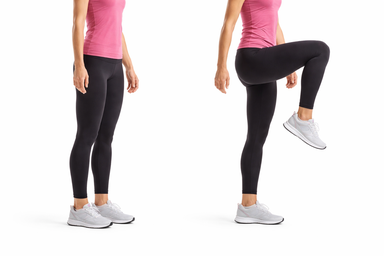
How to
A low-impact cardio move that warms up your legs and hips while raising your heart rate.
- Stand tall with your feet hip-width apart and arms at your sides.
- Lift one knee to hip height as you swing the opposite arm forward.
- Lower that foot, then lift the other knee and switch arms.
- Keep alternating sides at a steady pace.
- Slow down and plant both feet to finish.
- Stand tall with your chest up
- Land softly under your hips
- Leaning back as you lift your knees
- Stomping your feet on each step
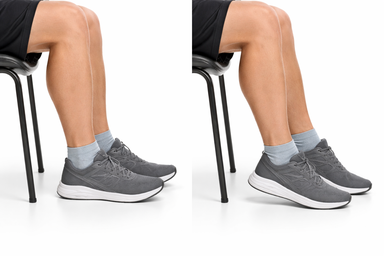
How to
A simple ankle movement that warms your calves and shins and moves both ankles through flex and point.
- Sit or lie down with both legs extended and relaxed.
- Pull your toes toward your shins on both feet.
- Point your toes away from you on both feet.
- Move smoothly back and forth for the set.
- Keep your knees still
- Use a full, smooth range
- Bouncing or jerking the ankles
- Letting your legs tense up
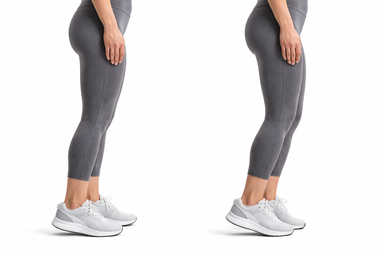
How to
A standing ankle rock that trains ankle mobility and balance.
- Stand tall with feet hip-width apart.
- Lift your toes, then rock back onto your heels.
- Lift your heels, then rock onto the balls of your feet.
- Keep rocking smoothly for your reps.
- Stay tall through your torso
- Move through your ankles, not your hips
- Leaning your upper body forward or back
- Letting your feet collapse inward
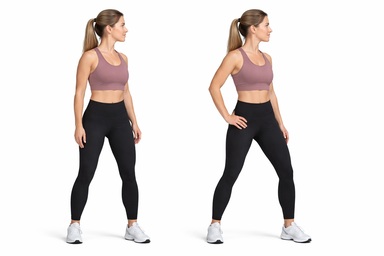
How to
A simple balance drill that shifts your weight from foot to foot to train control and stability.
- Stand tall with your feet hip-width apart.
- Shift your weight slowly onto one foot.
- Let the other foot get light, but keep it near the floor.
- Shift back through center and repeat to the other side.
- Move slowly and stay tall.
- Keep your hips level.
- Leaning your chest far to the side.
- Rushing the shift or losing control.
Circuit A
Static balance work for legs. Keep a hand hovering near support. Quality over speed.
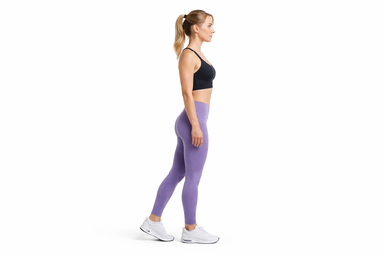
How to
A narrow heel-to-toe balance hold that trains steady posture and control.
- Stand tall near support if needed.
- Place one foot directly in front of the other, heel to toe.
- Keep your weight even and eyes forward.
- Hold the stance and breathe slowly.
- Stand tall through your head
- Keep your feet in one line
- Leaning your body to one side
- Looking down the whole time
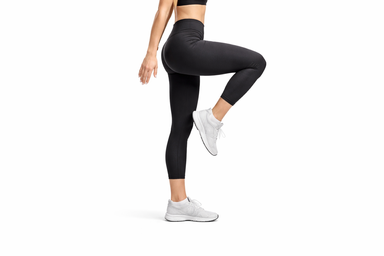
How to
A one-leg balance hold that trains stability in your foot, ankle, and hip.
- Stand tall with feet hip-width apart and arms relaxed.
- Shift your weight onto one foot and lift the other foot off the floor.
- Hold steady and breathe, keeping your body tall.
- Lower your foot with control when the hold is done.
- Finish your hold, then switch legs.
- Keep your hips level
- Stand tall through your crown
- Leaning your torso far to one side
- Letting your lifted foot rest on the floor
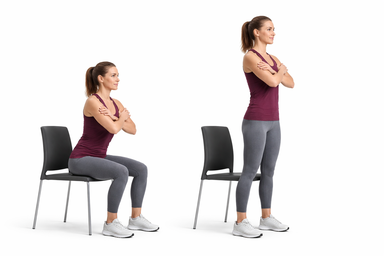
How to
A chair-based squat pattern that trains your thighs and glutes for standing strength.
- Sit near the front of a chair with feet flat and hip-width apart.
- Lean slightly forward and brace your core.
- Press through both feet and stand tall.
- Push your hips back and sit down with control.
- Keep your knees tracking over your toes
- Stand tall at the top
- Letting your knees cave inward
- Dropping hard onto the chair
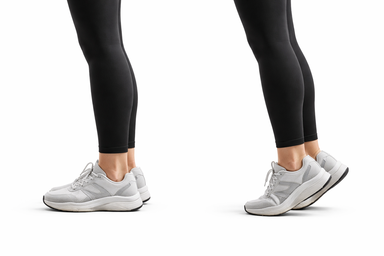
How to
A standing lower-leg move that trains your calves by lifting and lowering your heels.
- Stand tall with both feet hip-width apart.
- Press through the balls of your feet and lift your heels.
- Pause briefly at the top with control.
- Lower your heels slowly back to the floor.
- Repeat for your reps.
- Keep your ankles tracking straight.
- Move up and down with control.
- Rocking onto the outside edges of your feet.
- Bouncing at the bottom of each rep.
Circuit B
Dynamic balance work for hips. Small, controlled steps. Pause to reset posture as needed.
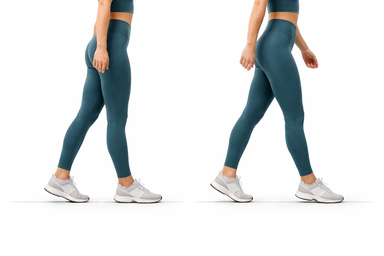
How to
A heel-to-toe walking drill that trains balance, control, and steady posture.
- Stand tall with your arms relaxed or out for balance.
- Step one foot directly in front of the other, heel to toe.
- Shift your weight onto the front foot with control.
- Bring the back foot forward heel to toe and keep alternating.
- Continue for the set distance or time.
- Keep your eyes forward.
- Move slowly and stay tall.
- Rushing each step.
- Letting your feet drift wide apart.
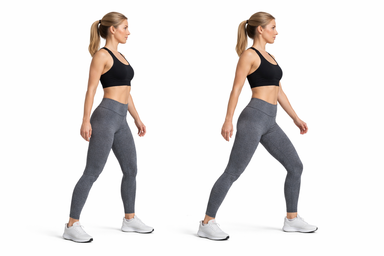
How to
A side-to-side stepping move that warms up your hips, glutes, and legs.
- Stand tall with feet hip-width apart and arms relaxed.
- Step one foot out to the side, then follow with the other foot.
- Step back the other way and keep alternating sides.
- Stay light on your feet and keep a steady rhythm.
- Keep your chest up
- Step softly with control
- Letting your knees cave inward
- Dragging your feet instead of stepping
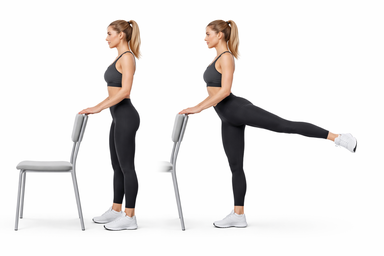
How to
A standing leg raise to the side that trains your outer hips and balance.
- Stand tall with one hand on a wall or chair for balance.
- Shift your weight onto one leg and brace your core.
- Lift the other leg out to the side without leaning your torso.
- Lower the leg with control to the start position.
- Finish your reps, then switch legs.
- Keep your toes facing forward.
- Stand tall through each rep.
- Leaning your torso to lift the leg.
- Turning your toes outward as you raise.
How to
A simple balance drill that shifts your weight from foot to foot to train control and stability.
- Stand tall with your feet hip-width apart.
- Shift your weight slowly onto one foot.
- Let the other foot get light, but keep it near the floor.
- Shift back through center and repeat to the other side.
- Move slowly and stay tall.
- Keep your hips level.
- Leaning your chest far to the side.
- Rushing the shift or losing control.
Cool-Down
Bring your breathing down and gently stretch calves/hips to reduce stiffness. 2 minutes.
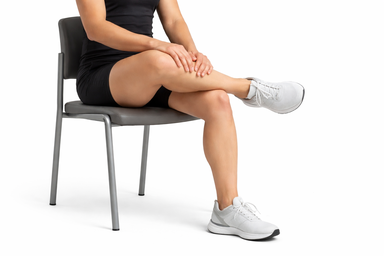
How to
A seated hip stretch that targets the glutes and outer hip on one side at a time.
- Sit tall near the edge of a chair with both feet flat.
- Cross one ankle over the opposite thigh, just above the knee.
- Keep your spine long and gently lean forward from your hips.
- Hold the stretch and breathe slowly.
- Finish the hold, then switch sides.
- Keep your chest lifted
- Relax the raised knee down
- Rounding your back to reach lower
- Pushing hard on the knee
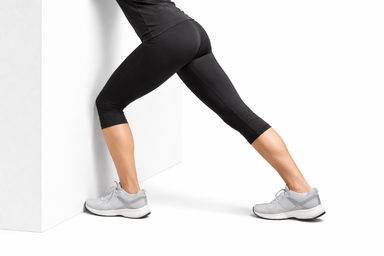
How to
A standing calf stretch for one leg that targets the back of your lower leg.
- Stand facing a wall and place both hands on it.
- Step one foot back and keep that heel on the floor.
- Bend your front knee until you feel a stretch in the back calf.
- Hold the stretch and breathe slowly.
- Release, step in, then switch legs.
- Keep your back heel down
- Point both toes forward
- Letting the back heel lift
- Turning the back foot out
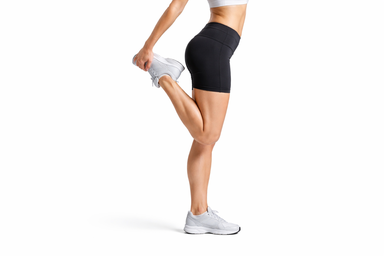
How to
A standing thigh stretch that targets the front of your hip and quad on one leg.
- Stand tall and hold a wall or chair for balance if needed.
- Bend one knee and hold your ankle or foot behind you.
- Keep your knees close and gently draw your heel toward your glute.
- Hold the stretch and breathe slowly.
- Release with control, then switch legs.
- Stand tall through your chest
- Keep your knees close
- Arching your lower back
- Pulling the knee out to the side
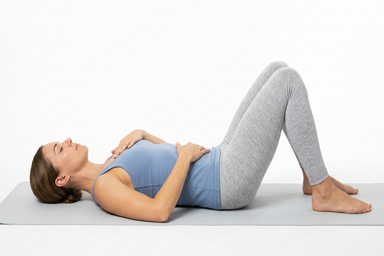
How to
A slow breathing drill that trains relaxed belly breathing and helps you control your breath.
- Lie on your back or sit tall with one hand on your belly.
- Inhale through your nose and let your belly rise.
- Exhale slowly and let your belly fall.
- Keep your chest and shoulders quiet.
- Continue for the set time with smooth breaths.
- Breathe low into your belly
- Keep your shoulders relaxed
- Shrugging your shoulders as you inhale
- Forcing the breath or holding tension

Rebuilding Proprioception From the Ground Up
Ankle Pumps and Heel-to-Toe Rocks directly stimulate mechanoreceptors in the ankle joint and plantar fascia — the exact sensory pathways that peripheral neuropathy disrupts. Calf Raises and Single-Leg Stand then load the soleus and tibialis anterior under controlled conditions, rebuilding the neuromuscular feedback loop that keeps you upright without conscious effort.

What Neuropathy Actually Steals From Your Balance
Peripheral neuropathy reduces afferent nerve signaling from the feet and lower legs, meaning your brain receives delayed or incomplete ground-contact data — forcing your visual and vestibular systems to overcompensate. This is why fatigue hits faster in dim lighting or on uneven surfaces, and why lower-leg strength loss accelerates: the muscles aren't just weak, they're poorly recruited.

Sensory Loading Before Stability Demands
The warm-up deliberately sequences March in Place and Ankle Pumps before any static balance challenge, priming residual nerve conduction and increasing local circulation to sensitize whatever sensory input remains. Progress Tandem Walk distance or reduce hand-support on Calf Raises as your first overload variable — single-leg demand scales intensity without adding joint stress.