
Clean & Minimal AI Powered Fitness Routines
Download AppIntermediate Osteopenia Prevention
A 25-minute, bone-supportive routine combining impact, strength, balance, and posture work.
Intermediate Osteopenia Prevention
A 25-minute, bone-supportive routine combining impact, strength, balance, and posture work.
Warm-Up
5 minutes. Gradually raise heart rate and prep hips/shoulders for loading.
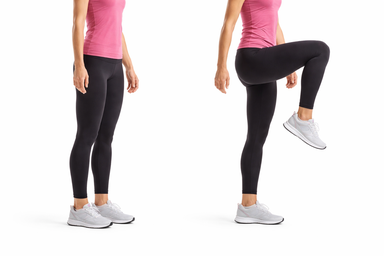
How to
A low-impact cardio move that warms up your legs and hips while raising your heart rate.
- Stand tall with your feet hip-width apart and arms at your sides.
- Lift one knee to hip height as you swing the opposite arm forward.
- Lower that foot, then lift the other knee and switch arms.
- Keep alternating sides at a steady pace.
- Slow down and plant both feet to finish.
- Stand tall with your chest up
- Land softly under your hips
- Leaning back as you lift your knees
- Stomping your feet on each step
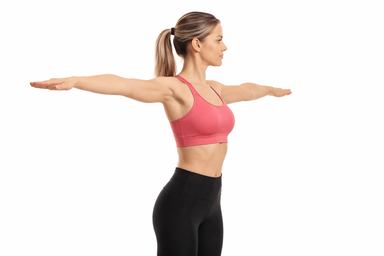
How to
A simple shoulder warm-up that moves both arms in circles and trains shoulder control.
- Stand tall with your feet about hip-width apart.
- Raise both arms out to your sides at shoulder height.
- Make small, controlled circles with both arms.
- Keep circling for the set time, then reverse direction if told.
- Lower your arms to finish.
- Keep your ribs down
- Move smoothly, not fast
- Shrugging your shoulders toward your ears
- Arching your back to keep the arms up
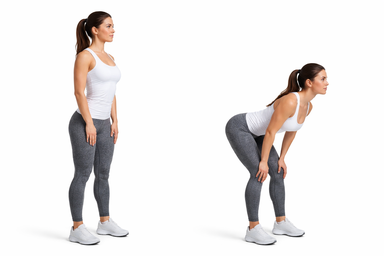
How to
A standing hip hinge that trains your glutes and hamstrings and builds the pattern for deadlifts.
- Stand with feet hip-width apart and knees slightly bent.
- Brace your core and keep your chest open.
- Push your hips back as your torso tips forward.
- Lower until you feel your hamstrings, keeping your back flat.
- Drive your hips forward to stand tall again.
- Move from your hips, not your waist.
- Keep your back long.
- Squatting instead of hinging your hips back.
- Rounding your back as you lower.
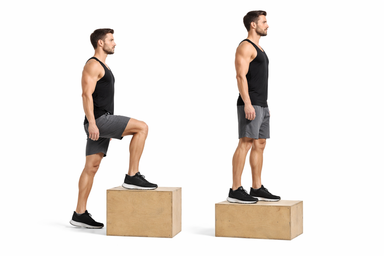
How to
A single-leg climb onto a step that trains your quads, glutes, and balance.
- Stand facing a sturdy step with one foot fully on top.
- Lean slightly forward and drive through the front foot to stand up.
- Bring your back foot onto the step with control.
- Step back down with the same back foot, then lower the front foot.
- Finish your reps, then switch legs.
- Keep your chest tall
- Drive through your whole front foot
- Pushing off too much with the back foot
- Letting your front knee cave inward
Main Bone-Loading Circuit
17 minutes. Strength and light impact to support bone density, plus posture work.
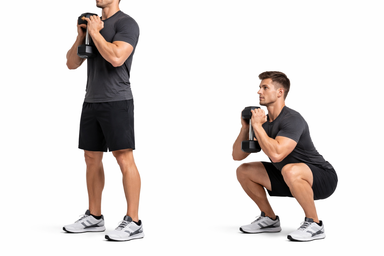
How to
A front-loaded squat that trains your quads, glutes, and core.
- Stand with feet about shoulder-width apart, holding one dumbbell at your chest.
- Brace your core and keep your chest tall.
- Bend your knees and hips to squat down under control.
- Pause briefly, then push through your feet to stand tall.
- Keep the dumbbell close to your chest
- Knees track in line with toes
- Letting your heels lift off the floor
- Rounding your back or collapsing your chest
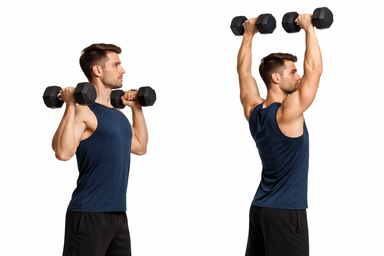
How to
A standing or seated press that trains your shoulders and triceps with dumbbells.
- Hold dumbbells at shoulder height, palms facing forward or in.
- Brace your core and keep your ribs down.
- Press both dumbbells overhead until your arms are straight.
- Lower the dumbbells with control back to your shoulders.
- Keep wrists stacked over elbows.
- Do not lean back as you press.
- Flaring your ribs to lift the weights.
- Dropping the dumbbells too fast.
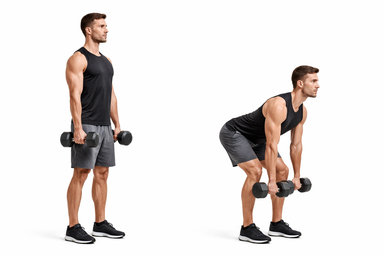
How to
A weighted hip hinge that trains your glutes, hamstrings, and back.
- Stand with feet hip-width apart, holding dumbbells in front of your thighs.
- Hinge at your hips and lower the weights close to your legs.
- Keep your back flat and knees softly bent as you lower.
- Drive through your feet and squeeze your glutes to stand tall.
- Keep the weights close
- Push your hips back
- Rounding your back as you lower
- Squatting instead of hinging
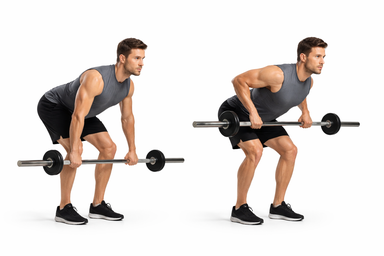
How to
A bent-over pulling move that trains your upper back, lats, and arms.
- Stand with feet hip-width and hold the weights in front of your thighs.
- Hinge at your hips and keep your back long, with arms hanging down.
- Pull the weights toward your ribs, squeezing your shoulder blades back.
- Lower the weights with control until your arms are straight.
- Keep your chest proud.
- Pull elbows back, not out.
- Rounding your back as you row.
- Jerking the weights with your body.
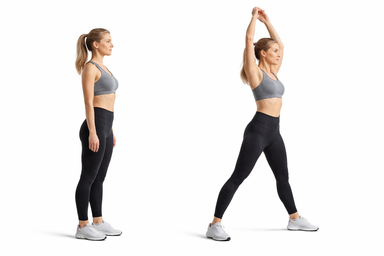
How to
A full-body cardio move that trains coordination, calves, shoulders, and hips.
- Stand tall with feet together and arms at your sides.
- Jump your feet out as you raise your arms overhead.
- Jump your feet back together as you lower your arms.
- Repeat at a steady pace, landing softly each time.
- Stay light on your toes
- Keep your chest tall
- Landing hard with locked knees
- Letting your arms swing out of control
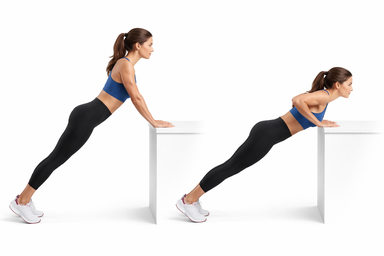
How to
An incline push-up using a counter. It trains your chest, shoulders, triceps, and core.
- Place your hands on a sturdy counter, slightly wider than shoulders.
- Step your feet back until your body forms a straight line.
- Bend your elbows and lower your chest toward the counter.
- Push the counter away to return to the start.
- Repeat for your reps.
- Keep your body in one straight line.
- Bend your elbows back and out slightly.
- Letting your hips sag or pike up.
- Shrugging your shoulders toward your ears.
Balance and Cool-Down
3 minutes. Balance work to reduce fall risk, then gentle stretching to finish.
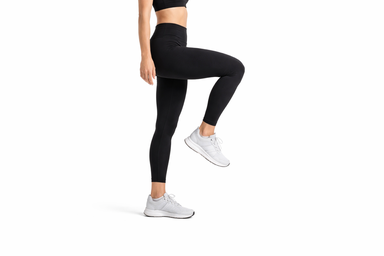
How to
A one-leg standing hold that trains balance and stability in your foot, ankle, and hips.
- Stand tall with feet hip-width apart and arms relaxed.
- Shift your weight onto one foot and lift the other foot off the floor.
- Hold steady, keep your torso tall, and breathe slowly.
- Lower your foot with control, then switch legs.
- Keep your hips level
- Look at one spot ahead
- Letting your hips twist or drop
- Holding your breath
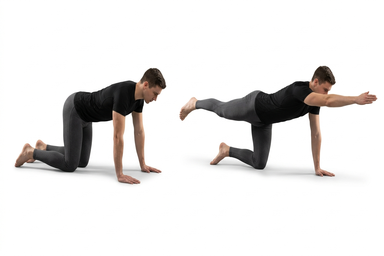
How to
A core stability move from all fours that trains your abs, back, glutes, and balance.
- Start on hands and knees with your hands under shoulders and knees under hips.
- Brace your core and keep your back flat.
- Reach one arm forward and the opposite leg back until they are straight.
- Pause briefly, then bring your hand and knee back under you.
- Repeat on the other side, alternating each rep.
- Keep your hips square
- Move slow and controlled
- Arching or sagging your lower back
- Rotating your hips as you reach
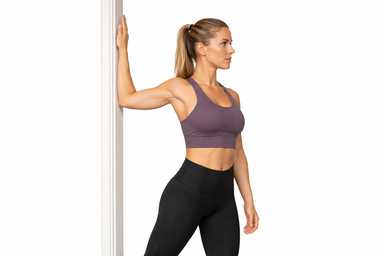
How to
A static chest opener that stretches your chest and front shoulders.
- Stand tall and clasp your hands behind your back.
- Straighten your arms and gently lift your hands.
- Open your chest until you feel a comfortable stretch.
- Hold and breathe slowly, then release with control.
- Keep your ribs down
- Relax your shoulders
- Arching your lower back to force the stretch
- Shrugging your shoulders up toward your ears
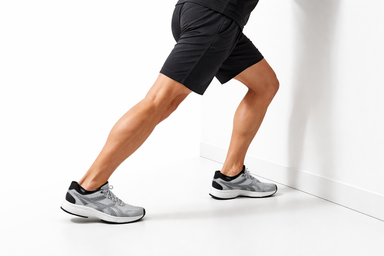
How to
A standing calf stretch that targets the back of your lower leg with a steady hold.
- Stand facing a wall and place your hands on it.
- Step one foot back and keep that heel on the floor.
- Bend your front knee until you feel a calf stretch.
- Hold and breathe slowly without bouncing.
- Finish the hold, then switch legs.
- Keep your back heel down
- Point both toes forward
- Bouncing in the stretch
- Letting the back heel lift

Impact + Load: The Dual Bone Stimulus
Step-Ups and Jumping Jacks deliver ground reaction forces that signal osteoblast activity in the femur and tibia, while Goblet Squats and Deadlifts add compressive axial loading through the lumbar spine and hip — the two fracture sites most vulnerable in osteopenia. Each modality triggers bone remodeling through distinct mechanotransduction pathways.

Osteopenia's Hidden Demand: Posture & Fall Risk
Osteopenia doesn't just weaken bone — it shifts your center of gravity as thoracic kyphosis quietly develops, turning minor trips into fracture events. Bent-Over Rows and Bird Dog directly counter this by reinforcing the posterior chain and lumbar stabilizers, while Single-Leg Balance trains the neuromuscular response that catches you before a fall becomes a break.

Mechanical Loading Thresholds & Your Next Step
Bone responds to strain above roughly 1,500 microstrain — meaning load must be challenging enough to matter. The Hip Hinge and Overhead Press progressively recruit the glutes, erectors, and deltoids under resistance, building toward that adaptive threshold. As bodyweight movements feel easy, increase dumbbell load by 2–5% to maintain the osteogenic stimulus.