
Clean & Minimal AI Powered Fitness Routines
Download AppCarpal Tunnel Irritation Relief — 25 Minutes
A 25-minute mobility + nerve-glide routine to reduce wrist/forearm irritation and improve hand function.
Carpal Tunnel Irritation Relief — 25 Minutes
A 25-minute mobility + nerve-glide routine to reduce wrist/forearm irritation and improve hand function.
Warm-Up
Downshift tension and set shoulder/neck alignment to reduce strain through the wrist/hand. Focus on nervous system calming and posture correction.
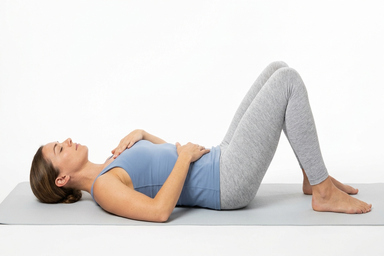
How to
A slow breathing drill that trains relaxed belly breathing and helps you control your breath.
- Lie on your back or sit tall with one hand on your belly.
- Inhale through your nose and let your belly rise.
- Exhale slowly and let your belly fall.
- Keep your chest and shoulders quiet.
- Continue for the set time with smooth breaths.
- Breathe low into your belly
- Keep your shoulders relaxed
- Shrugging your shoulders as you inhale
- Forcing the breath or holding tension
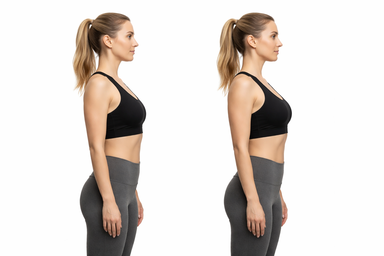
How to
A small shoulder blade squeeze that trains your upper back and shoulder control.
- Stand or sit tall with your arms relaxed by your sides.
- Pull your shoulder blades back and slightly down.
- Pause briefly while keeping your ribs stacked.
- Release with control to the start position.
- Repeat for the set.
- Keep your neck relaxed
- Move from your shoulder blades
- Shrugging your shoulders toward your ears
- Arching your lower back to create the squeeze
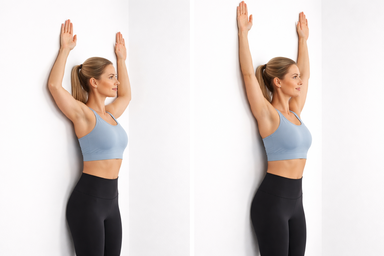
How to
A wall-based shoulder movement that trains upper-back control and shoulder mobility.
- Stand with your back to a wall and feet a small step forward.
- Press your head, upper back, and hips toward the wall.
- Set your arms in a goalpost shape with elbows and wrists near the wall.
- Slide your arms up as far as you can without arching your back.
- Slide your arms back down to the start and repeat.
- Keep your ribs down
- Move slowly and stay controlled
- Arching your back to reach higher
- Letting your shoulders shrug toward your ears
Circuit A
Keep symptoms calm. For glides, stop short of tingling or pain.
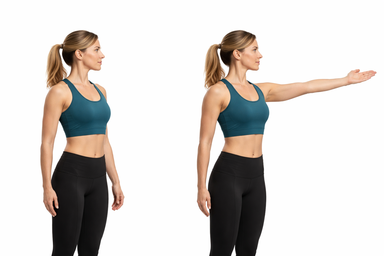
How to
A gentle nerve glide for one arm that uses shoulder, wrist, and neck motion.
- Stand tall with one arm out to the side, palm up.
- Slowly straighten your elbow and extend your wrist and fingers.
- Tilt your head away as you open the hand.
- Bend your elbow and relax your wrist to return.
- Finish your reps, then switch sides.
- Move gently and smoothly.
- Keep your shoulder relaxed.
- Forcing a strong stretch.
- Shrugging your shoulder toward your ear.
How to
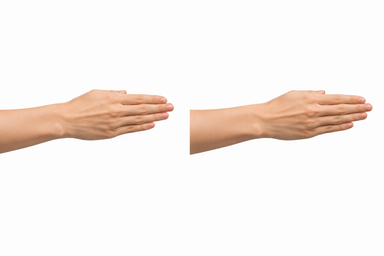
A finger mobility drill for both hands that trains finger control through several fist shapes.
- Hold both hands up with wrists straight and fingers long.
- Bend your fingertips into a hook, then straighten.
- Make a full fist, then straighten your fingers.
- Bend at the big knuckles into a flat fist, then open fully.
- Move slowly through each shape for your reps.
- Keep your wrists straight.
- Move with control.
- Rushing through the finger positions.
- Letting your wrists bend or collapse.
How to
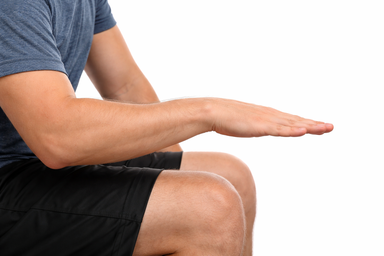
An isometric wrist drill that trains your wrist extensors without moving the joint.
- Sit or stand with forearms supported and palms facing down.
- Place the backs of both hands under a fixed surface.
- Press your knuckles upward into the surface without moving your wrists.
- Hold the effort and breathe, then relax.
- Keep the pressure steady.
- Keep your forearms still.
- Letting your elbows lift.
- Twisting your wrists as you press.
How to
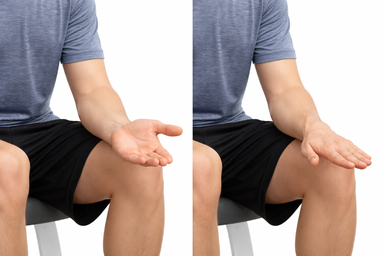
A forearm rotation that trains wrist and forearm control through palm-up and palm-down positions.
- Sit or stand with one elbow bent at your side.
- Keep your upper arm still and rotate your palm up.
- Rotate your palm down with control.
- Move slowly through a comfortable range.
- Finish your reps, then switch sides.
- Keep your elbow tucked
- Move from the forearm
- Letting your elbow drift away from your side
- Forcing the wrist past a comfortable range
Circuit B
Stretch lightly; then add gentle isometrics. Maintain neutral wrist alignment.
How to
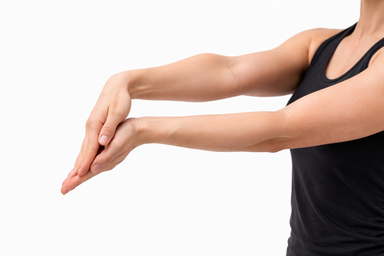
A forearm stretch that targets the wrist flexors on one arm at a time.
- Extend one arm in front of you, palm up.
- Keep your elbow straight and gently pull your fingers back.
- Hold the stretch and breathe slowly.
- Release gently, then switch sides.
- Keep your shoulder relaxed
- Use gentle pressure
- Bending your elbow
- Pulling into sharp pain
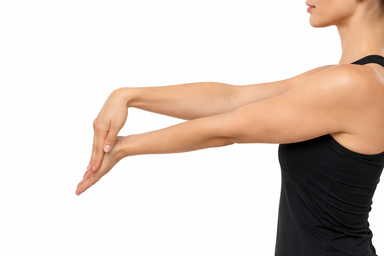
How to
A forearm stretch that targets the wrist extensors on the top of your forearm.
- Extend one arm in front with your palm down.
- Use your other hand to gently bend your wrist down.
- Keep your elbow straight and hold while breathing slowly.
- Release slowly, then switch sides.
- Use gentle pressure
- Keep your shoulder relaxed
- Forcing the wrist into pain
- Bending your elbow during the stretch

How to
A one-arm wrist hold that trains your wrist flexors without moving the joint.
- Sit or stand with one forearm supported, palm facing up.
- Bend your wrist slightly toward you and press into your other hand.
- Match the pressure so your wrist does not move.
- Hold and breathe steadily, then relax.
- Switch arms and repeat.
- Keep your forearm still
- Use steady pressure
- Letting your wrist bend or collapse
- Shrugging your shoulder as you press
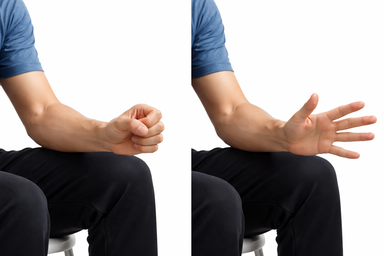
How to
A simple finger opening move that trains the muscles on the back of your hands and forearms.
- Hold both hands in front of you with relaxed wrists.
- Make loose fists with your thumbs outside.
- Open your hands and spread your fingers wide.
- Pause briefly, then return to loose fists.
- Repeat for the set.
- Keep your wrists still.
- Spread through every finger.
- Locking your wrists or shrugging your shoulders.
- Snapping the fingers open too fast.
Cool-Down
Finish with gentle motion and optional soft-tissue work to settle irritation. Decompress and calm tissue.
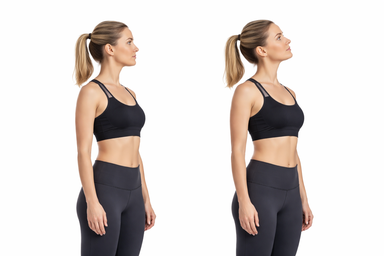
How to
A gentle side-bend stretch for the side of your neck, held still while you breathe.
- Sit or stand tall with your shoulders relaxed.
- Let your right ear move toward your right shoulder.
- Hold the stretch and breathe slowly.
- Return to center, then switch sides.
- Keep both shoulders down.
- Move slowly and gently.
- Lifting the shoulder toward your ear.
- Forcing your head into the stretch.
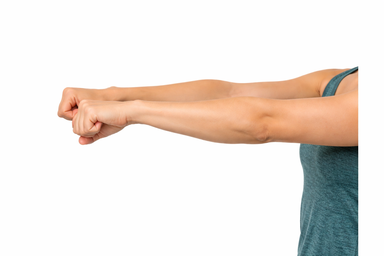
How to
A gentle wrist mobility drill that moves both wrists through circles to warm your forearms and hands.
- Stand or sit tall with your arms relaxed and elbows bent.
- Make slow circles with both wrists in one direction.
- Keep the movement smooth and controlled.
- Reverse direction and circle both wrists the other way.
- Move through a comfortable range
- Keep your shoulders relaxed
- Forcing a painful range
- Moving too fast or jerky
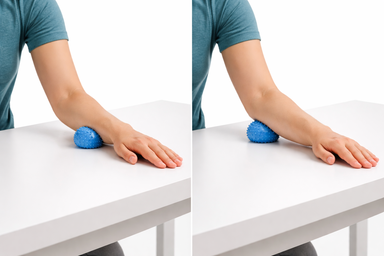
How to
A forearm self-massage drill using a ball to roll tight spots and warm up your wrist and forearm.
- Place a massage ball on a table and rest one forearm on it.
- Lean in gently and roll from wrist toward elbow.
- Pause on tender spots and make small circles.
- Turn your palm up or down to reach different areas.
- Finish your time, then switch arms.
- Use light to moderate pressure
- Move slowly and stay relaxed
- Pressing so hard that you tense up
- Rolling directly over the elbow or wrist joint

Why Nerve Glides Come Before Isometrics
The Median Nerve Glide mobilizes the nerve trunk through its full excursion path before the wrist isometrics load the surrounding flexor and extensor tendons. This sequencing prevents compressive irritation — a sensitized nerve needs slack before the carpal tunnel faces any mechanical demand. Scapular Retraction upstream ensures the thoracic outlet isn't restricting the nerve's proximal pathway.

CTS Isn't Just a Wrist Problem
Carpal tunnel irritation often originates from cervical compression, rounded shoulders, or forearm hypertonicity — which is why the Neck Side Bend and Wall Angel appear here alongside wrist work. The median nerve runs from C6-T1 through the brachial plexus, past the pronator teres, and into the carpal tunnel, meaning tension anywhere along that chain amplifies distal symptoms. Forearm Pronation/Su

Isometric Load as Tendon Rehab, Not Strength
The wrist flexion and extension isometrics here aren't building peak force — they're driving tendon mechanotransduction at low intensity to reduce irritation and restore gliding surface health within the carpal tunnel. Diaphragmatic Breathing at the start down-regulates sympathetic tone, which measurably reduces neural sensitivity before any mechanical work begins. Progress these isometrics by inc