
Clean & Minimal AI Powered Fitness Routines
Download AppKnee-Friendly Strength & Mobility
Low-impact lower-body strength and stability to support a knee injury (~25 min).
Knee-Friendly Strength & Mobility
Low-impact lower-body strength and stability to support a knee injury (~25 min).
Warm-Up
Knee prep. Activate quads and warm key support muscles before strength work.
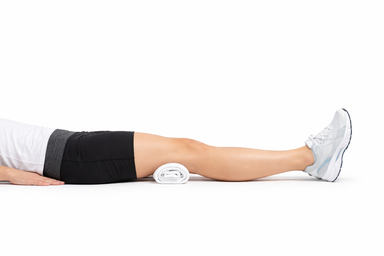
How to
An isometric thigh squeeze that trains your quad with your leg straight.
- Sit or lie with one leg straight and toes up.
- Tighten your thigh and press the back of your knee down.
- Hold the squeeze and breathe steadily.
- Relax, then repeat for your reps or time.
- Finish your set, then switch legs.
- Keep your kneecap facing up
- Squeeze the front of your thigh
- Lifting your hip off the floor
- Holding your breath
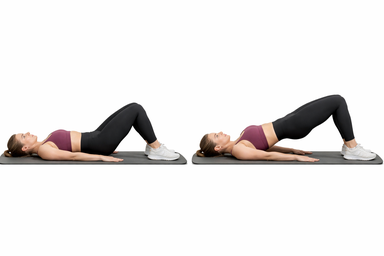
How to
A floor hip lift that trains your glutes and hamstrings with both feet planted.
- Lie on your back with knees bent and feet flat, hip-width apart.
- Brace your core and press your arms lightly into the floor.
- Drive through your heels and lift your hips until your body forms a straight line.
- Squeeze your glutes at the top, then lower with control.
- Repeat for your reps.
- Keep your ribs down
- Drive through your heels
- Arching your lower back at the top
- Pushing through your toes
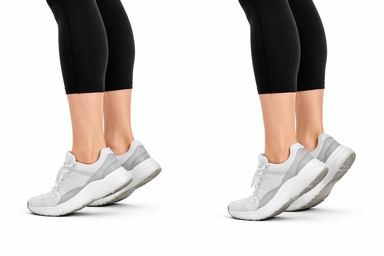
How to
A standing lower-leg move that trains your calves by lifting and lowering your heels.
- Stand tall with feet hip-width apart and toes pointing forward.
- Press through the balls of your feet and lift your heels high.
- Pause briefly at the top without leaning forward.
- Lower your heels with control to the floor.
- Keep your knees softly straight.
- Rise straight up, not forward.
- Bouncing through the reps.
- Letting your ankles roll outward.
Circuit
Use a chair/wall for support as needed. Keep squat depth comfortable.
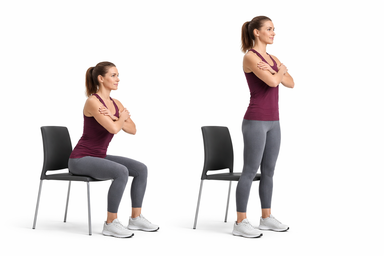
How to
A chair-based squat pattern that trains your thighs and glutes for standing strength.
- Sit near the front of a chair with feet flat and hip-width apart.
- Lean slightly forward and brace your core.
- Press through both feet and stand tall.
- Push your hips back and sit down with control.
- Keep your knees tracking over your toes
- Stand tall at the top
- Letting your knees cave inward
- Dropping hard onto the chair
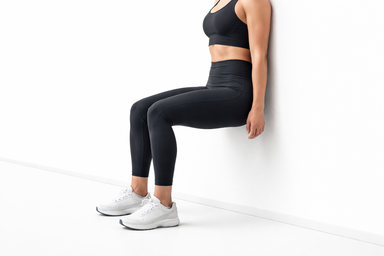
How to
An isometric squat hold against a wall that trains your quads, glutes, and endurance.
- Stand with your back against a wall and feet hip-width apart.
- Walk your feet forward and slide down until your thighs are near parallel.
- Keep your back on the wall and knees over your ankles.
- Hold the position and breathe steadily.
- Stand up by pressing through your feet when finished.
- Keep your chest tall
- Press your back into the wall
- Letting your knees cave inward
- Holding your breath
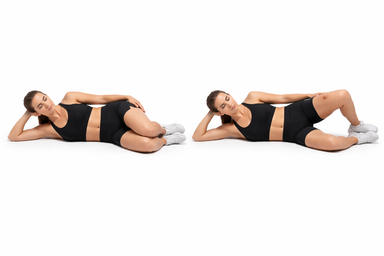
How to
A side-lying hip exercise that trains your glutes and outer hips.
- Lie on your side with knees bent and feet stacked.
- Brace your core and keep your hips stacked.
- Lift your top knee while keeping your feet together.
- Lower your knee with control to the start.
- Finish your reps, then switch sides.
- Keep your hips stacked
- Move slow and controlled
- Rolling your hips back as you lift
- Letting your feet separate
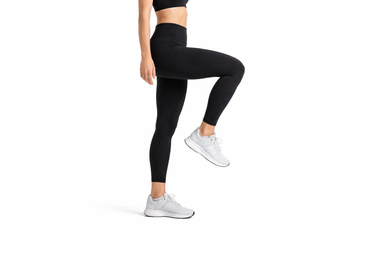
How to
A one-leg standing hold that trains balance and stability in your foot, ankle, and hips.
- Stand tall with feet hip-width apart and arms relaxed.
- Shift your weight onto one foot and lift the other foot off the floor.
- Hold steady, keep your torso tall, and breathe slowly.
- Lower your foot with control, then switch legs.
- Keep your hips level
- Look at one spot ahead
- Letting your hips twist or drop
- Holding your breath
How to
A standing lower-leg move that trains your calves by lifting and lowering your heels.
- Stand tall with feet hip-width apart and toes pointing forward.
- Press through the balls of your feet and lift your heels high.
- Pause briefly at the top without leaning forward.
- Lower your heels with control to the floor.
- Keep your knees softly straight.
- Rise straight up, not forward.
- Bouncing through the reps.
- Letting your ankles roll outward.
Finisher
Quad control. Slow and strict. Keep the knee fully straight on the lift.
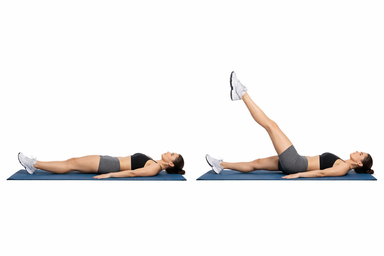
How to
A lying leg lift that trains your hip flexors, quads, and core control on one side.
- Lie on your back with one leg straight and the other knee bent.
- Brace your core and keep your straight leg locked out.
- Lift the straight leg until your knees line up.
- Lower it with control back to the floor.
- Finish your reps, then switch legs.
- Keep your low back steady
- Move slow and controlled
- Bending the lifting knee
- Arching your lower back as you lift
Cool-Down
Mobility work. Downshift and reduce stiffness in calves/hamstrings.
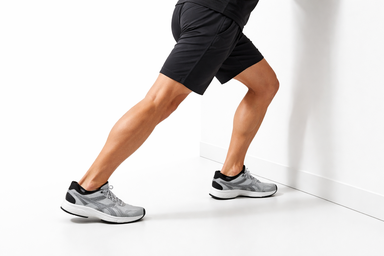
How to
A standing calf stretch that targets the back of your lower leg with a steady hold.
- Stand facing a wall and place your hands on it.
- Step one foot back and keep that heel on the floor.
- Bend your front knee until you feel a calf stretch.
- Hold and breathe slowly without bouncing.
- Finish the hold, then switch legs.
- Keep your back heel down
- Point both toes forward
- Bouncing in the stretch
- Letting the back heel lift
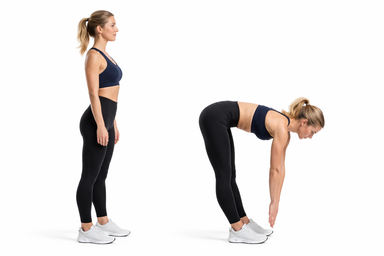
How to
A held stretch for the back of your thigh that targets your hamstrings.
- Sit tall with your target leg straight and toes up.
- Hinge at your hips and reach toward your foot.
- Stop when you feel a gentle stretch behind your thigh.
- Hold the stretch and breathe slowly.
- Release slowly, then switch sides if stretching one leg.
- Keep your back long.
- Hinge from your hips.
- Rounding your back to reach farther.
- Bouncing in the stretch.

Loading the Knee Without Stressing It
Quad Sets and Straight Leg Raises recruit the VMO — the teardrop muscle that stabilizes your kneecap — without bending the joint under load. Glute Bridges and Clamshells then activate the hip abductors and posterior chain, reducing the compressive forces your knee absorbs during every step.

What a Compromised Knee Actually Needs
Knee injuries create rapid quad inhibition — your nervous system literally suppresses muscle firing to protect the joint. This routine targets that exact shutdown pattern, rebuilding the neuromuscular connection before asking the knee to bear real load. Single-Leg Balance challenges proprioception, the sensory feedback system most damaged by sprains and post-surgical recovery.

Isometrics First, Then Movement
The progression from isometric holds like Wall Sit and Quad Set to dynamic patterns like Sit to Stand mirrors clinical rehab periodization — building tensile tissue tolerance before adding range-of-motion demand. To personalize: increase Wall Sit duration by 5 seconds each session as a simple, trackable overload marker.