
Clean & Minimal AI Powered Fitness Routines
Download AppIntermediate Karate Routine
A ~25-minute karate-focused session: warm-up, kihon-style conditioning, and cool-down.
Intermediate Karate Routine
A ~25-minute karate-focused session: warm-up, kihon-style conditioning, and cool-down.
Warm-Up
Raise heart rate and mobilize shoulders, hips, and knees for striking and footwork. (5 minutes)
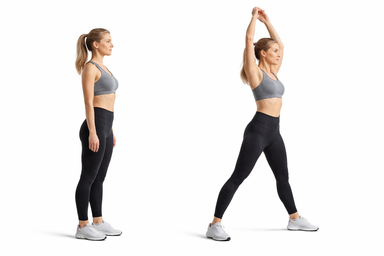
How to
A full-body cardio move that trains coordination, calves, shoulders, and hips.
- Stand tall with feet together and arms at your sides.
- Jump your feet out as you raise your arms overhead.
- Jump your feet back together as you lower your arms.
- Repeat at a steady pace, landing softly each time.
- Stay light on your toes
- Keep your chest tall
- Landing hard with locked knees
- Letting your arms swing out of control
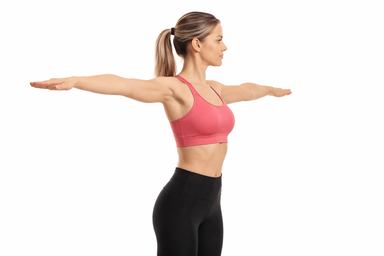
How to
A simple shoulder warm-up that moves both arms in circles and trains shoulder control.
- Stand tall with your feet about hip-width apart.
- Raise both arms out to your sides at shoulder height.
- Make small, controlled circles with both arms.
- Keep circling for the set time, then reverse direction if told.
- Lower your arms to finish.
- Keep your ribs down
- Move smoothly, not fast
- Shrugging your shoulders toward your ears
- Arching your back to keep the arms up
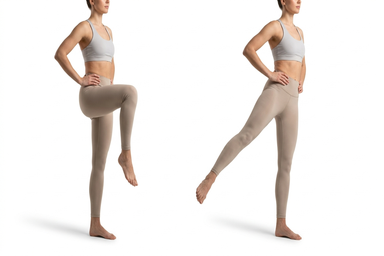
How to
A dynamic hip mobility move that trains hip control, glutes, and balance.
- Stand tall and hold a wall if you need support.
- Lift one knee in front of your hip.
- Circle the knee out, around, and back with control.
- Finish your reps in both directions, then lower your foot.
- Switch legs and repeat.
- Keep your torso tall.
- Move from your hip.
- Leaning or twisting your torso.
- Rushing through the circle.
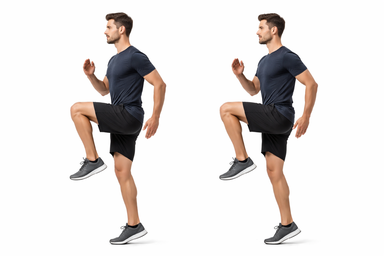
How to
A fast marching or running move that raises each knee to train your legs and raise your heart rate.
- Stand tall with feet under your hips and arms at your sides.
- Drive one knee up toward hip height as the opposite arm swings forward.
- Land softly on the ball of that foot.
- Switch quickly to the other knee and keep alternating.
- Keep a steady rhythm until the set ends.
- Stay tall through your chest
- Land light and quick
- Leaning back as your knees lift
- Stomping your feet into the floor
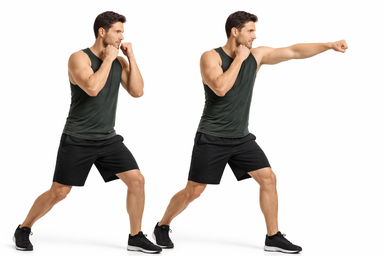
How to
A fast punching drill that raises your heart rate and trains shoulders, arms, and footwork.
- Stand tall with fists by your chin and knees soft.
- Punch straight out with one hand as the other stays up.
- Pull the punch back fast and rotate your hips lightly.
- Alternate hands and keep moving until the set ends.
- Keep your guard up
- Stay light on your feet
- Dropping your hands after each punch
- Locking your elbows at full reach
Kihon Intervals
Work 45s, transition 15s. Keep a stable stance and snap strikes back to guard.
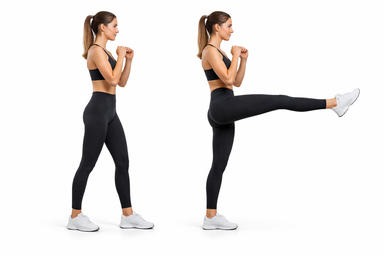
How to
A straight forward kick that trains your legs, hips, and core while challenging balance.
- Stand tall with your feet hip-width apart and guard up.
- Shift weight onto one foot and lift the other knee in front of you.
- Extend your foot forward in a controlled kick.
- Pull the knee back, then place your foot down with control.
- Finish your reps, then switch legs.
- Keep your chest tall.
- Kick straight ahead with control.
- Leaning far back as you kick.
- Snapping the knee without control.
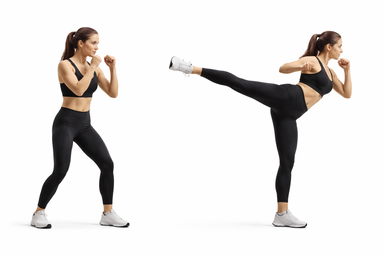
How to
A rotating kick that trains your hips, legs, and core while building balance and control.
- Stand side-on with your guard up and weight on your support foot.
- Lift your kicking knee and turn your support foot outward.
- Snap your shin or foot across toward the target.
- Recoil the leg, then set it down with control.
- Finish your reps, then switch legs.
- Pivot on your support foot.
- Keep your core braced.
- Kicking with a locked knee.
- Dropping your hands as you kick.
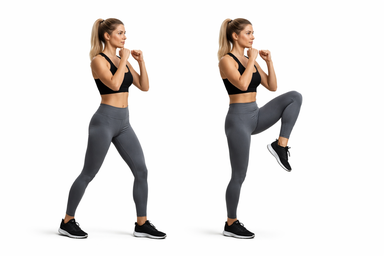
How to
A standing knee drive that trains your core, hips, and balance while raising your heart rate.
- Stand tall with your feet hip-width apart and fists up.
- Shift weight to one foot and drive the other knee up toward your chest.
- Pull your elbows down slightly as the knee rises.
- Step the foot back down with control.
- Alternate knees each rep for the whole set.
- Stay tall through your chest
- Brace your core
- Leaning far back as the knee lifts
- Slamming the foot down between reps
How to
A fast punching drill that raises your heart rate and trains shoulders, arms, and footwork.
- Stand tall with fists by your chin and knees soft.
- Punch straight out with one hand as the other stays up.
- Pull the punch back fast and rotate your hips lightly.
- Alternate hands and keep moving until the set ends.
- Keep your guard up
- Stay light on your feet
- Dropping your hands after each punch
- Locking your elbows at full reach
Strength for Stance & Guard
Controlled reps; keep core braced and posture tall.
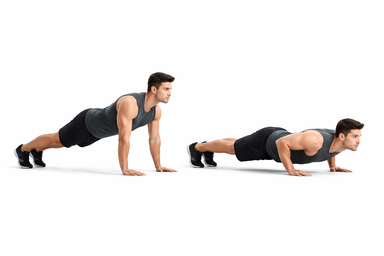
How to
A bodyweight press that trains your chest, shoulders, triceps, and core.
- Start in a high plank with hands just wider than shoulders.
- Brace your core and keep your body in a straight line.
- Bend your elbows and lower your chest toward the floor.
- Press the floor away until your arms are straight again.
- Repeat for your reps.
- Keep your ribs down
- Move your body as one piece
- Letting your hips sag
- Flaring your elbows straight out
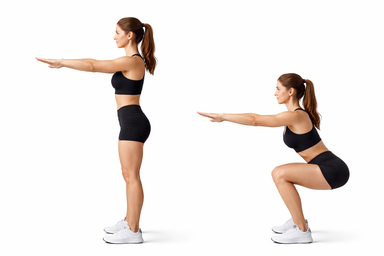
How to
A lower-body move that trains your quads, glutes, and core as you sit down and stand up.
- Stand with feet about shoulder-width apart, toes slightly out.
- Brace your core and keep your chest tall.
- Bend your knees and hips to lower into a squat.
- Lower until comfortable, keeping heels on the floor.
- Drive through your feet to stand back up.
- Keep your knees tracking over your toes.
- Keep your chest lifted.
- Letting your knees cave inward.
- Rounding your back as you lower.
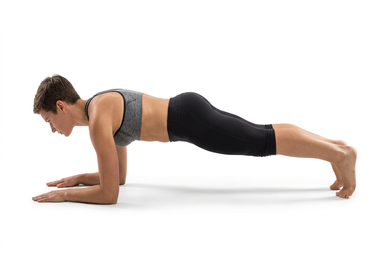
How to
A core hold that trains your abs, shoulders, and glutes while you keep a straight body line.
- Place your forearms on the floor with elbows under shoulders.
- Step both feet back and lift into a straight line from head to heels.
- Brace your abs and squeeze your glutes.
- Hold the position and breathe steadily.
- Lower your knees to the floor to finish.
- Keep your ribs pulled down
- Push the floor away
- Letting your hips sag
- Lifting your hips too high
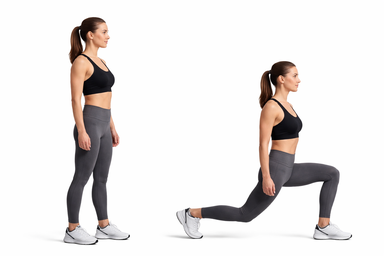
How to
A forward step lunge that trains your legs and glutes, one side at a time.
- Stand tall with your feet hip-width apart.
- Step one foot forward and plant it flat.
- Bend both knees until your back knee moves toward the floor.
- Push through your front foot to return to standing.
- Finish your reps, then switch legs.
- Keep your chest tall.
- Track your front knee over your toes.
- Letting your front knee cave inward.
- Pushing off your back foot to stand up.
Cool-Down
Downshift breathing and open hips/hamstrings after kicking and stance work. (3 minutes)
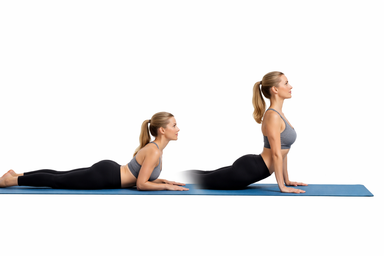
How to
A prone back extension stretch that opens the front of your body and gently works spinal extension.
- Lie face down with your legs long and hands under your shoulders.
- Press the tops of your feet and hips into the floor.
- Lift your chest by pressing lightly through your hands.
- Keep your shoulders down and your gaze slightly forward.
- Hold the stretch and breathe slowly, then lower with control.
- Keep your shoulders away from your ears
- Use a gentle lift
- Shrugging your shoulders up
- Forcing your lower back into a hard arch
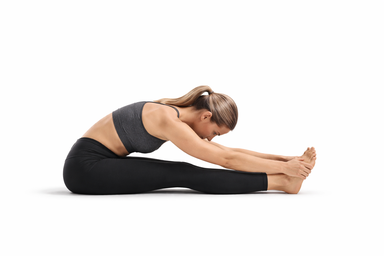
How to
A seated hamstring stretch that also eases your lower back and hips.
- Sit tall with both legs straight in front of you.
- Flex your feet and reach your arms toward your toes.
- Fold forward from your hips until you feel a gentle stretch.
- Hold the position and breathe slowly.
- Keep your knees soft
- Lengthen your spine
- Forcing your head toward your knees
- Bouncing in the stretch
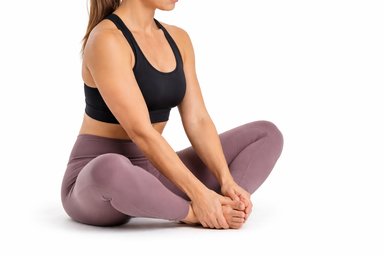
How to
A seated hip stretch that targets your inner thighs and groin.
- Sit tall and bring the soles of your feet together.
- Let your knees fall out to the sides.
- Hold your feet or ankles and lengthen through your spine.
- Relax your thighs and hold, breathing slowly.
- Keep your chest lifted
- Let your knees drop naturally
- Forcing your knees down with your hands
- Rounding your back to reach your feet

Kihon Mechanics Behind Each Movement
Mae Geri and Mawashi Geri demand explosive hip flexor recruitment and standing-leg stability simultaneously — Squats and Forward Lunges directly build the unilateral strength base that powers chamber-to-extension. Push Ups and Plank reinforce the tensed core that karate calls 'kime,' the full-body contraction at point of impact.

What Kihon Training Really Costs the Body
Repetitive kicking technique taxes the hip flexors, glutes, and adductors asymmetrically, while Shadowboxing spikes your phosphocreatine system in short, maximal bursts — the exact energy demand of kumite exchanges. Knee Strikes compound this by requiring rapid hip drive from a near-static stance, exposing any weakness in posterior chain recruitment.

Structuring 25 Minutes for Real Karate Gains
The warm-up sequence — Jumping Jacks into Hip Circles into High Knees — deliberately raises core temperature before joint mobility work, reducing injury risk during the high-velocity kicking that follows. To personalize, increase Mawashi Geri repetitions on your weaker side by 20% to correct the rotational imbalance most intermediate karatekas develop from dominant-side drilling.