
Clean & Minimal AI Powered Fitness Routines
Download AppIntermediate Military Load Carriage
A 25-minute loaded carry session to build ruck endurance, posture, and trunk strength.
Intermediate Military Load Carriage
A 25-minute loaded carry session to build ruck endurance, posture, and trunk strength.
Warm-Up
Ease into the load and establish posture and breathing.
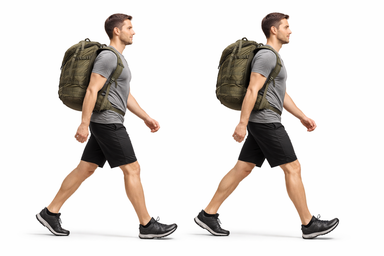
How to
A loaded walk with a pack or vest that trains your legs, core, and posture.
- Put on the pack or vest and stand tall with feet hip-width apart.
- Brace your core and keep your shoulders down and back.
- Walk at a steady pace with short, controlled steps.
- Keep your chest up and eyes forward as you breathe evenly.
- Finish the set time or distance, then set the load down safely.
- Stand tall under the load
- Take smooth, steady steps
- Leaning far forward under the weight
- Letting the pack bounce with each step
Main Carry Intervals
Work intervals at a brisk, sustainable pace with short recoveries.
How to
A loaded walk with a pack or vest that trains your legs, core, and posture.
- Put on the pack or vest and stand tall with feet hip-width apart.
- Brace your core and keep your shoulders down and back.
- Walk at a steady pace with short, controlled steps.
- Keep your chest up and eyes forward as you breathe evenly.
- Finish the set time or distance, then set the load down safely.
- Stand tall under the load
- Take smooth, steady steps
- Leaning far forward under the weight
- Letting the pack bounce with each step
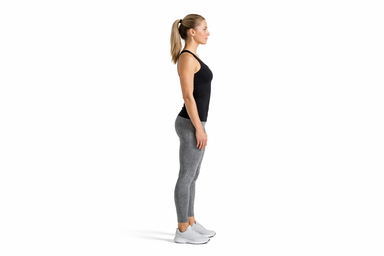
How to
A standing recovery position for catching your breath and resetting posture between exercises.
- Stand tall with feet about hip-width apart.
- Let your arms hang or place your hands on your hips.
- Relax your shoulders and keep your chest open.
- Breathe slowly until the rest time ends.
- Breathe steady
- Keep your knees soft
- Holding your breath
- Locking your knees
Cool-Down
Lower intensity to bring heart rate down while maintaining posture.
How to
A loaded walk with a pack or vest that trains your legs, core, and posture.
- Put on the pack or vest and stand tall with feet hip-width apart.
- Brace your core and keep your shoulders down and back.
- Walk at a steady pace with short, controlled steps.
- Keep your chest up and eyes forward as you breathe evenly.
- Finish the set time or distance, then set the load down safely.
- Stand tall under the load
- Take smooth, steady steps
- Leaning far forward under the weight
- Letting the pack bounce with each step

Why Loaded Gait Rewires Your Posture
The Ruck Walk forces your erector spinae, glutes, and deep spinal stabilizers to resist anterior trunk collapse under axial load — a demand no unloaded walk replicates. Standing Rest intervals train isometric postural endurance, teaching your thoracic extensors to hold alignment when fatigued.

What Rucking Actually Taxes in Soldiers
Military load carriage degrades performance through cumulative compressive spinal load, hip flexor shortening, and glycolytic fatigue in the soleus and tibialis anterior long before cardiovascular limits are hit. Managing pace and upright posture under weight is the actual skill being trained here, not just aerobic capacity.

Interval Structure Builds Ruck-Specific Stamina
Alternating Ruck Walk bouts with Standing Rest mimics work-to-rest periodization, allowing partial neuromuscular recovery without unloading the spine — conditioning connective tissue progressively. To personalize, increase load by 5–10% or shorten rest intervals every 1–2 sessions once you complete all carries without postural breakdown.