
Clean & Minimal AI Powered Fitness Routines
Download AppIntermediate Parkinson's Mobility
A 25-minute mobility and balance session focused on posture, gait mechanics, and large-amplitude movement.
Intermediate Parkinson's Mobility
A 25-minute mobility and balance session focused on posture, gait mechanics, and large-amplitude movement.
Warm-Up
Prepare joints and posture with controlled, comfortable mobility. Focus on posture and range of motion.
How to
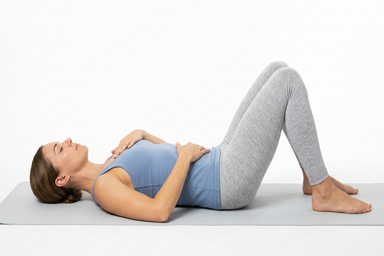
A slow breathing drill that trains relaxed belly breathing and helps you control your breath.
- Lie on your back or sit tall with one hand on your belly.
- Inhale through your nose and let your belly rise.
- Exhale slowly and let your belly fall.
- Keep your chest and shoulders quiet.
- Continue for the set time with smooth breaths.
- Breathe low into your belly
- Keep your shoulders relaxed
- Shrugging your shoulders as you inhale
- Forcing the breath or holding tension
How to
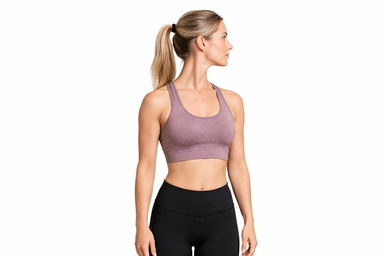
A gentle neck rotation that moves your head side to side and trains neck control.
- Sit or stand tall with your shoulders relaxed.
- Slowly turn your head to look over one shoulder.
- Pause briefly, then return to center.
- Turn to the other side with the same control.
- Keep alternating sides for your reps.
- Move slowly and stay tall.
- Keep your shoulders relaxed.
- Forcing the turn past a comfortable range.
- Letting your chin lift or drop as you turn.
How to
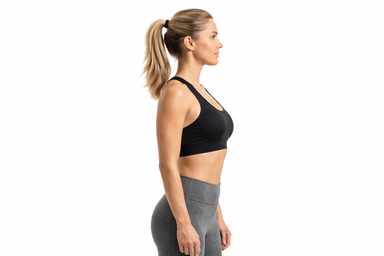
A simple shoulder mobility move that warms up your upper back, neck, and shoulders.
- Stand tall with your arms relaxed at your sides.
- Lift both shoulders up toward your ears.
- Roll them back and down in a smooth circle.
- Repeat for reps, then reverse the direction if needed.
- Move slowly and smoothly.
- Keep your neck relaxed.
- Shrugging with tension in your neck.
- Rushing through small, jerky circles.
How to
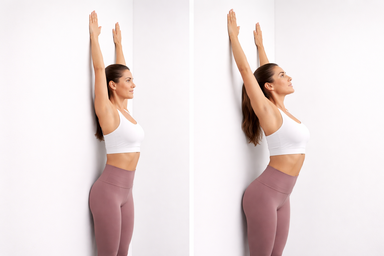
A wall-supported upper-back extension hold that trains thoracic mobility and posture control.
- Stand facing a wall and place your forearms on it at shoulder width.
- Step back and hinge at your hips until your chest lowers.
- Press your forearms into the wall and sink your chest between your arms.
- Hold the position and breathe slowly.
- Walk back in and stand tall to finish.
- Keep your ribs gently tucked.
- Keep your neck long.
- Arching through your lower back.
- Shrugging your shoulders toward your ears.
Circuit A
Use a chair for light support; emphasize tall posture and big, confident movement. Focus on big steps and strength.
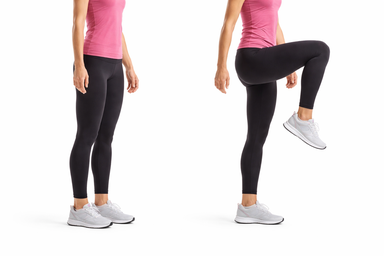
How to
A low-impact cardio move that warms up your legs and hips while raising your heart rate.
- Stand tall with your feet hip-width apart and arms at your sides.
- Lift one knee to hip height as you swing the opposite arm forward.
- Lower that foot, then lift the other knee and switch arms.
- Keep alternating sides at a steady pace.
- Slow down and plant both feet to finish.
- Stand tall with your chest up
- Land softly under your hips
- Leaning back as you lift your knees
- Stomping your feet on each step
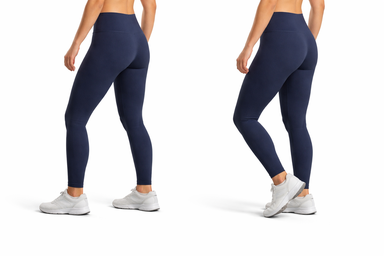
How to
A low-impact side-to-side step that warms up your legs and raises your heart rate.
- Stand tall with your feet hip-width apart and arms relaxed.
- Step to one side with your right foot.
- Tap your left foot next to it, then step back the other way.
- Tap your right foot in and keep alternating side to side.
- Stay light on your feet
- Keep your chest lifted
- Leaning your torso side to side
- Letting your knees cave inward
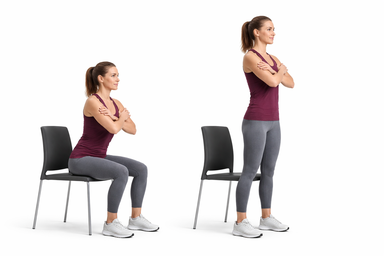
How to
A chair-based squat pattern that trains your thighs and glutes for standing strength.
- Sit near the front of a chair with feet flat and hip-width apart.
- Lean slightly forward and brace your core.
- Press through both feet and stand tall.
- Push your hips back and sit down with control.
- Keep your knees tracking over your toes
- Stand tall at the top
- Letting your knees cave inward
- Dropping hard onto the chair
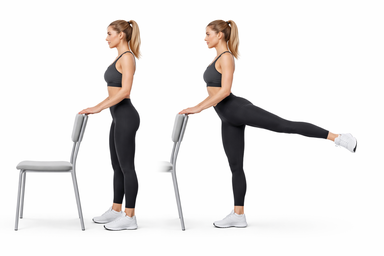
How to
A standing leg raise to the side that trains your outer hips and balance.
- Stand tall with one hand on a wall or chair for balance.
- Shift your weight onto one leg and brace your core.
- Lift the other leg out to the side without leaning your torso.
- Lower the leg with control to the start position.
- Finish your reps, then switch legs.
- Keep your toes facing forward.
- Stand tall through each rep.
- Leaning your torso to lift the leg.
- Turning your toes outward as you raise.
Circuit B
Stay near a wall/chair. If balance feels shaky, keep one hand on support. Balance and upper body work.
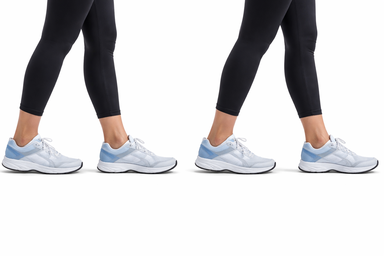
How to
A walking balance drill that trains your feet, ankles, and steady posture.
- Stand tall with one foot directly in front of the other.
- Place your heel to your toe on each step.
- Walk forward in a straight line, one step at a time.
- Keep going for your set, then turn and repeat.
- Keep your eyes forward
- Move slowly and stay controlled
- Looking down at your feet the whole time
- Rushing and losing your balance
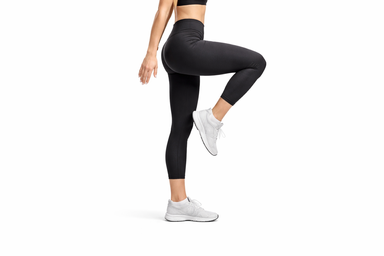
How to
A one-leg balance hold that trains stability in your foot, ankle, and hip.
- Stand tall with feet hip-width apart and arms relaxed.
- Shift your weight onto one foot and lift the other foot off the floor.
- Hold steady and breathe, keeping your body tall.
- Lower your foot with control when the hold is done.
- Finish your hold, then switch legs.
- Keep your hips level
- Stand tall through your crown
- Leaning your torso far to one side
- Letting your lifted foot rest on the floor
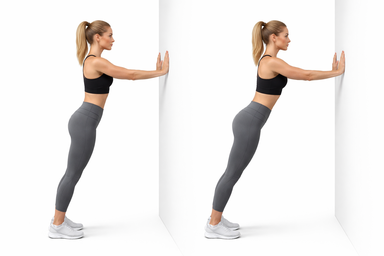
How to
A standing push-up against a wall that trains your chest, shoulders, and triceps.
- Stand facing a wall and place your hands at chest height.
- Step your feet back so your body forms a straight line.
- Bend your elbows and lower your chest toward the wall.
- Press the wall away to return to the start.
- Repeat for your planned reps.
- Keep your body straight
- Keep elbows about 45 degrees
- Letting your hips sag
- Shrugging your shoulders toward your ears
Cool-Down
Lower intensity and stretch key areas for gait and posture. Gentle stretching—no bouncing. Breathe slowly.
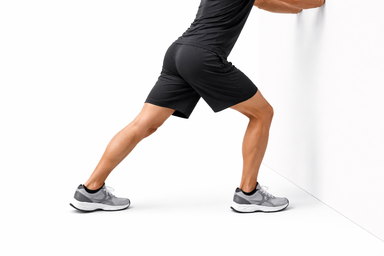
How to
A wall-supported calf stretch that targets the back of your lower leg on one side at a time.
- Stand facing a wall and place both hands on it.
- Step one foot back, keeping that heel down and toes forward.
- Bend your front knee until you feel a stretch in the back calf.
- Hold the stretch and breathe slowly.
- Release, then switch legs.
- Keep your back heel down
- Point both feet forward
- Letting the back heel lift
- Turning the back foot out
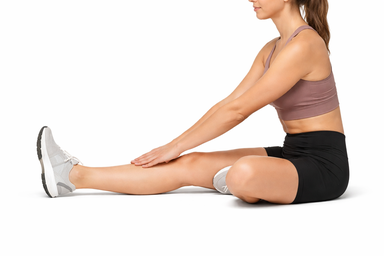
How to
A seated hamstring stretch that targets the backs of your thighs.
- Sit tall with one or both legs extended in front of you.
- Flex your toes gently toward you.
- Hinge at your hips and reach toward your feet.
- Hold the stretch and breathe slowly.
- Release by sitting back up.
- Keep your back long.
- Relax your shoulders.
- Rounding your back to reach farther.
- Bouncing in the stretch.
How to
A slow breathing drill that trains relaxed belly breathing and helps you control your breath.
- Lie on your back or sit tall with one hand on your belly.
- Inhale through your nose and let your belly rise.
- Exhale slowly and let your belly fall.
- Keep your chest and shoulders quiet.
- Continue for the set time with smooth breaths.
- Breathe low into your belly
- Keep your shoulders relaxed
- Shrugging your shoulders as you inhale
- Forcing the breath or holding tension

LSVT BIG Logic Behind Each Move
March in Place and Step Touch train the intentional exaggeration of movement amplitude—directly countering Parkinson's hallmark hypokinesia. Sit to Stand and Standing Hip Abduction load the hip extensors and abductors that govern gait initiation, while Heel-to-Toe Walk challenges the cerebellar pathways responsible for stride sequencing.

What Parkinson's Actually Demands
Dopamine depletion disrupts the basal ganglia's ability to automate movement, making conscious motor recruitment exhausting. Rigidity shortens the thoracic spine and hip flexors—exactly why Wall Thoracic Extension and Calf Stretch at Wall appear here—while postural instability shifts the center of mass forward, compressing fall risk into every single step.

Amplitude First, Then Automaticity
This session follows a specificity-to-transfer model: large-amplitude drills practiced consciously at moderate intensity gradually reduce the cognitive load of everyday movement over weeks. Single-Leg Stand (Supported) is your adaptation lever—reduce wall contact by one fingertip each session as stability improves to progressively challenge proprioceptive recalibration without sacrificing safety.