
Clean & Minimal AI Powered Fitness Routines
Download AppIntermediate Patellar Tendinopathy Routine
A knee-friendly strength + tendon-loading session to reduce patellar tendon pain and improve capacity.
Intermediate Patellar Tendinopathy Routine
A knee-friendly strength + tendon-loading session to reduce patellar tendon pain and improve capacity.
Warm-Up
5 minutes. Increase blood flow and prepare the knee/ankle/hip for loading.
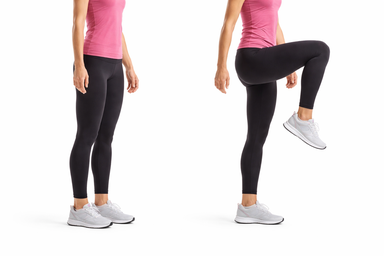
How to
A low-impact cardio move that warms up your legs and hips while raising your heart rate.
- Stand tall with your feet hip-width apart and arms at your sides.
- Lift one knee to hip height as you swing the opposite arm forward.
- Lower that foot, then lift the other knee and switch arms.
- Keep alternating sides at a steady pace.
- Slow down and plant both feet to finish.
- Stand tall with your chest up
- Land softly under your hips
- Leaning back as you lift your knees
- Stomping your feet on each step
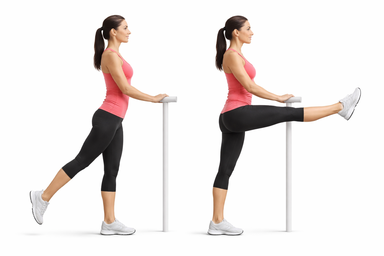
How to
A dynamic leg swing that warms up your hips, hamstrings, and glutes while challenging balance.
- Stand tall and hold a wall or rail for light support if needed.
- Lift one leg slightly off the floor with a soft knee.
- Swing it forward and back with control.
- Set it down, then switch legs on the next rep.
- Keep your torso tall.
- Swing from the hip, not the low back.
- Leaning back as the leg swings forward.
- Forcing the range of motion.
How to
A low-impact cardio move that warms up your legs and hips while raising your heart rate.
- Stand tall with your feet hip-width apart and arms at your sides.
- Lift one knee to hip height as you swing the opposite arm forward.
- Lower that foot, then lift the other knee and switch arms.
- Keep alternating sides at a steady pace.
- Slow down and plant both feet to finish.
- Stand tall with your chest up
- Land softly under your hips
- Leaning back as you lift your knees
- Stomping your feet on each step
How to
A dynamic leg swing that warms up your hips, hamstrings, and glutes while challenging balance.
- Stand tall and hold a wall or rail for light support if needed.
- Lift one leg slightly off the floor with a soft knee.
- Swing it forward and back with control.
- Set it down, then switch legs on the next rep.
- Keep your torso tall.
- Swing from the hip, not the low back.
- Leaning back as the leg swings forward.
- Forcing the range of motion.
Isometric and Tendon Loading
Prioritize smooth control and tolerable pain (0–3/10).
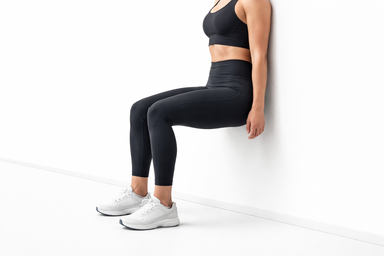
How to
An isometric squat hold against a wall that trains your quads, glutes, and endurance.
- Stand with your back against a wall and feet hip-width apart.
- Walk your feet forward and slide down until your thighs are near parallel.
- Keep your back on the wall and knees over your ankles.
- Hold the position and breathe steadily.
- Stand up by pressing through your feet when finished.
- Keep your chest tall
- Press your back into the wall
- Letting your knees cave inward
- Holding your breath
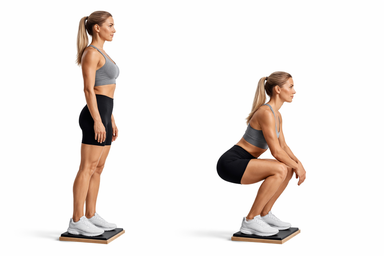
How to
A squat on a sloped surface with heels higher than toes. It trains your quads, glutes, and control.
- Stand on a decline wedge with feet about hip-width apart.
- Brace your core and keep your chest tall.
- Bend your knees and hips to lower into a squat.
- Pause briefly at the bottom with heels planted.
- Push through your feet to stand back up.
- Keep your knees tracking over toes
- Stay tall through your chest
- Letting your knees cave inward
- Lifting your heels off the wedge
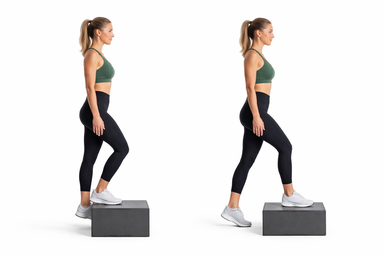
How to
A controlled step from a raised surface that trains your quads, glutes, and balance.
- Stand on a step with one foot near the edge.
- Let the other foot hover off the front of the step.
- Bend your standing knee and lower your free heel toward the floor.
- Tap lightly, then press through your standing foot to return to the top.
- Finish your reps, then switch legs.
- Keep your knee tracking over your toes.
- Move slowly and stay tall.
- Dropping your free foot hard to the floor.
- Letting your standing knee cave inward.
Posterior Chain and Hip Support
Build hip strength to reduce knee stress; keep tempo controlled.
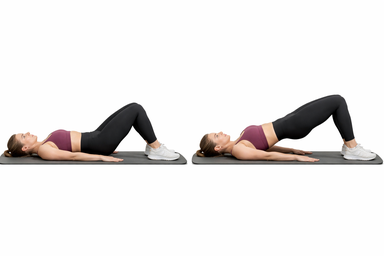
How to
A floor hip lift that trains your glutes and hamstrings with both feet planted.
- Lie on your back with knees bent and feet flat, hip-width apart.
- Brace your core and press your arms lightly into the floor.
- Drive through your heels and lift your hips until your body forms a straight line.
- Squeeze your glutes at the top, then lower with control.
- Repeat for your reps.
- Keep your ribs down
- Drive through your heels
- Arching your lower back at the top
- Pushing through your toes
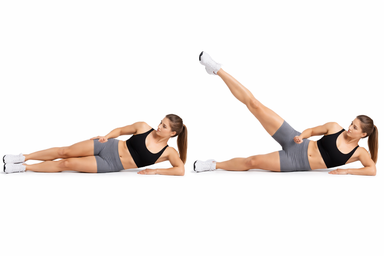
How to
A side-lying leg lift that trains your outer hips and glutes.
- Lie on your side with your legs straight and hips stacked.
- Brace your core and point your top foot straight ahead.
- Lift your top leg up without rolling your hips back.
- Lower with control to the start position.
- Finish your reps, then switch sides.
- Keep your hips stacked.
- Lead with your heel.
- Rolling your top hip back as you lift.
- Swinging the leg instead of controlling it.
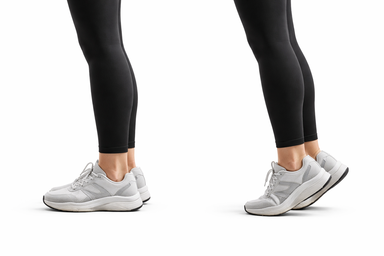
How to
A standing lower-leg move that trains your calves by lifting and lowering your heels.
- Stand tall with both feet hip-width apart.
- Press through the balls of your feet and lift your heels.
- Pause briefly at the top with control.
- Lower your heels slowly back to the floor.
- Repeat for your reps.
- Keep your ankles tracking straight.
- Move up and down with control.
- Rocking onto the outside edges of your feet.
- Bouncing at the bottom of each rep.
Cool-Down
2 minutes. Gentle stretching—no aggressive forcing into pain.
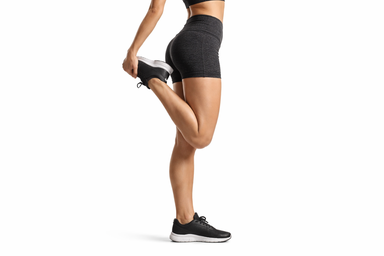
How to
A standing thigh stretch that targets the front of one leg and challenges balance.
- Stand tall and hold a wall or chair for balance if needed.
- Bend one knee and bring your heel toward your glutes.
- Grab your ankle or foot, and keep your knees close together.
- Hold the stretch and breathe slowly.
- Release with control, then switch legs.
- Stand tall with your chest up.
- Keep your knees close together.
- Arching your lower back to force the stretch.
- Letting your lifted knee flare out wide.
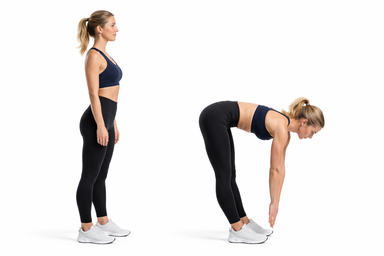
How to
A held stretch for the back of your thigh that targets your hamstrings.
- Sit tall with your target leg straight and toes up.
- Hinge at your hips and reach toward your foot.
- Stop when you feel a gentle stretch behind your thigh.
- Hold the stretch and breathe slowly.
- Release slowly, then switch sides if stretching one leg.
- Keep your back long.
- Hinge from your hips.
- Rounding your back to reach farther.
- Bouncing in the stretch.

Isometric Before Isotonic: The Pain Gate Strategy
Wall sits and decline squats aren't interchangeable — isometrics like the wall sit suppress patellar tendon pain via cortical inhibition before isotonic loading begins. The decline squat then maximally loads the patellar tendon through range, targeting the proximal tendon insertion where degeneration most commonly occurs.

What Patellar Tendinopathy Actually Demands
Tendons don't respond to rest — they respond to progressive compressive and tensile load. The patellar tendon is under peak stress at 60–90° of knee flexion, which is exactly why step-downs and slow-tempo decline squats dominate this session rather than full-range, high-speed movements that exceed current tissue capacity.

Slow Tempo as Your Primary Training Variable
The 'slow' cues on calf raises and decline squats aren't just safety measures — time-under-tension drives collagen synthesis in tendon tissue more effectively than rep count alone. As pain scores drop below 3/10 consistently, increase load before increasing speed, and use the side-lying abduction as a benchmark: hip weakness is the most overlooked driver of patellar overload.