
Clean & Minimal AI Powered Fitness Routines
Download App25-Minute Tension-Type Headache Relief
A 25-minute mobility + posture routine to reduce neck/upper-back tension and support headache relief.
25-Minute Tension-Type Headache Relief
A 25-minute mobility + posture routine to reduce neck/upper-back tension and support headache relief.
Breath + Reset
Breathe through the nose if possible; keep shoulders relaxed and ribs moving.
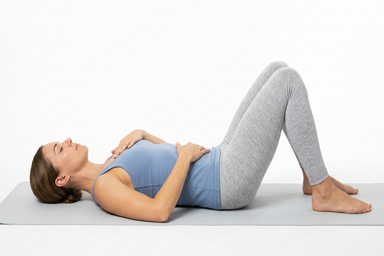
How to
A slow breathing drill that trains relaxed belly breathing and helps you control your breath.
- Lie on your back or sit tall with one hand on your belly.
- Inhale through your nose and let your belly rise.
- Exhale slowly and let your belly fall.
- Keep your chest and shoulders quiet.
- Continue for the set time with smooth breaths.
- Breathe low into your belly
- Keep your shoulders relaxed
- Shrugging your shoulders as you inhale
- Forcing the breath or holding tension
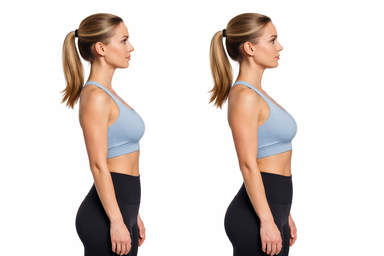
How to
A small neck position hold that trains the front of your neck and helps control head position.
- Sit or stand tall with your eyes looking straight ahead.
- Gently slide your chin straight back, like making a double chin.
- Keep your head level and your jaw relaxed.
- Hold the tuck and breathe slowly.
- Release to neutral, then repeat for the set.
- Move straight back, not down.
- Keep your shoulders relaxed.
- Tilting your head up or down.
- Forcing the tuck or clenching your jaw.
Spine Mobility Primer
Move smoothly; let the head follow the spine without cranking the neck.
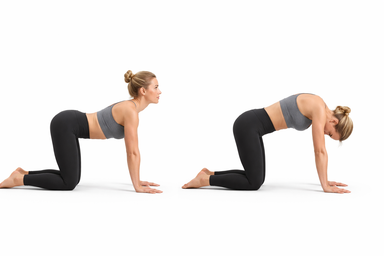
How to
A gentle spine mobility move that alternates rounding and arching your back on hands and knees.
- Start on hands and knees with wrists under shoulders and knees under hips.
- Inhale and drop your belly as you lift your chest and tailbone.
- Exhale and round your back, tucking your chin and tailbone.
- Move slowly between both positions with your breath.
- Move one vertebra at a time.
- Keep your shoulders away from your ears.
- Forcing your neck up or down.
- Rushing through the movement.
Thoracic Rotation
Exhale as you rotate; keep hips stacked and avoid shrugging.
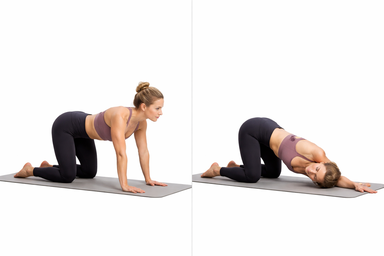
How to
A floor stretch that opens your upper back and shoulder while you hold one side at a time.
- Start on all fours with your hands under shoulders and knees under hips.
- Slide one arm under your chest, palm up, and lower your shoulder toward the floor.
- Rest your head down if comfortable, and keep your hips over your knees.
- Hold the stretch and breathe slowly.
- Press into your top hand to return to all fours, then switch sides.
- Keep your hips stacked over your knees
- Breathe into your upper back
- Letting your hips drift far to one side
- Forcing your shoulder lower than comfortable
Neck Stretch Series
Keep the stretch gentle; avoid pulling on the head. Breathe slowly.
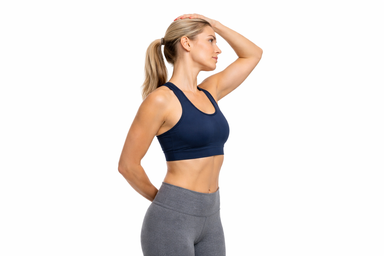
How to
A gentle neck stretch for one upper trapezius at a time. Hold it and breathe.
- Sit or stand tall with your shoulders relaxed.
- Hold a chair with the hand on the side you will stretch.
- Tilt your ear away from that shoulder until you feel a gentle stretch.
- Add light pressure with your other hand, if needed.
- Hold and breathe slowly, then switch sides.
- Keep both shoulders down.
- Use gentle pressure only.
- Pulling your head hard with your hand.
- Lifting the shoulder you are stretching.
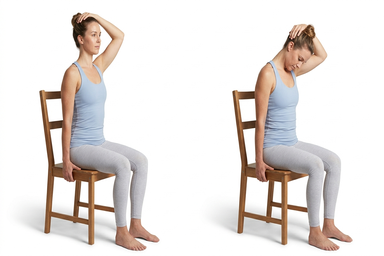
How to
A seated neck stretch for one side that targets the levator scapulae near the neck and upper shoulder.
- Sit tall and place one hand behind your back to anchor that shoulder.
- Turn your head about 45 degrees away from that shoulder.
- Look down toward your opposite armpit.
- Use your other hand to gently guide your head down.
- Hold and breathe slowly, then switch sides.
- Keep the stretch gentle
- Keep your anchored shoulder down
- Pulling hard on your head
- Rounding your upper back
Posture Strength
Keep chin slightly tucked and ribs down; slide arms without arching the low back.
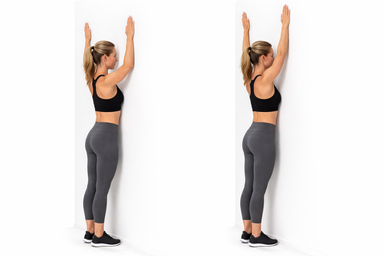
How to
A wall-based shoulder slide that trains upper back control and shoulder movement.
- Stand with your back to a wall and feet a small step away.
- Press your ribs, upper back, and head gently toward the wall.
- Set your arms in a goalpost shape with elbows and wrists near the wall.
- Slide your arms up the wall without shrugging.
- Slide back down to the start and repeat.
- Keep your ribs down
- Move slow and smooth
- Arching your lower back to reach higher
- Shrugging your shoulders toward your ears
Neck Isometric Stability
Press into your hand at ~30–50% effort; no pain and no breath-holding.
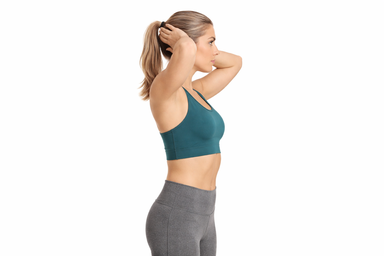
How to
An isometric neck extension hold that trains the muscles at the back of your neck.
- Sit or stand tall with your chin level.
- Place both hands behind your head.
- Press your head back into your hands without letting it move.
- Hold steady and breathe slowly.
- Release gently and relax your neck.
- Keep your chin level.
- Use light, steady pressure.
- Tilting your chin up as you press.
- Holding your breath.
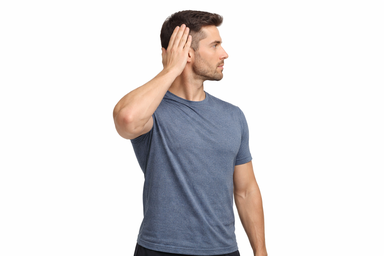
How to
An isometric neck rotation that trains the muscles that turn your head without moving your neck.
- Sit or stand tall with your shoulders relaxed.
- Place one hand against the side of your face.
- Try to turn your head into your hand, but do not let it move.
- Hold the pressure and breathe steadily.
- Release gently, then switch sides.
- Keep your chin level.
- Use gentle, steady pressure.
- Shrugging your shoulders.
- Holding your breath or forcing the push.
Thoracic Extension
Support the head if needed; focus on opening the chest without flaring ribs.
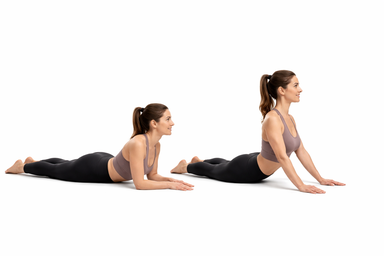
How to
A floor hold that trains upper-back extension and posture muscles.
- Lie face down with legs long and forehead near the floor.
- Place your hands by your temples with elbows wide.
- Brace lightly, then lift your chest a few inches from the floor.
- Hold the lift and breathe slowly.
- Lower with control when the hold is done.
- Keep your neck long.
- Lift from your upper back.
- Cranking your neck to look forward.
- Overarching your lower back.
Cool-Down
Finish with gentle relaxation to reduce residual tension.
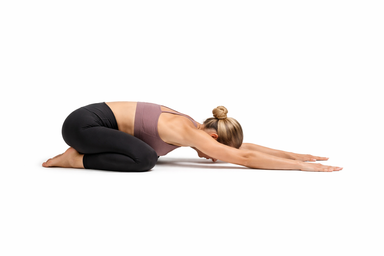
How to
A kneeling rest pose that gently stretches your back, hips, and shoulders.
- Kneel on the floor with your big toes together and knees apart.
- Sit your hips back toward your heels.
- Fold forward and reach your arms in front of you.
- Rest your forehead down and let your chest sink between your thighs.
- Hold the position and breathe slowly.
- Relax your shoulders
- Breathe into your back
- Forcing your hips down
- Holding your breath

Targeting the Cervicogenic Pain Chain
Chin Tucks and Isometric Neck work directly recondition the deep cervical flexors—the muscles most inhibited in tension-type headache sufferers. Upper Trapezius and Levator Scapulae stretches address the two muscles most notorious for referring pain into the skull, while Thread the Needle unlocks thoracic rotation that these muscles compensate for daily.

Why Desk Posture Becomes Head Pain
Tension-type headaches are frequently driven by forward-head posture loading the suboccipital muscles at 3–4x their resting force. Every degree your head sits anterior to your shoulders increases compressive load on C1–C3 nerve roots, sensitizing the trigeminal pain pathway—the exact mechanism this routine interrupts through scapular repositioning and thoracic extension.

Sequencing That Resets the Nervous System
Diaphragmatic Breathing opens this routine deliberately—parasympathetic activation lowers muscle guarding before any mechanical work begins, making stretches more effective. Scapular Wall Slides and Thoracic Extension on Floor then reinforce postural motor patterns under low load, building the neuromuscular re-education that passive stretching alone cannot achieve. Reduce isometric hold intensity