
Clean & Minimal AI Powered Fitness Routines
Download AppIntermediate Shoulder Overhead Mobility
A 25-minute mobility session to improve overhead range of motion, scapular control, and thoracic extension.
Intermediate Shoulder Overhead Mobility
A 25-minute mobility session to improve overhead range of motion, scapular control, and thoracic extension.
Warm-Up
Spine and shoulder prep. Increase thoracic mobility and gently warm the shoulders before overhead work.
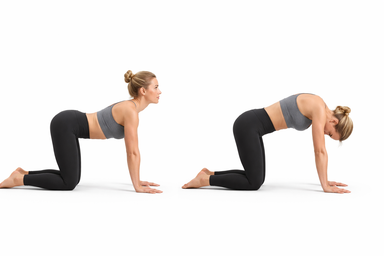
How to
A gentle spine mobility move that alternates rounding and arching your back on hands and knees.
- Start on hands and knees with wrists under shoulders and knees under hips.
- Inhale and drop your belly as you lift your chest and tailbone.
- Exhale and round your back, tucking your chin and tailbone.
- Move slowly between both positions with your breath.
- Move one vertebra at a time.
- Keep your shoulders away from your ears.
- Forcing your neck up or down.
- Rushing through the movement.
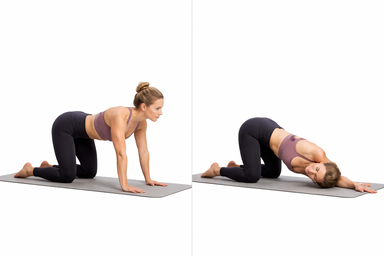
How to
A floor stretch that opens your upper back and shoulder while you hold one side at a time.
- Start on all fours with your hands under shoulders and knees under hips.
- Slide one arm under your chest, palm up, and lower your shoulder toward the floor.
- Rest your head down if comfortable, and keep your hips over your knees.
- Hold the stretch and breathe slowly.
- Press into your top hand to return to all fours, then switch sides.
- Keep your hips stacked over your knees
- Breathe into your upper back
- Letting your hips drift far to one side
- Forcing your shoulder lower than comfortable
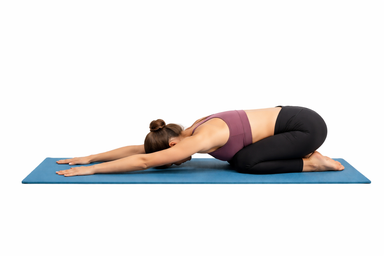
How to
A kneeling rest stretch that relaxes your back, hips, and shoulders while you breathe.
- Kneel with your big toes together and knees apart.
- Sit your hips back toward your heels.
- Reach your arms forward and lower your chest to the floor.
- Rest your forehead down and relax your neck.
- Hold the stretch and breathe slowly.
- Let your hips sink back
- Keep your neck relaxed
- Forcing your hips down
- Holding your breath
Thoracic Overhead Patterning
Thoracic and overhead patterning. Keep ribs down; reach long without shrugging.
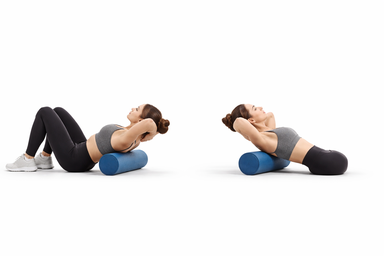
How to
A supported upper-back extension on a foam roller that opens your chest and trains thoracic mobility.
- Sit with the foam roller across your upper back.
- Support your head with your hands and keep your hips on the floor.
- Gently lean back over the roller until you feel a stretch.
- Hold the position and breathe slowly.
- Return to upright, then move the roller to another upper-back spot.
- Keep your ribs down
- Move from your upper back
- Arching hard through your lower back
- Pulling on your neck with your hands
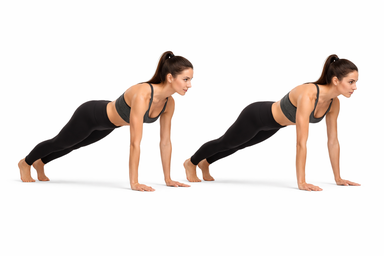
How to
A straight-arm push-up variation that trains shoulder blade control and upper back stability.
- Start in a high plank with hands under shoulders and arms straight.
- Let your chest sink slightly as your shoulder blades move together.
- Push the floor away to spread your shoulder blades apart.
- Keep your body in one straight line as you repeat.
- Keep your elbows straight
- Move only at your shoulder blades
- Bending your elbows like a regular push-up
- Letting your hips sag or pike
Scapular Upward Rotation
Scapular upward rotation and rotator cuff work. Use light tension; prioritize smooth, controlled reps.
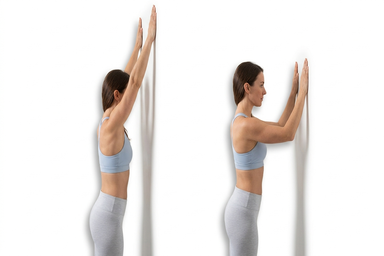
How to
A wall-based shoulder move that trains shoulder control and upper-back posture.
- Stand with your back to a wall and feet a small step out.
- Press your head, upper back, and hips gently into the wall.
- Place your arms on the wall in a goalpost shape.
- Slide your arms up the wall as far as you can control.
- Slide back down to the start and repeat.
- Keep your ribs down.
- Move slowly and stay in control.
- Arching your lower back to reach higher.
- Shrugging your shoulders toward your ears.
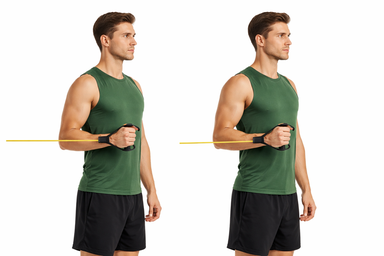
How to
A one-arm band rotation that trains your shoulder rotators.
- Stand tall with the band at your side and elbow bent 90 degrees.
- Keep your elbow tucked to your side.
- Rotate your forearm outward against the band.
- Slowly return to start under control.
- Finish your reps, then switch sides.
- Keep your elbow pinned to your side
- Move only your forearm
- Letting your elbow drift away from your body
- Twisting your torso to cheat the rep
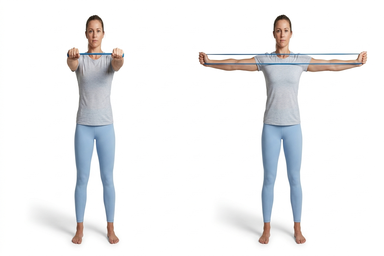
How to
A band upper-back move that trains your rear shoulders and mid-back.
- Stand tall and hold a band at chest height with both hands.
- Start with arms straight and hands shoulder-width apart.
- Pull the band apart until your hands move out to your sides.
- Pause briefly with shoulder blades squeezed together.
- Control the band back to the start and repeat.
- Keep your ribs down.
- Move from your shoulders, not your lower back.
- Shrugging your shoulders toward your ears.
- Arching your back to finish the pull.
Cool-Down
End-range comfort. Finish with gentle end-range overhead holds and wall-supported mobility.
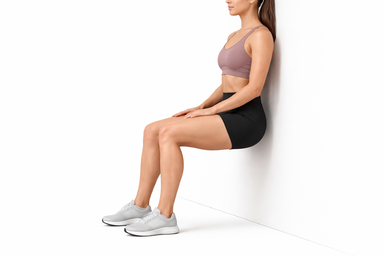
How to
A wall-supported shoulder hold that trains upper back control and shoulder position.
- Stand with your back against a wall and feet a small step forward.
- Press your head, upper back, and hips gently into the wall.
- Raise your arms to a goalpost shape with elbows and wrists near the wall.
- Hold the position and breathe steadily.
- Lower your arms and step away from the wall.
- Keep your ribs down.
- Keep your neck relaxed.
- Arching your lower back off the wall.
- Forcing your wrists to touch the wall.
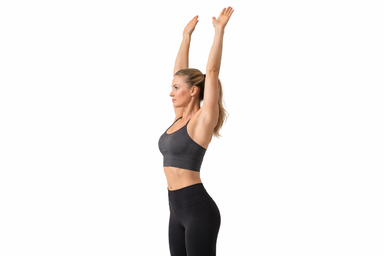
How to
A standing overhead hold that trains shoulder position, upper back control, and posture.
- Stand tall with feet about hip-width apart.
- Reach both arms overhead with palms facing in.
- Keep your ribs down and your neck relaxed.
- Hold the reach and breathe steadily.
- Lower your arms with control when the hold is done.
- Reach tall without shrugging
- Keep your ribs stacked over hips
- Arching your lower back
- Letting your shoulders creep to your ears

Unlocking the Thoracic-Shoulder Link
Cat-Cow and Thoracic Extension on Foam Roller directly mobilize the T4-T8 vertebral segments, where stiffness most commonly blocks true overhead elevation. Without this spinal range, your glenohumeral joint compensates — creating impingement risk. Every spinal drill here clears the path before the shoulder is ever asked to reach.

Why Scapular Control Is the Real Bottleneck
Overhead range isn't just about shoulder flexibility — it demands precise upward rotation and posterior tilting of the scapula. Wall Slides and Scapular Push-Ups train serratus anterior and lower trapezius, the two muscles most chronically underactive in people who struggle to reach full lockout overhead. Without them, mobility gains don't stick.

End-Range Exposure Builds Lasting Mobility
The Overhead Reach Hold and Wall Angle use a principle called end-range loading — spending time at the limit of your current range signals the nervous system to accept that position as safe, converting passive flexibility into active, usable mobility. Start the Wall Angle with a smaller range of motion and only extend as far as your lower back stays flat against the wall.