
Clean & Minimal AI Powered Fitness Routines
Download AppHealthy Aging Mobility — 25 Minutes
A joint-friendly mobility session to improve range of motion, balance, and everyday movement quality in ~25 minutes.
Healthy Aging Mobility — 25 Minutes
A joint-friendly mobility session to improve range of motion, balance, and everyday movement quality in ~25 minutes.
Warm-Up
5 minutes. Increase temperature and gently open hips, spine, and shoulders.
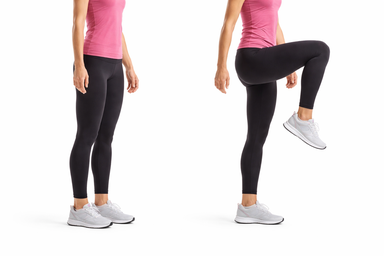
How to
A low-impact cardio move that warms up your legs and hips while raising your heart rate.
- Stand tall with your feet hip-width apart and arms at your sides.
- Lift one knee to hip height as you swing the opposite arm forward.
- Lower that foot, then lift the other knee and switch arms.
- Keep alternating sides at a steady pace.
- Slow down and plant both feet to finish.
- Stand tall with your chest up
- Land softly under your hips
- Leaning back as you lift your knees
- Stomping your feet on each step
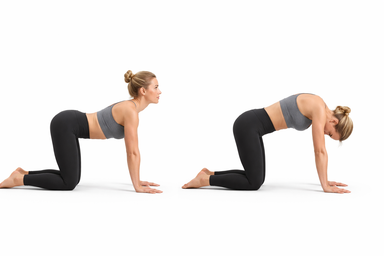
How to
A gentle spine mobility move that alternates rounding and arching your back on hands and knees.
- Start on hands and knees with wrists under shoulders and knees under hips.
- Inhale and drop your belly as you lift your chest and tailbone.
- Exhale and round your back, tucking your chin and tailbone.
- Move slowly between both positions with your breath.
- Move one vertebra at a time.
- Keep your shoulders away from your ears.
- Forcing your neck up or down.
- Rushing through the movement.
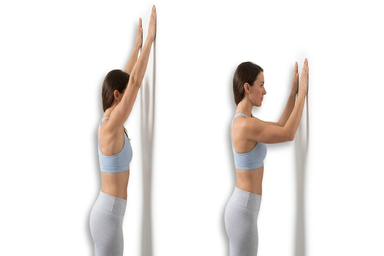
How to
A wall-based shoulder move that trains shoulder control and upper-back posture.
- Stand with your back to a wall and feet a small step out.
- Press your head, upper back, and hips gently into the wall.
- Place your arms on the wall in a goalpost shape.
- Slide your arms up the wall as far as you can control.
- Slide back down to the start and repeat.
- Keep your ribs down.
- Move slowly and stay in control.
- Arching your lower back to reach higher.
- Shrugging your shoulders toward your ears.
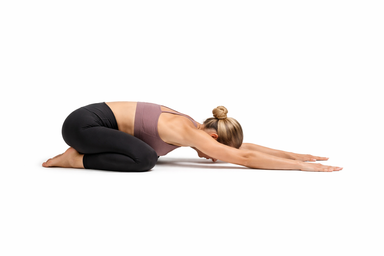
How to
A kneeling rest pose that gently stretches your back, hips, and shoulders.
- Kneel on the floor with your big toes together and knees apart.
- Sit your hips back toward your heels.
- Fold forward and reach your arms in front of you.
- Rest your forehead down and let your chest sink between your thighs.
- Hold the position and breathe slowly.
- Relax your shoulders
- Breathe into your back
- Forcing your hips down
- Holding your breath
Circuit A
Mobility and core control. Move with control. Rest as needed; keep transitions smooth.
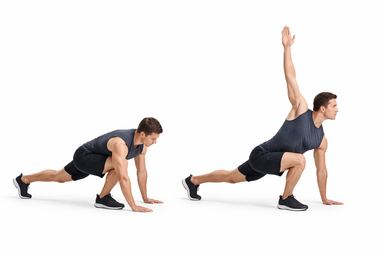
How to
A dynamic lunge stretch that opens your hips, hamstrings, and upper back as you alternate sides.
- Start in a high plank with hands under shoulders.
- Step your right foot outside your right hand.
- Drop your hips, then rotate your right arm up toward the ceiling.
- Place your hand down and step back to plank.
- Repeat on the left side, alternating sides each rep.
- Keep your front foot flat.
- Reach long through your top hand.
- Letting your front heel lift off the floor.
- Rushing the rotation without control.
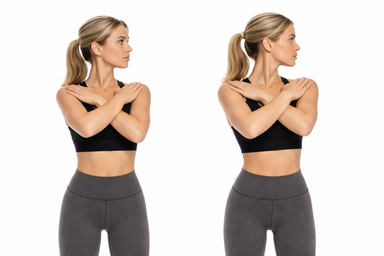
How to
A controlled upper-back rotation that trains thoracic mobility and trunk control.
- Sit or stand tall with your feet steady.
- Cross your arms over your chest or reach them forward.
- Rotate your chest to one side while your hips stay still.
- Return to center, then rotate to the other side.
- Move slowly and breathe through each turn.
- Keep your hips still
- Rotate through your upper back
- Letting your hips follow the turn
- Twisting mostly from your lower back
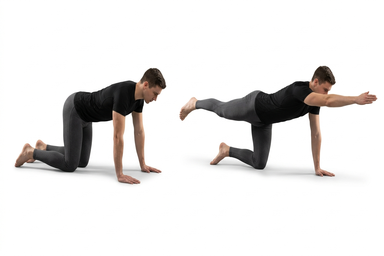
How to
A core stability move from all fours that trains your abs, back, glutes, and balance.
- Start on hands and knees with your hands under shoulders and knees under hips.
- Brace your core and keep your back flat.
- Reach one arm forward and the opposite leg back until they are straight.
- Pause briefly, then bring your hand and knee back under you.
- Repeat on the other side, alternating each rep.
- Keep your hips square
- Move slow and controlled
- Arching or sagging your lower back
- Rotating your hips as you reach
Circuit B
Lower body and balance. Use a chair or wall for support if needed. Focus on steady knees and tall posture.
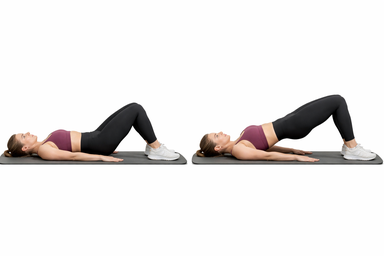
How to
A floor hip lift that trains your glutes and hamstrings with both feet planted.
- Lie on your back with knees bent and feet flat, hip-width apart.
- Brace your core and press your arms lightly into the floor.
- Drive through your heels and lift your hips until your body forms a straight line.
- Squeeze your glutes at the top, then lower with control.
- Repeat for your reps.
- Keep your ribs down
- Drive through your heels
- Arching your lower back at the top
- Pushing through your toes
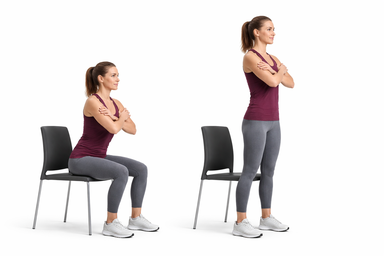
How to
A chair-based squat pattern that trains your thighs and glutes for standing strength.
- Sit near the front of a chair with feet flat and hip-width apart.
- Lean slightly forward and brace your core.
- Press through both feet and stand tall.
- Push your hips back and sit down with control.
- Keep your knees tracking over your toes
- Stand tall at the top
- Letting your knees cave inward
- Dropping hard onto the chair
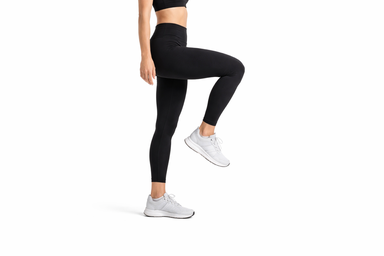
How to
A one-leg standing hold that trains balance and stability in your foot, ankle, and hips.
- Stand tall with feet hip-width apart and arms relaxed.
- Shift your weight onto one foot and lift the other foot off the floor.
- Hold steady, keep your torso tall, and breathe slowly.
- Lower your foot with control, then switch legs.
- Keep your hips level
- Look at one spot ahead
- Letting your hips twist or drop
- Holding your breath
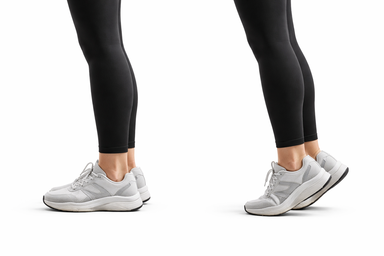
How to
A standing lower-leg move that trains your calves by lifting and lowering your heels.
- Stand tall with both feet hip-width apart.
- Press through the balls of your feet and lift your heels.
- Pause briefly at the top with control.
- Lower your heels slowly back to the floor.
- Repeat for your reps.
- Keep your ankles tracking straight.
- Move up and down with control.
- Rocking onto the outside edges of your feet.
- Bouncing at the bottom of each rep.
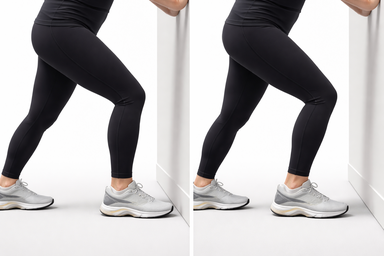
How to
A one-leg ankle mobility drill that trains dorsiflexion by moving your knee over your toes.
- Stand facing a wall with one foot flat a few inches away.
- Keep your heel down and your toes pointing forward.
- Drive your knee toward the wall over your middle toes.
- Ease back to the start and repeat smoothly.
- Finish your reps, then switch legs.
- Keep your heel planted.
- Track your knee over your toes.
- Letting your heel lift.
- Rolling your foot inward or outward.
Cool-Down
4 minutes. Downshift breathing and finish with gentle spine and hip relaxation.
How to
A gentle spine mobility move that alternates rounding and arching your back on hands and knees.
- Start on hands and knees with wrists under shoulders and knees under hips.
- Inhale and drop your belly as you lift your chest and tailbone.
- Exhale and round your back, tucking your chin and tailbone.
- Move slowly between both positions with your breath.
- Move one vertebra at a time.
- Keep your shoulders away from your ears.
- Forcing your neck up or down.
- Rushing through the movement.
How to
A kneeling rest pose that gently stretches your back, hips, and shoulders.
- Kneel on the floor with your big toes together and knees apart.
- Sit your hips back toward your heels.
- Fold forward and reach your arms in front of you.
- Rest your forehead down and let your chest sink between your thighs.
- Hold the position and breathe slowly.
- Relax your shoulders
- Breathe into your back
- Forcing your hips down
- Holding your breath

Every Rep Targets Functional Independence
Sit to Stand directly trains the quad-dominant hip extension pattern used in daily transfers, while Glute Bridge and Bird Dog co-activate the posterior chain and deep spinal stabilizers that prevent fall-related injury. Each exercise maps to a movement your body performs outside this session.

Aging Joints Need Controlled Range, Not Just Stret
Cartilage health depends on synovial fluid circulation driven by active movement through full range — which is why Cat-Cow, Thoracic Rotation, and Ankle Dorsiflexion Mobilization are sequenced before load. Stiff thoracic segments and restricted ankles are the two leading contributors to balance loss in adults over 60.

Stability Before Strength Is the Right Order
Single-Leg Balance and Bird Dog appear after the mobility block intentionally — proprioceptive challenges require a nervous system that's already warmed and mobile. Progress Single-Leg Balance by reducing wall or chair contact over weeks; that single variable reliably tracks your neuromuscular adaptation without adding load.