
Clean & Minimal AI Powered Fitness Routines
Download AppBeginner Leg Stretch Flow
Gentle leg stretching to build flexibility from zero.
Beginner Leg Stretch Flow
Gentle leg stretching to build flexibility from zero.
Leg Stretch Circuit
Hold each stretch smoothly for the full time. Repeat the whole circuit 2 times.
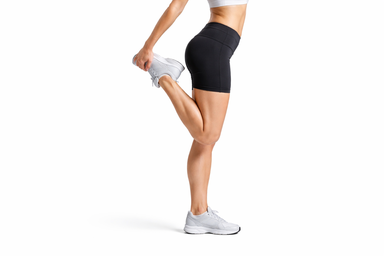
How to
A standing thigh stretch that targets the front of your hip and quad on one leg.
- Stand tall and hold a wall or chair for balance if needed.
- Bend one knee and hold your ankle or foot behind you.
- Keep your knees close and gently draw your heel toward your glute.
- Hold the stretch and breathe slowly.
- Release with control, then switch legs.
- Stand tall through your chest
- Keep your knees close
- Arching your lower back
- Pulling the knee out to the side
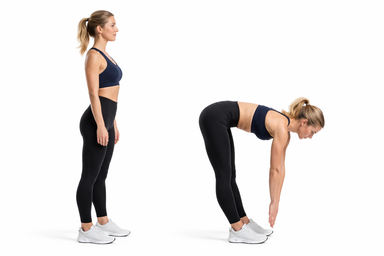
How to
A held stretch for the back of your thigh that targets your hamstrings.
- Sit tall with your target leg straight and toes up.
- Hinge at your hips and reach toward your foot.
- Stop when you feel a gentle stretch behind your thigh.
- Hold the stretch and breathe slowly.
- Release slowly, then switch sides if stretching one leg.
- Keep your back long.
- Hinge from your hips.
- Rounding your back to reach farther.
- Bouncing in the stretch.
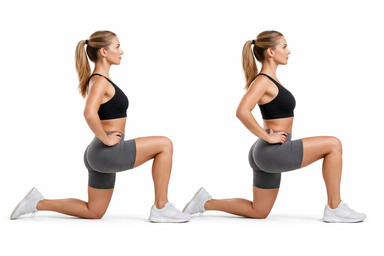
How to
A kneeling stretch for the front of your hip. It targets the hip flexors on one side at a time.
- Kneel with one foot forward and the other knee on the floor.
- Tuck your hips slightly and stand tall through your chest.
- Shift your hips forward until you feel a stretch in the back-leg hip.
- Hold and breathe slowly without bouncing.
- Release gently, then switch sides.
- Keep your ribs stacked over your hips
- Squeeze the back-leg glute lightly
- Arching your lower back to go deeper
- Bouncing in the stretch
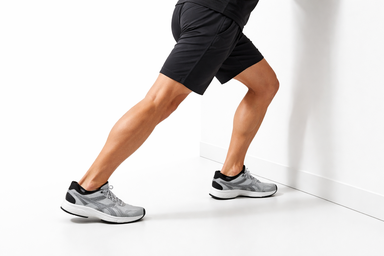
How to
A standing calf stretch that targets the back of your lower leg with a steady hold.
- Stand facing a wall and place your hands on it.
- Step one foot back and keep that heel on the floor.
- Bend your front knee until you feel a calf stretch.
- Hold and breathe slowly without bouncing.
- Finish the hold, then switch legs.
- Keep your back heel down
- Point both toes forward
- Bouncing in the stretch
- Letting the back heel lift
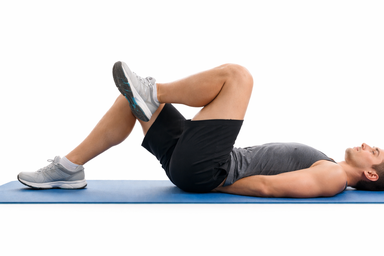
How to
A seated or lying hip stretch that targets your glutes and outer hip on one side.
- Lie on your back with both knees bent and feet flat.
- Cross one ankle over the opposite thigh, making a figure four.
- Pull the uncrossed thigh toward your chest until you feel a stretch.
- Hold and breathe, keeping your shoulders relaxed.
- Release slowly, then switch sides.
- Keep your lower back relaxed
- Flex the crossed foot
- Forcing the knee down with your hand
- Holding your breath
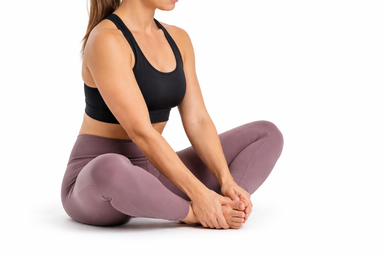
How to
A seated hip stretch that targets your inner thighs and groin.
- Sit tall and bring the soles of your feet together.
- Let your knees fall out to the sides.
- Hold your feet or ankles and lengthen through your spine.
- Relax your thighs and hold, breathing slowly.
- Keep your chest lifted
- Let your knees drop naturally
- Forcing your knees down with your hands
- Rounding your back to reach your feet
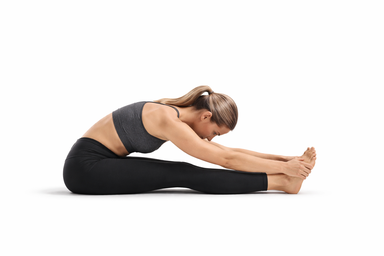
How to
A seated hamstring stretch that also eases your lower back and hips.
- Sit tall with both legs straight in front of you.
- Flex your feet and reach your arms toward your toes.
- Fold forward from your hips until you feel a gentle stretch.
- Hold the position and breathe slowly.
- Keep your knees soft
- Lengthen your spine
- Forcing your head toward your knees
- Bouncing in the stretch
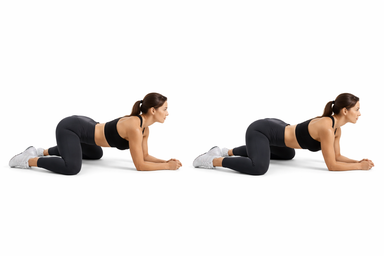
How to
A floor hip stretch with knees wide that targets your inner thighs and hips.
- Start on hands and knees with your knees set wide.
- Turn your feet out so your inner feet rest on the floor.
- Ease your hips back until you feel a steady stretch.
- Hold the position and breathe slowly.
- Come out by shifting forward and bringing your knees in.
- Keep your back flat
- Move slowly into the stretch
- Forcing your hips too far back
- Holding your breath

Targeting Every Lower-Body Fascial Line
From Standing Quad Stretch to Frog Stretch, each movement addresses a distinct myofascial chain — anterior, posterior, and medial. Hip Flexor Stretch releases the psoas, which shortens from prolonged sitting, while Figure Four directly mobilizes the piriformis and external hip rotators that restrict pelvic movement.

Why Beginners Lose Flexibility First
Tight hamstrings and hip flexors are the body's default response to sedentary patterns, creating anterior pelvic tilt and compressed lumbar vertebrae. Butterfly and Seated Forward Fold work the adductors and posterior chain simultaneously, targeting the exact tissues that stiffen earliest and limit range of motion most aggressively.

Building Range Before Loading It
Starting with passive holds like Calf Stretch and Standing Quad Stretch trains the nervous system to tolerate new end-range positions before any strength work is added — a principle called neurological flexibility adaptation. To personalize, hold any position where you feel the most resistance for an extra 15 seconds each session.