
Clean & Minimal AI Powered Fitness Routines
Download AppIntermediate Padel Conditioning
A 25-minute padel-focused session to build footwork, speed, and shoulder/hip durability.
Intermediate Padel Conditioning
A 25-minute padel-focused session to build footwork, speed, and shoulder/hip durability.
Warm-Up
5 minutes. Raise heart rate and prep ankles, hips, and shoulders for quick changes of direction.
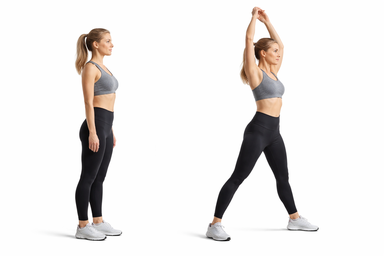
How to
A full-body cardio move that trains coordination, calves, shoulders, and hips.
- Stand tall with feet together and arms at your sides.
- Jump your feet out as you raise your arms overhead.
- Jump your feet back together as you lower your arms.
- Repeat at a steady pace, landing softly each time.
- Stay light on your toes
- Keep your chest tall
- Landing hard with locked knees
- Letting your arms swing out of control
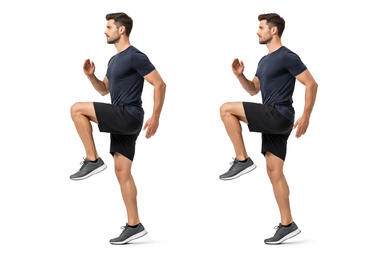
How to
A fast marching or running move that raises each knee to train your legs and raise your heart rate.
- Stand tall with feet under your hips and arms at your sides.
- Drive one knee up toward hip height as the opposite arm swings forward.
- Land softly on the ball of that foot.
- Switch quickly to the other knee and keep alternating.
- Keep a steady rhythm until the set ends.
- Stay tall through your chest
- Land light and quick
- Leaning back as your knees lift
- Stomping your feet into the floor
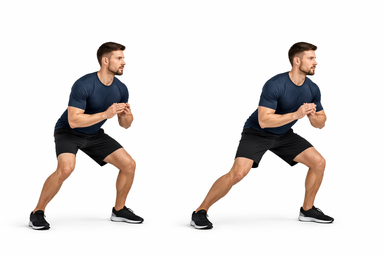
How to
A side-to-side cardio move that trains quick feet, hips, and legs.
- Stand with feet hip-width apart and knees slightly bent.
- Step quickly to one side, then bring your other foot in.
- Shuffle a few steps, staying low and light on your feet.
- Push off and shuffle back the other way.
- Keep alternating sides for the set.
- Stay low with your chest up
- Keep your feet quick and light
- Standing tall between shuffles
- Letting your feet cross over

How to
A quick hop into an athletic stance that trains foot speed, timing, and lower-body control.
- Stand tall with feet hip-width apart and knees soft.
- Make a small hop straight up off both feet.
- Land on both feet slightly wider, with knees bent.
- Push through the floor and repeat for your reps.
- Land light and quiet
- Keep your chest up
- Landing with locked knees
- Letting your knees cave inward
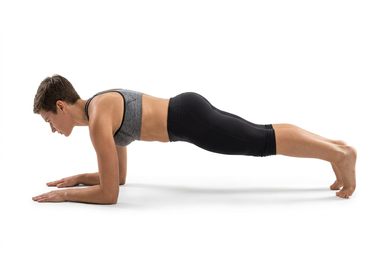
How to
A core hold that trains your abs, shoulders, and glutes while you keep a straight body line.
- Place your forearms on the floor with elbows under shoulders.
- Step both feet back and lift into a straight line from head to heels.
- Brace your abs and squeeze your glutes.
- Hold the position and breathe steadily.
- Lower your knees to the floor to finish.
- Keep your ribs pulled down
- Push the floor away
- Letting your hips sag
- Lifting your hips too high
Footwork & Conditioning Circuit
Work hard with clean form. Stay low on shuffles; keep knees soft on hops.
How to
A side-to-side cardio move that trains quick feet, hips, and legs.
- Stand with feet hip-width apart and knees slightly bent.
- Step quickly to one side, then bring your other foot in.
- Shuffle a few steps, staying low and light on your feet.
- Push off and shuffle back the other way.
- Keep alternating sides for the set.
- Stay low with your chest up
- Keep your feet quick and light
- Standing tall between shuffles
- Letting your feet cross over
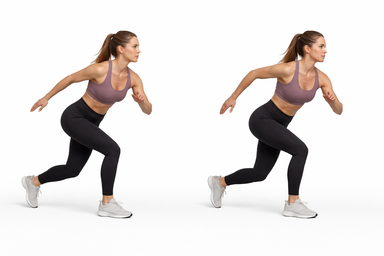
How to
A side-to-side hop that trains your legs, glutes, and balance with quick lateral movement.
- Stand tall with your feet hip-width apart and knees soft.
- Hop sideways onto your right foot, letting your left leg sweep behind you.
- Land softly with your knee bent and hips back.
- Push off and hop to the left foot, sweeping your right leg behind.
- Keep alternating sides for your reps.
- Land softly and stay low
- Keep your chest up
- Letting your knee cave inward on landing
- Rushing the hop and losing balance
How to
A quick hop into an athletic stance that trains foot speed, timing, and lower-body control.
- Stand tall with feet hip-width apart and knees soft.
- Make a small hop straight up off both feet.
- Land on both feet slightly wider, with knees bent.
- Push through the floor and repeat for your reps.
- Land light and quiet
- Keep your chest up
- Landing with locked knees
- Letting your knees cave inward
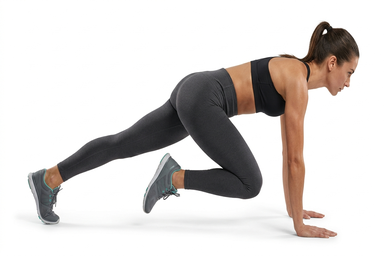
How to
A fast plank move that trains your core, shoulders, and hip flexors.
- Start in a high plank with hands under shoulders and legs straight.
- Brace your core and keep your body in a straight line.
- Drive one knee toward your chest, then quickly step it back.
- Alternate knees at a steady pace for the set.
- Keep your hips low
- Push the floor away
- Letting your hips bounce high
- Dropping your head or rounding your shoulders
Core & Hip Stability
Brace your midsection; avoid arching the low back. Side plank: keep hips stacked.
How to
A core hold that trains your abs, shoulders, and glutes while you keep a straight body line.
- Place your forearms on the floor with elbows under shoulders.
- Step both feet back and lift into a straight line from head to heels.
- Brace your abs and squeeze your glutes.
- Hold the position and breathe steadily.
- Lower your knees to the floor to finish.
- Keep your ribs pulled down
- Push the floor away
- Letting your hips sag
- Lifting your hips too high
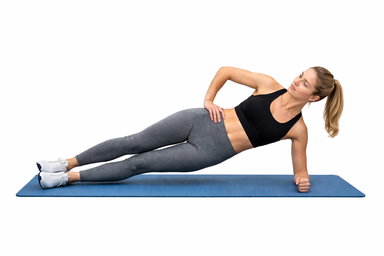
How to
A side hold that trains your obliques, hips, and shoulder stability.
- Lie on one side with your elbow under your shoulder and legs stacked.
- Lift your hips until your body forms a straight line.
- Hold the position and breathe steadily.
- Lower your hips with control.
- Finish your hold, then switch sides.
- Keep your hips stacked
- Press the floor away
- Letting your hips sag
- Rolling your chest toward the floor
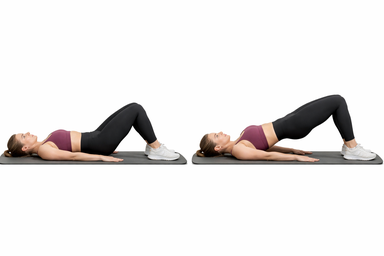
How to
A floor hip lift that trains your glutes and hamstrings with both feet planted.
- Lie on your back with knees bent and feet flat, hip-width apart.
- Brace your core and press your arms lightly into the floor.
- Drive through your heels and lift your hips until your body forms a straight line.
- Squeeze your glutes at the top, then lower with control.
- Repeat for your reps.
- Keep your ribs down
- Drive through your heels
- Arching your lower back at the top
- Pushing through your toes
Cool-Down
3 minutes. Bring breathing down and restore hips and spine after lateral work.
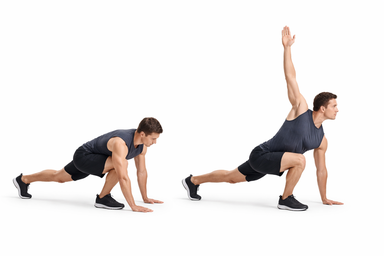
How to
A dynamic lunge stretch that opens your hips, hamstrings, and upper back as you alternate sides.
- Start in a high plank with hands under shoulders.
- Step your right foot outside your right hand.
- Drop your hips, then rotate your right arm up toward the ceiling.
- Place your hand down and step back to plank.
- Repeat on the left side, alternating sides each rep.
- Keep your front foot flat.
- Reach long through your top hand.
- Letting your front heel lift off the floor.
- Rushing the rotation without control.
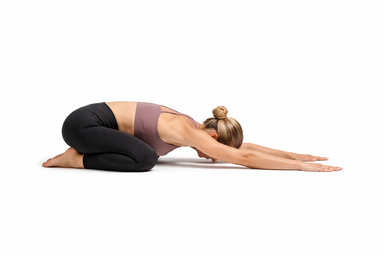
How to
A kneeling rest pose that gently stretches your back, hips, and shoulders.
- Kneel on the floor with your big toes together and knees apart.
- Sit your hips back toward your heels.
- Fold forward and reach your arms in front of you.
- Rest your forehead down and let your chest sink between your thighs.
- Hold the position and breathe slowly.
- Relax your shoulders
- Breathe into your back
- Forcing your hips down
- Holding your breath

Rotational Power Meets Court Reactivity
Skater Hops and Lateral Shuffles train the hip abductors and gluteus medius under lateral loading—the exact force vectors padel demands during wide volleys and side-wall retrievals. The Split Step primes your stretch-shortening cycle so your first explosive step fires faster off your opponent's contact point.

Why Padel Shoulders and Hips Break Down
Padel's confined court forces repetitive overhead smashes and rapid direction changes, creating asymmetrical stress on the rotator cuff and hip flexor complex. The World's Greatest Stretch directly counteracts this by mobilizing thoracic rotation and hip extension simultaneously—the two ranges most restricted in padel players after match play.

Density Training in a 25-Minute Window
Compressing Plank, Side Plank, and Glute Bridge into the main block builds anti-rotation core stiffness without accumulated fatigue that would compromise footwork quality. Progress this session by reducing rest intervals by 5 seconds weekly before increasing movement complexity—your neural adaptation will outpace muscular fatigue at this stage.